Augustine of Hippo
-
Project #EuropeanBios entry #16 is Augustine of Hippo, also known at Saint Augustine. This bio was a real eye-opener. Augustine profoundly shaped the Christian faith, which is wild because he was basically a scientologist for half of his life and extremely horny for all of it.
-
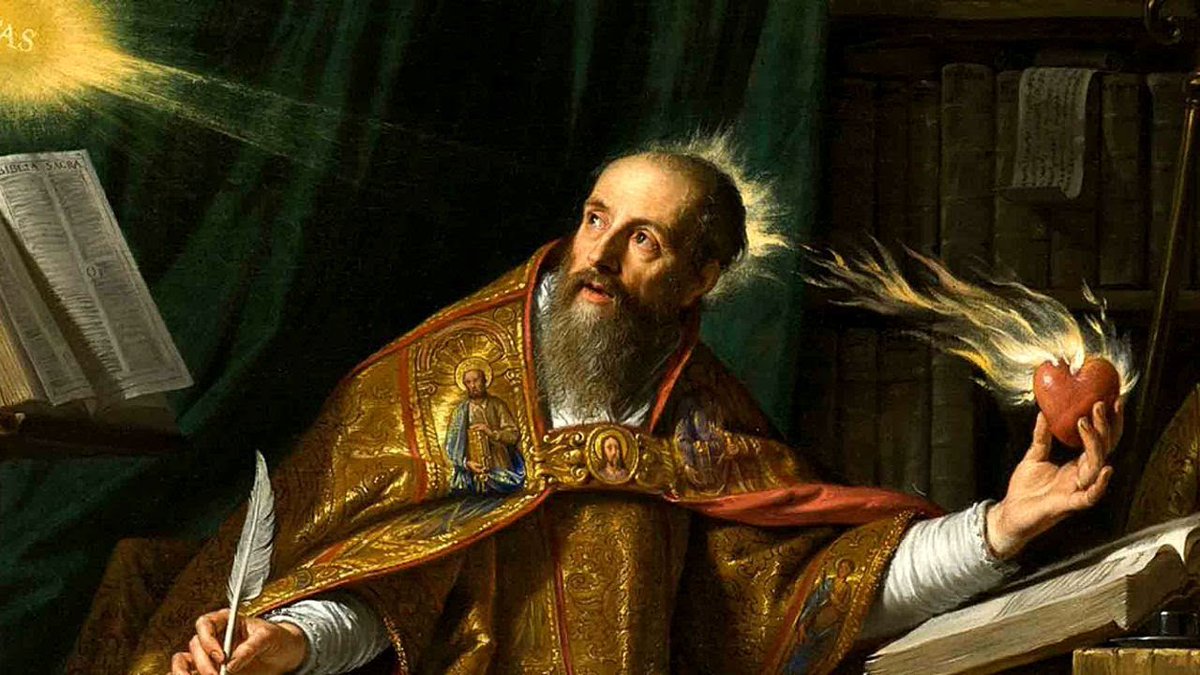
Nobody knows what Augustine looked like. This was painted a thousand years after he died. His father was a Roman colonist but his African mother was a Berber so probably wasn't as white as this or the title image. Public domain via Wikimedia Commons -
Augustine is most famous for a book he wrote called Confessions, which shaped Christian thought for centuries afterwards. Because he became important to the faith, his reputation has been significantly cleaned up to make him more respectable. There was a lot of cleaning up to do.
-
Fun fact: the place I grew up in Trinidad and Tobago was called Saint Augustine, though we pronounced it "Sint Ah-gust-in". At no point in all the time I lived there did I bother to learn even the first thing about the man, since I assumed he was a fictional character.
-
Augustine grew up in Hippo, a coastal region of Mediterranean Africa at the time colonized by the Romans, in what is currently Algeria. Algeria's an enormous country and mostly desert, but the coast is quite lush.
-
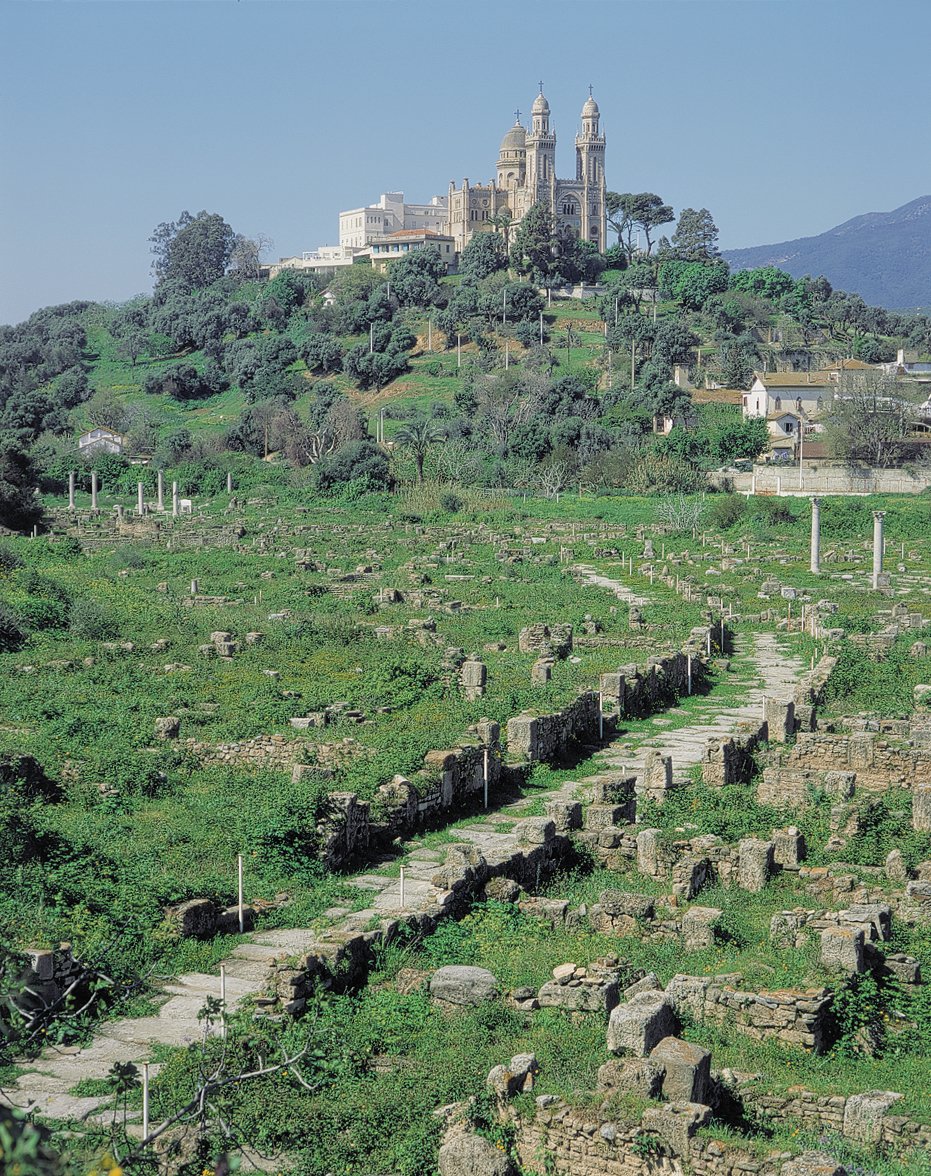
This is what the ruins of Augustine's hometown look like today. CC BY-SA 3.0 Wikimedia user Oris -
Augustine was not born a Christian; when he was born in 354AD almost nobody was. Christianity was still unformed and ill-defined. Our previous subject, Theodosius the Great, had not yet got his claws into it and fucked it up forever as he would later.
-
Augustine's father was a pagan, a blanket term for the endless polytheistic cults prevalent in the Mediterranean prior to Christianity, not really a specific religion. His mother was a Christian, extremely attached to her son. She moved all over the world to stay with him.
-
Fun fact 2: his mother's name was Monica. She was a huge drama queen, constantly weeping and praying, and a huge influence on his life. After their deaths she was sanctified. The modern town of Santa Monica is named after Saint Augustine's mom.
-
Augustine describes his own upbringing as poor and this works for the myth so that story has been reinforced, but in fact his family was well-off, and explicitly social climbers. They paid for his expensive education and arranged a socially advantageous marriage for him.
-
But Augustine was very much not interested in marriage and certainly not in Christianity. While abroad for his education he was having a wild time of endless sex and parties. He was definitely a fan of ladies but there's indications he may have had same-sex encounters as well.
-
For about 15 years, well into his 30s, he lived with a concubine. This was a common arrangement at the time, where a man would live with a woman of lower social status and provide for her but without official marriage. They had a son, Adeodatus, who lived into his teens.
-
Augustine is famous for converting to Christianity around age 33 and renouncing his sinful ways. This is certainly how the church would like the matter viewed. But Augustine never considered himself as converting to Christianity; as far as he was concerned he always was one.
-
But the other reason Augustine "converted" in his 30s is because it was believed baptism wiped away all of your sins, and he had been enthusiastically sinning all through his 20s. There's evidence his mother deliberately delayed his baptism so she could wipe it all out in one go.
-
Into his 30s Augustine followed a faith now called Manichaeism. Manicheans considered themselves to be not just Christians but ultra-Christians, more correct than any other Christians. What they believed however was totally unrecognizable as modern Christianity.
-
Manichaeism was at the time a major world religion, a rival to Christianity and Islam. It spread worldwide and although it died out in most places it survived well into the 1400s in China, though like any religion it mutated considerably in that time.
-
Manichaeism had a very complicated cosmology, but amongst other things they believed that all life in the world consists of demon semen, which is dark, but animated by heavenly light. Their goal as a faith is to release the heavenly light and allow it to escape.
-
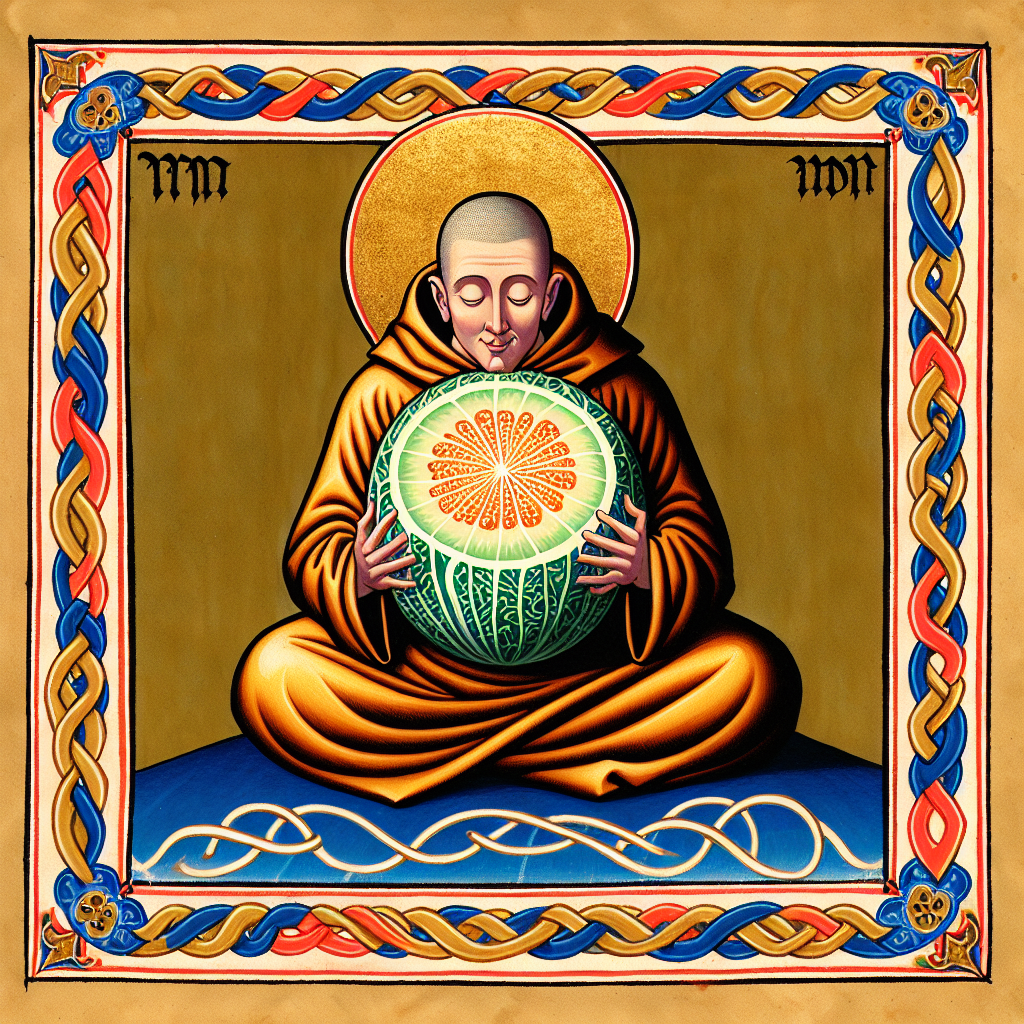
In order to release the light, they had to consume the mixed dark and light, and their body would separate out the light. Meat was too dark, so they were vegetarian. They preferred foods that were considered high in light; this essentially meant "shiny" foods. They were big fans of melons.
-
Manicheans believed their holy duty of separating out the light from the dark manifested as burps and farts. Every time they farted they were letting out heavenly light. This is what Saint Augustine, cornerstone of the Christian faith, spent much of his life sincerely believing.
-
Augustine was also a great believer in astrology. It was not considered incompatible with Manichaeism or Christianity to believe in astrology, because then as now the religion of astrology presented itself as science, no more incompatible with your religion than mathematics.
-
Augustine was also a philosopher. In fact, he would not have drawn any distinction between his Manichean beliefs, his later more recognizably Christian beliefs, and the philosophy of Plato and his later disciple Plotinus, both of whom he read and studied intently.
-
What Augustine was trying to do was make sense of the world. Manichaeism, philosophy, Christianity, astrology, poetry were all interchangeable tools to him in this goal. Like many great thinkers, he communicated his ideas widely to get feedback and further input.
-
This is how he became the major player in Christianity he is today. A brilliant speaker and writer, he could afford secretaries who wrote down enormous amounts of what he said out loud when praying. This writing, suitably spruced up and edited, became important to Christianity.
-
But this really wasn't his goal. He wasn't trying to define Christianity. He was trying to discover the truth, and his life was an endless pattern of finding new ideas, passionately adopting them, examining them, finding flaws, and abandoning them for new ideas.
-
His ability to sincerely and passionately embrace ideas was part of what made his speaking and writing so compelling. He would sincerely believe just about anything, and could convince other people he was right. He converted dozens of friends to Manichaeism before abandoning it.
-
Reading Augustine's biography and absorbing the endless parade of ideas that he absorbed, embraced, and then abandoned is beautiful and hypnotizing, like watching sunlight sparkle off water. The patterns are dazzling, ephemeral, and meaningless but no less beautiful for that.
-
Augustine could have convinced people of anything, and where his mind's random wandering ended shaped modern Christianity. Modern Christians should probably consider themselves lucky they ended up with what they got, and not the version with the melons and the holy farts.
- Previously: Theodosius the Great
- Next: Attila the Hun
- Full list
Text and images copyright © 2020-2023 Laurie Voss
except where indicated
except where indicated