Beethoven
-
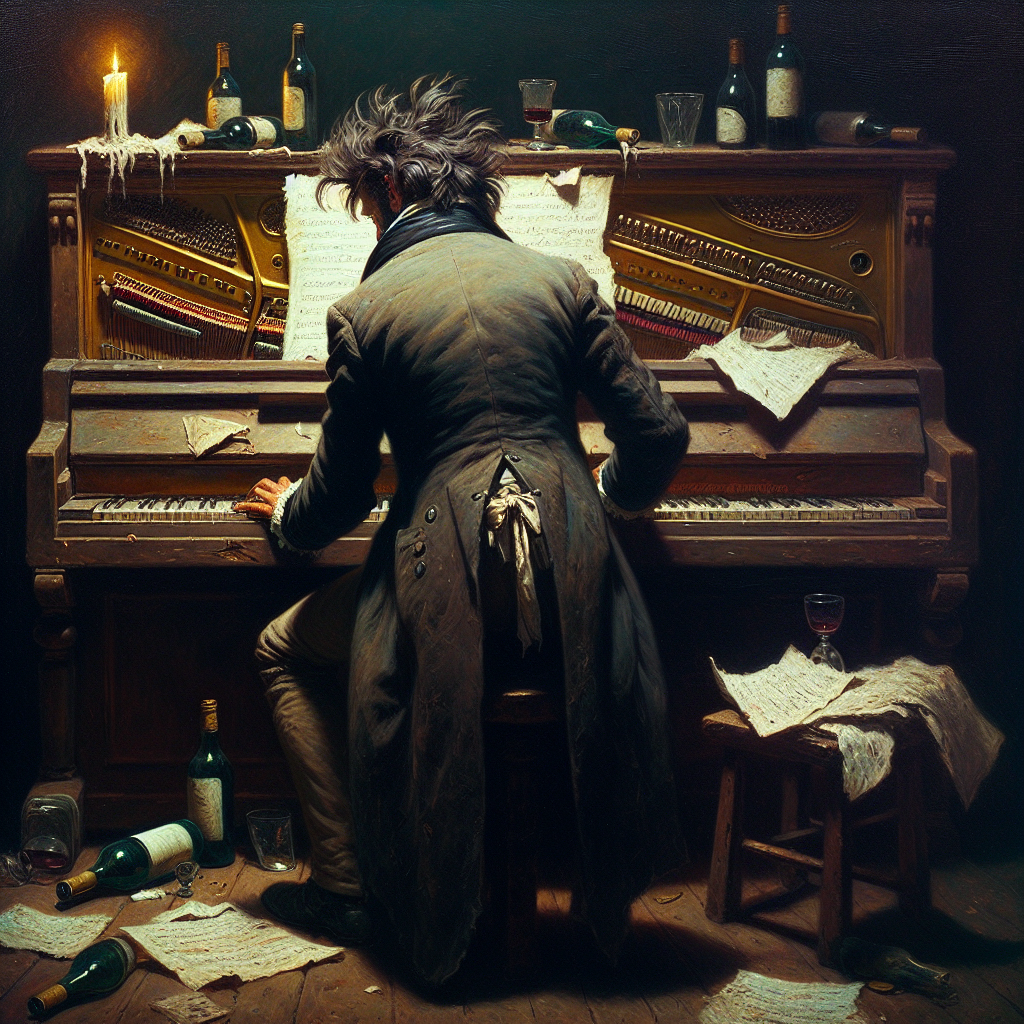
It's time for #EuropeanBios entry #69, which we can all agree is nice. Our subject today is Ludwig van Beethoven, born 1770, world famous composer, musical genius and barely functional alcoholic whose life was miserable from start to finish but created joy for millions.
-
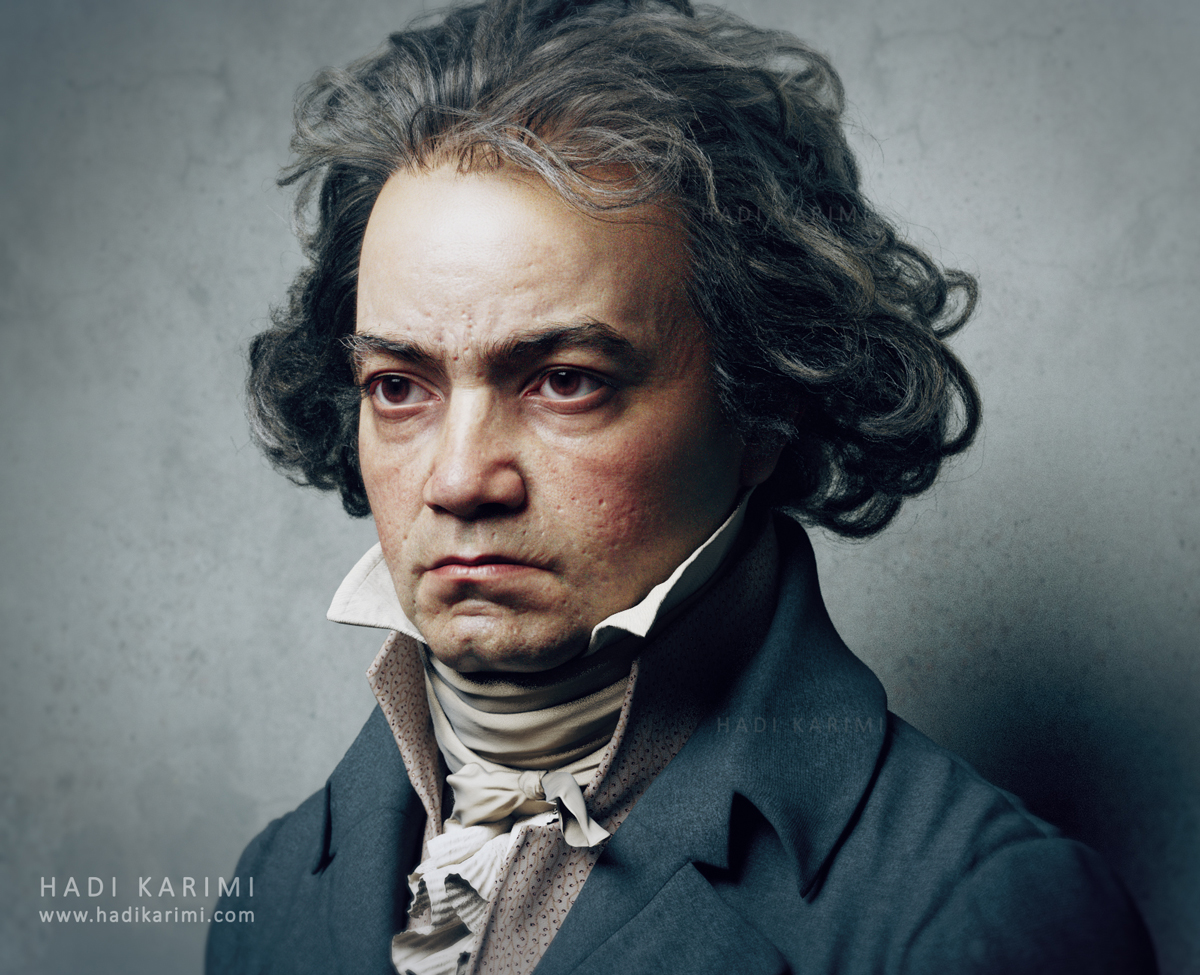
AI-reconstructed portrait of Ludwig van Beethoven based on historical descriptions and portraits AI reconstruction of Beethoven by Hadi Karimi (hadikarimi.com) -
(If this is your first entry in #EuropeanBios, it's a project started in 2020 to read a continuous series of historical biographies of famous Europeans from 500BC to 1950. You can find them all collected at TKTKTK)
-
Let's start, as we so often do, with his name. "Ludwig van Beethoven" is his real name, but spelling was very variable at the time, and in particular the "van" is very important: in German, "von" denotes a member of the nobility. But Beethoven's ancestors are not German.
-
Beethoven's "van" is Dutch. In Dutch, "van" is just a prefix meaning "of", like the O in "O'Connor". Some high drama in Beethoven's life revolves around people assuming he was "von" and him never correcting them. I'm going to be calling him Ludwig.
-
The three remarkable portraits I include here are not paintings but a 3D model made from a plaster cast taken of his face during his life. There's no way to know how accurate it is but I have read a hundred descriptions of his face and it matches them all. TKTKTK
-
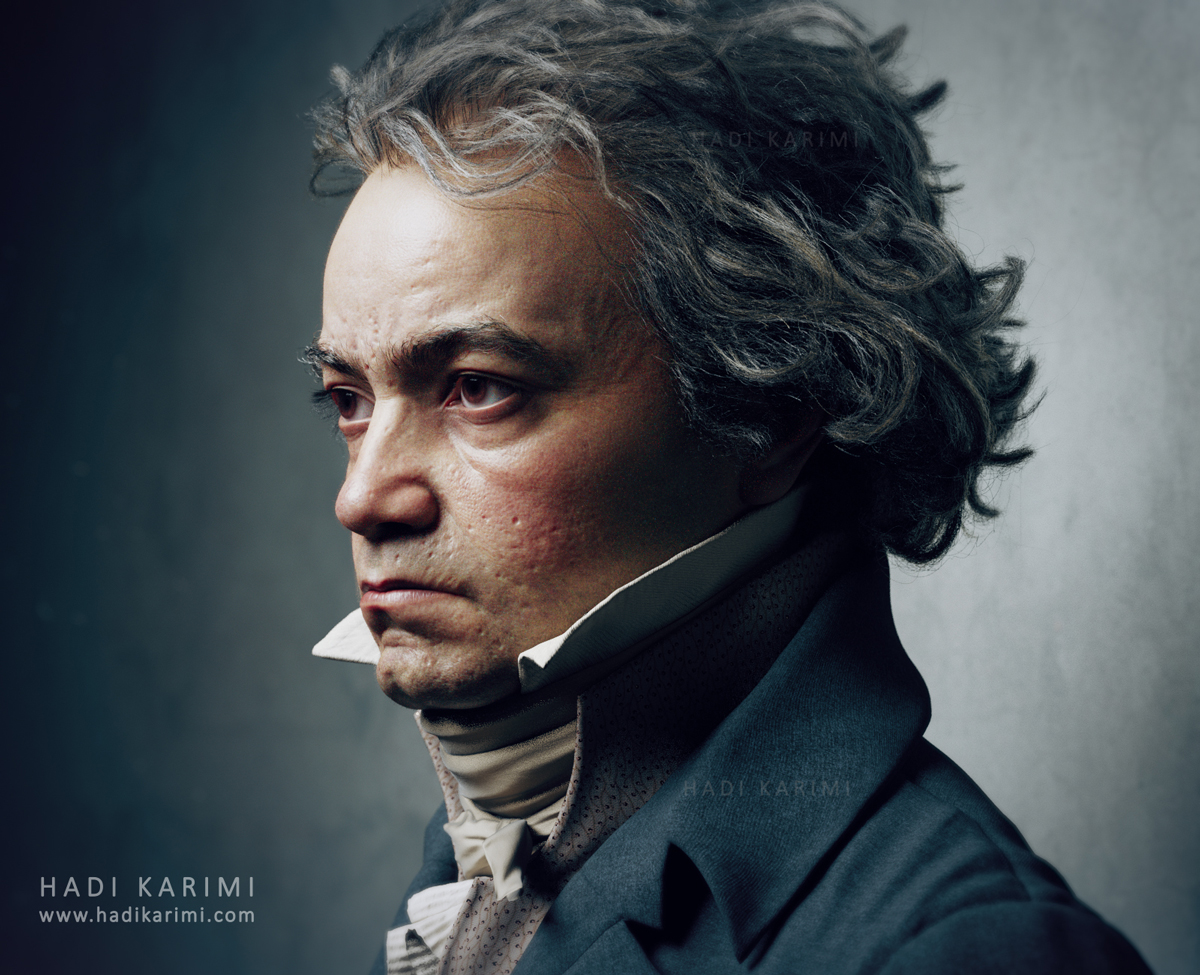
AI-reconstructed portrait of Ludwig van Beethoven, side profile AI reconstruction of Beethoven by Hadi Karimi (hadikarimi.com) -
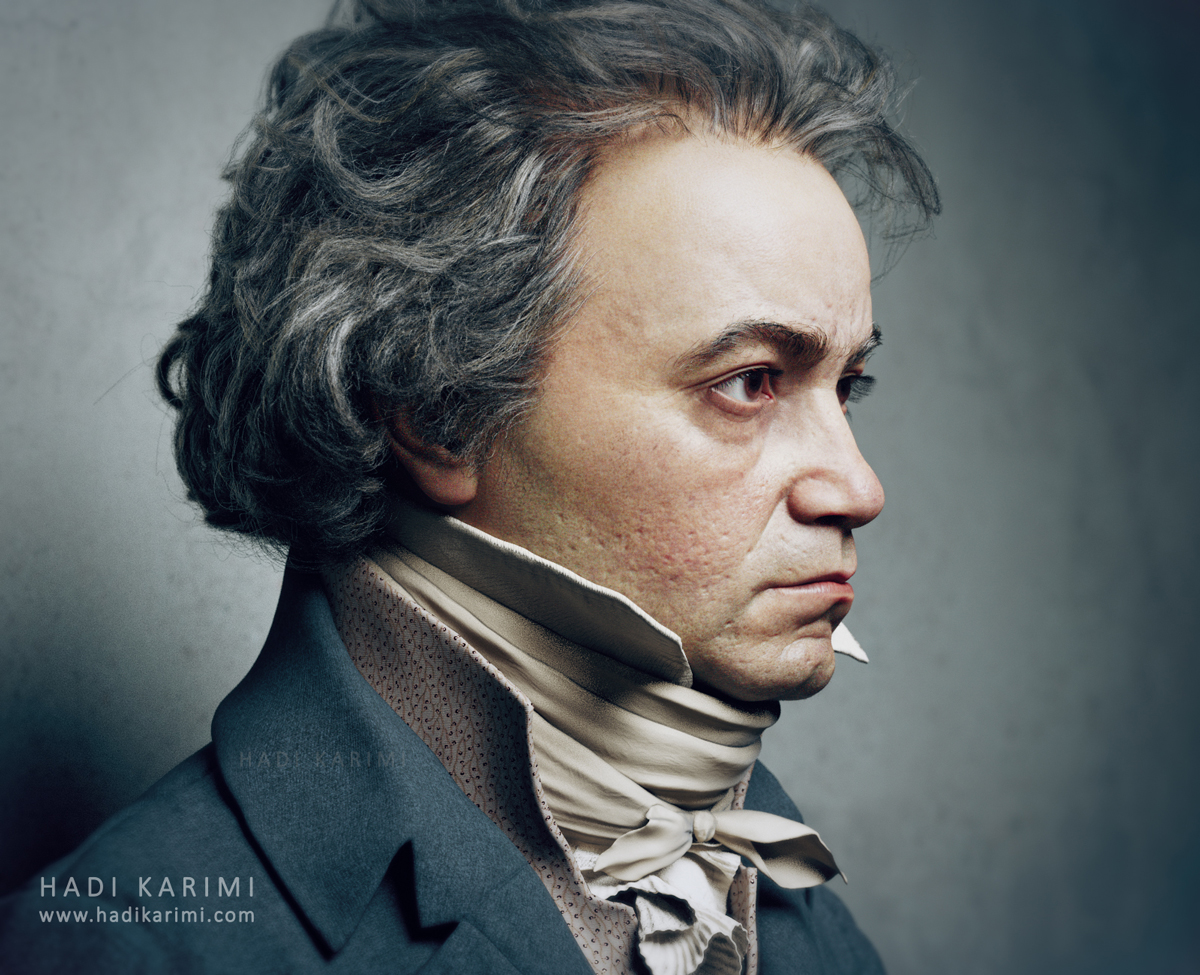
AI-reconstructed portrait of Ludwig van Beethoven, second side profile AI reconstruction of Beethoven by Hadi Karimi (hadikarimi.com) -
Ludwig was born to a family who were prosperous, making money selling wine, and also alcoholics, making themselves ill drinking too much of it. His grandmother, his father, his brothers and himself are all recorded as dying from illnesses related to alcohol consumption.
-
I am aware that alcoholism is a disease and not a moral failing, so I am going to try my utmost not to include any moral judgements on the effects of alcoholism on his life, which were many and nearly universally negative for him, his family, and everyone around him.
-
In particular, you may have heard that Ludwig went deaf halfway through his life. This was almost certainly a self-inflicted illness caused by drinking cheap wine sweetened with lead. Serious symptoms of lead poisoning including his deafness tortured him for most of his life.
-
Another side effect of lead poisoning is irritability, and Ludwig was famous for his bad temper. He shares both the temper and the poisoning in common with Andrew Jackson, who incidentally lived around the same time:
-
Ludwig's father Johan and grandfather were both Kapellmeisters, sort of a musical director for a local nobleman, which in addition to the wine trade left them both prosperous. However, Johan was non-functionally alcoholic, often physically abusive to his family including Ludwig.
-
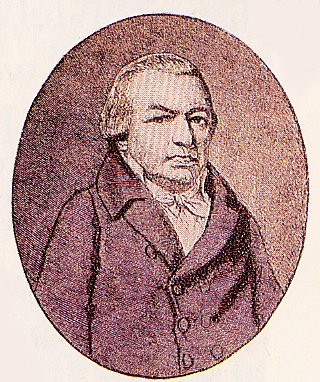
Portrait of Johann van Beethoven, Ludwig's father, a musician and alcoholic who forced his son to practice Portrait of Johann van Beethoven, public domain -
Determined that his son should carry on the musical career, Johan forced young Ludwig to learn to play. This shouldn't have been hard, since Ludwig loved music and was very talented from childhood, but Johan managed to make it miserable, beating him when he tried to improvise.
-
What Ludwig was learning to play was the piano: this seems obvious, but Ludwig is the first major musician to have learned to play on the modern piano. The piano had only just been invented, and while Mozart played it he had learned to play on the harpsichord and clavichord.
-
I always look for connections between my subjects and there are many, but surely the most relevant is Mozart, who we covered a few threads ago. Young Beethoven witnessed Mozart play in person, and was profoundly influenced by his music and his life:
-
The contrasts between the lives of the two could not be greater. Mozart's life was full of comedy and toilet humor, and he was always playful. No less talented, Beethoven's life was full of drunken explosions of rage, followed by abject apologies the next day when sober.
-
At age 22 Ludwig moved away from his family in Bonn to Vienna, which was larger and a world center of musical performance and innovation. His mentor there was the no less illustrious Joseph Haydn. Ludwig was alternately grateful for Haydn's help and jealous of his great fame.
-
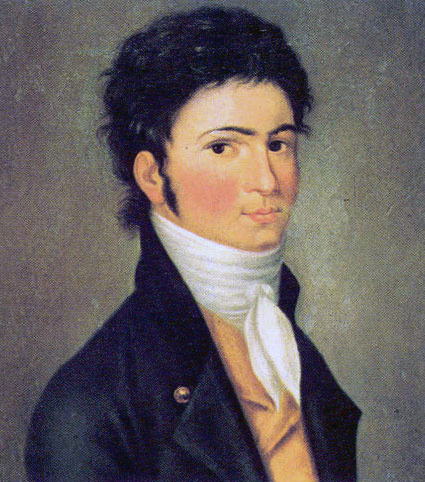
Portrait of young Ludwig van Beethoven, c. 1803 Christian Horneman, Portrait of Beethoven, 1803, public domain -
His health was always precarious. Lead poisoning can have disastrous effects on the digestive system, and these began at an early age. His sickly appearance and constant diarrhea was, understandably, a turn-off on the dating scene, and he would never get married.
-
He was also, and I can't emphasize this enough, drunk all the time. His biography is an endless sequence of him getting ripped, insulting somebody or promising something rash, and then either apologizing or desperately trying to get out of it the next day.
-
He was also a huge slob, and this got worse the older and drunker he got. His apartment was always a mess. One visitor described his house as having 4 half-built pianos lying around and an "unemptied chamber pot", aka a bucket of shit, underneath the one he was playing.
-
He moved house a lot, another side-effect of his habit of getting roaring drunk and getting into fights with his landlords. Likewise, he was constantly looking for new domestic help, because he would get drunk and accuse them of theft or other skullduggery.
-
As with Mozart, in an age before recorded music or copyright laws there was much less money to be made in publishing composed music than in performing it, and most of Ludwig's money in the first half of his life was made performing music, often making it up on the spot.
-
He was a terrific performer and also an excellent conductor of music, noted for his wild antics in front of the orchestra. On one famous occasion his wildly swinging arms knocked over the candles used to light his music, nearly setting fire to the hall.
-
In effort to avoid a repeat of this accident, the next day the hall hired some choir boys to stand holding the candles nearby rather than leaving them standing around. The result was that instead of his arms hitting the candles he accidentally hit a choir boy in the face.
-
Earning money performing became a problem when he began to lose his hearing around age 28. He never went totally deaf, but his hearing got slowly worse and he also became sensitive to loud noises. The thought of being unable to earn a living drove him to thoughts of suicide.
-
This was when he wrote the document known as the Heiligenstadt Testament. Somewhere between a will, a suicide note and a private contemplation, he never showed it to anyone, and instead of killing himself he used it to give himself a new resolve: he would live to compose.
-
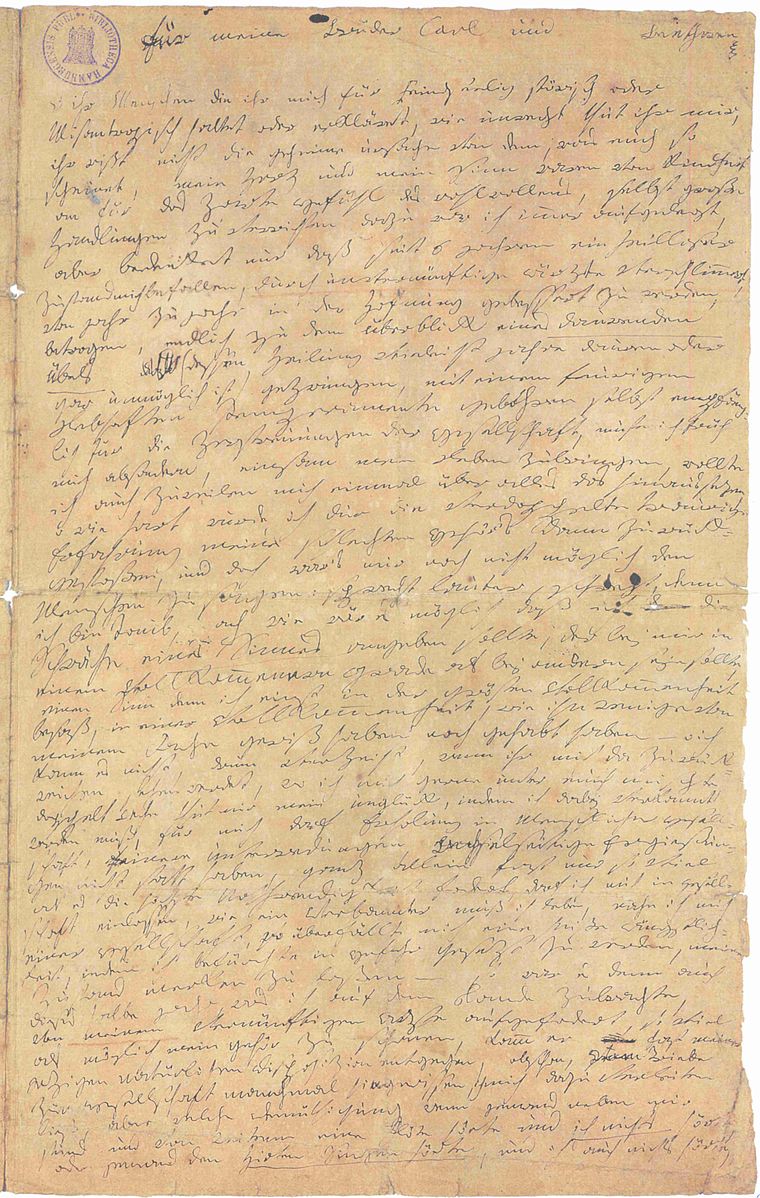
The Heiligenstadt Testament, 1802, Beethoven's private document in which he contemplated suicide but resolved to live for his music Beethoven, Heiligenstadt Testament, 1802, public domain -
This was novel: nobody had ever made a living solely as a composer before, and Ludwig's prodigious output is due both to his resolve to keep going for another 28 years and his switch to mostly composition for this second half of his life.
-
This was not easy to pull off. As soon as any piece of music was published, it would be "pirated", copied and sold without giving him any profits. He began a practice of selling the same piece of new music to be published simultaneously in several countries to maximize profits.
-
(In the course of reading this biography I learned that the word "piracy" in the sense of "stealing copyrighted music" was first used in the early 1700s. It makes me picture public service posters saying "YOU WOULDN'T DOWNLOAD A HORSE" from whatever the RIAA equivalent was.)
-
This worked quite well, but it eventually got out of hand: towards the end of his life he would try to sell the same piece of music three, four or even five times to different publishers in the same country, which soured his relationships with them when they found out.
-
A strange fact: for most of his life, he was incorrect about how old he was. This appears to have started when his father started exaggerating his youth to make him a more impressive child prodigy, to the point that he got confused about how old he really was, by about 3 years.
-
A major event in Ludwig's life was the life of our previous subject, Napoleon. Ludwig loved the republican principles of the French revolution and composed the Eroica, symphony number 3, about the idealized vision of Napoleon as a hero:
-
At times, Ludwig seriously considered upping stakes from Vienna to Paris to suck up to Napoleon, who spent lavishly on the arts. However, Napoleon turned out to be a murderous despot. Ludwig was deeply disillusioned by this, so lucky that he never followed through.
-
Napoleon turning out to be an asshole also presented a commercial problem for Ludwig: his symphony Eroica was originally titled "Bonaparte", but that became a liability, so he hastily re-titled it and pretended it was about some other hero and nothing to do with Napoleon.
-
Napoleon's love life was another source of anguish for him. As previously mentioned, he was a slob, drunk all the time, frequently an asshole, and often unpleasantly ill. Nevertheless, as he became famous he attracted the 17th century version of groupies, and slept with many.
-
As he got older and even more unpleasant the groupies dried up and he began to frequent brothels, which was common for bachelors and not particularly frowned upon at the time, but he was very self-loathing about it.
-
Much more unpleasantly, he was in the habit of giving music lessons and was particularly likely to accept a student if they were an attractive young woman. There are endless records of him hitting on his students, always unethical, but worse when they were 20 years his junior.
-
The final drama of his life kicked off when his brother Kaspar died of tuberculosis and he attempted, with the best of intentions, to follow his brother's dying wish and gain custody of his nephew Karl from Karl's mother, whom Ludwig did not like and considered an unfit mother.
-
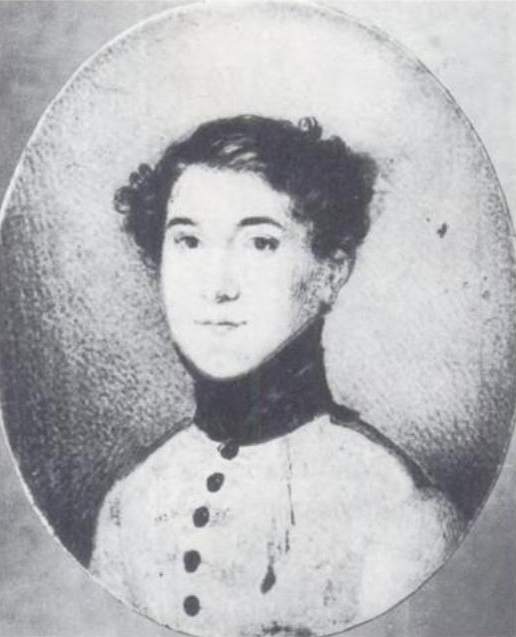
Portrait of Johanna van Beethoven, mother of Beethoven's nephew Karl, whom Beethoven fought for custody of Portrait of Johanna van Beethoven, public domain -
This is where the "von" vs. "van" thing comes in: at the time, there were two parallel legal systems in Vienna. One set of courts were for the nobility, and usually let them get their way, and another set was for everyone else, and were rather more even-handed legally speaking.
-
Since everyone assumed he was Von Beethoven, Ludwig took Karl's mother to court in the noble courts and was immediately granted custody of Karl. On appeal, however, he accidentally let slip that he was "van" Beethoven, so he was kicked out and sent back to the regular courts.
-
(Beethoven's position seemed to be that, as a great musician, he had elevated himself to the status of nobility through his work. The hereditary nobles of Germany absolutely did not buy this.)
-
The endless wrangling between Ludwig and his mother left Karl a deeply troubled young man who would play them off each other to get what he wanted. Ludwig also put him under enormous pressure to become a musician, which he attempted to escape by committing suicide.
-
Following Karl's unsuccessful suicide attempt, Ludwig backed off and Karl entered the military instead. Despite being deeply disappointed that Karl would not carry on his legacy, the cash-strapped Ludwig set aside a huge sum that he left untouched as Karl's inheritance.
-
Through all of this Ludwig was getting progressively more ill, both in his digestion and his hearing. Doctors in the early 1800s were still just making shit up as they went along, so nothing they tried helped except when, depressingly, they'd give him alcohol to perk him up.
-
Ludwig died aged 56 of liver failure, almost certainly the result of a lifetime of drinking lead-laced alcohol. It took ages and was gruesomely painful, a horrific end to a life that, despite amazing productivity, had always been a painful struggle for its author.
-
Beethoven's legacy is secure. Not counting small, incidental or lost pieces we have over 722 works by him written over 45 years. He casts a long shadow over the music world forever. He was a genius, worthy of respect, but not a nice guy, and his life was no fun at all.
-
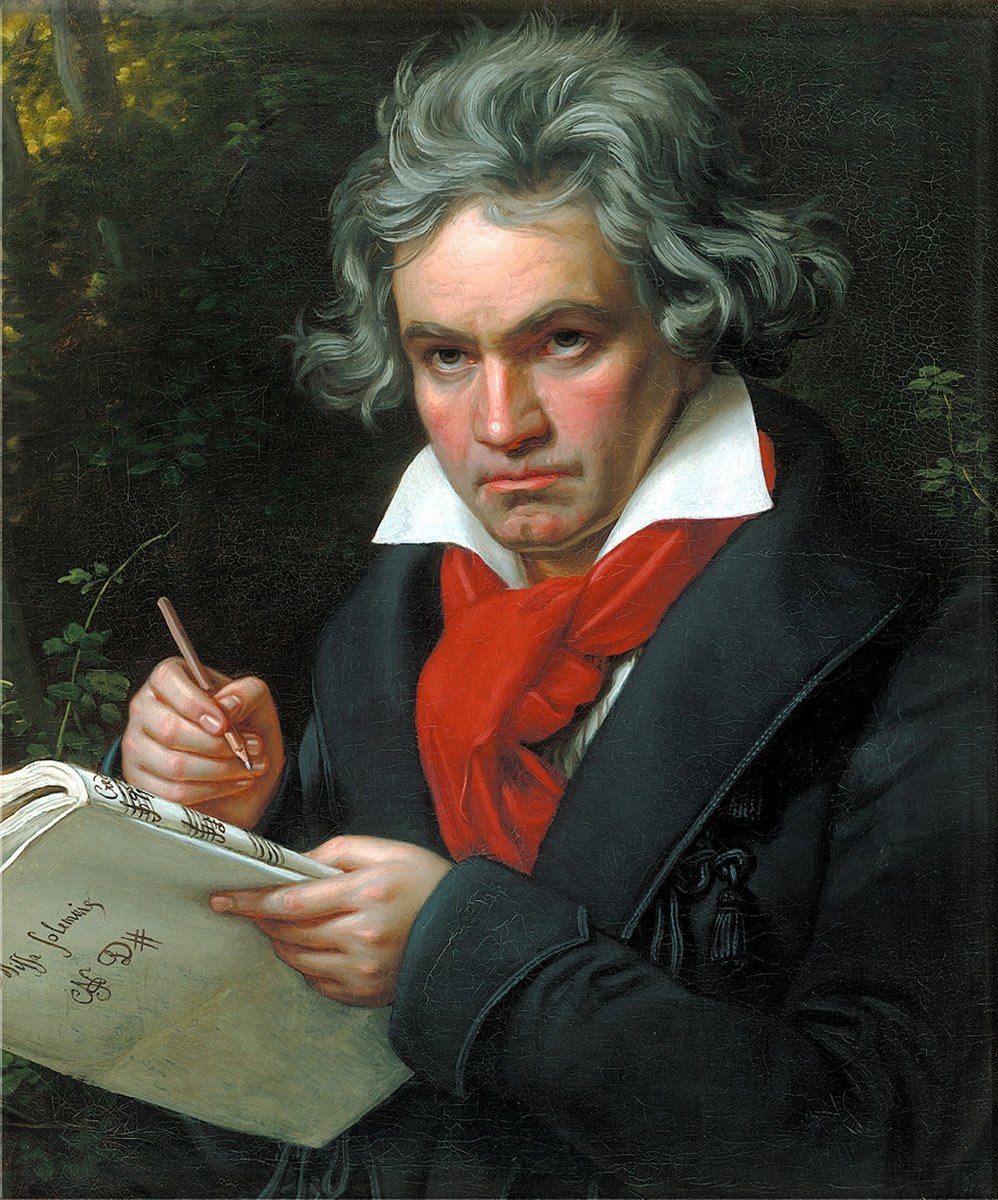
Portrait of Beethoven composing the Missa Solemnis, by Joseph Karl Stieler, 1820 Joseph Karl Stieler, Beethoven, 1820, public domain -
P.S. By Napoleon here I meant Beethoven, you see how that happened, my kingdom for an edit button.
- Previously: Napoleon
- Next: Mary Anning
- Full list
Text and images copyright © 2020-2023 Laurie Voss
except where indicated
except where indicated