Charlotte Bronte
-
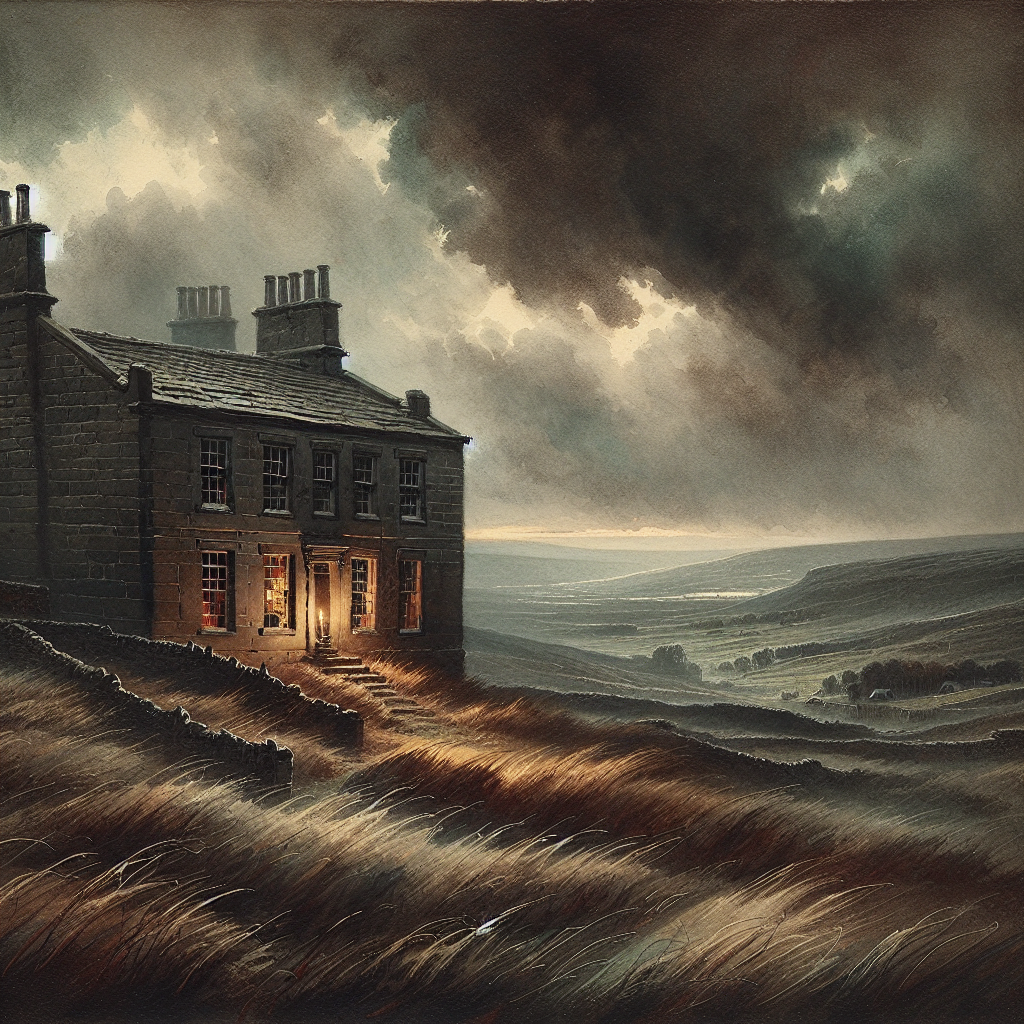
Today's #EuropeanBios entry is #75 and it's Charlotte Brontë, author of Jane Eyre and sister to the authors of Wuthering Heights and Agnes Grey respectively. Jane Eyre is known as a work of fiction but I'm here to say it was all real. The Brontë family were a LOT, so buckle up.
-
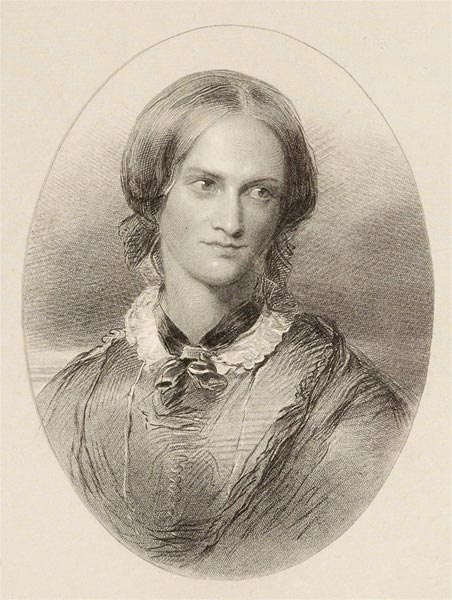
Portrait engraving of Charlotte Brontë, author of Jane Eyre Portrait of Charlotte Brontë, public domain -
Let's start with her father, Patrick Brontë, or more accurately Patrick Brunty. Born one of 10 children to a poor family in Ireland, he had a rags-to-comfortably-well-off story, getting a scholarship at Cambridge and becoming a clergyman in the town of Haworth in Yorkshire.
-
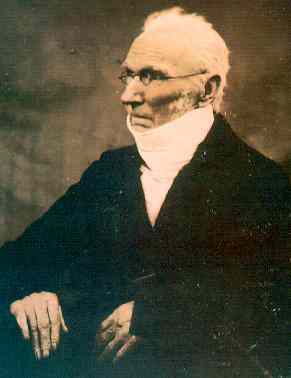
Patrick Brontë, Charlotte's father, an Irish-born clergyman who educated his remarkable children in the Yorkshire town of Haworth Photograph of Patrick Brontë, public domain -
The switch in spelling from the pedestrian Brunty to Brontë was a deliberate re-branding on Patrick's part, swapping anti-Irish prejudice for association with the famous Lord Nelson, a war hero who had been named Duke of Bronte, a town in Sicily, as a reward for his efforts.
-
So here's a fun fact: the Brontë children and their father are the only people to have ever had that last name. There were no Brontës before them, and none of them had any children, so there are no Brontës now. The name was born, made famous, and ended in a single generation.
-
Patrick's rise from poverty to social respectability in an age of extreme class consciousness left him deeply insecure and socially awkward, a quality he would pass on to all of his children. Patrick's other, equally problematic legacy to his children was an extremely poor diet.
-
Growing up in rural Ireland meat had been hard to come by, and Patrick regarded eating meat frequently as lavish and unnecessary. As a result the family had a bland, porridge-heavy, almost protein-free diet which left all of his children notably small, malnourished and sickly.
-
In addition to being small and sickly, the Brontës were all somewhat unattractive. Literally everyone who describes them mentions that they would not be called handsome and had "rotten" teeth. In fact Charlotte makes a point of describing herself in a letter as "ugly".
-
Patrick married Maria Branwell, the daughter of an extremely well-off local merchant. She and her siblings inherited considerable sums of money from her parents and invested them wisely, a fact crucial to the course of the lives of Maria's six children.
-
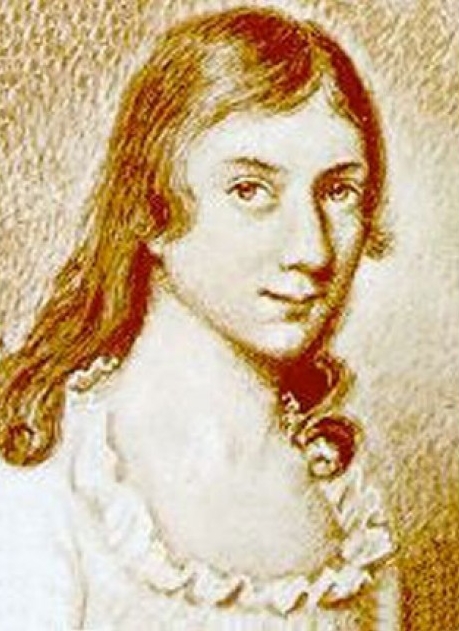
Portrait of Maria Branwell Brontë, Charlotte's mother, who died of cancer when Charlotte was a small child Portrait of Maria Branwell, public domain -
The six Brontë siblings, in order of age, were Maria, Elizabeth, Charlotte, Branwell (the only boy, confusingly his first name was his mother's maiden name), Emily and Anne. Less than a year after giving birth to Anne, Maria was dead of cancer, leaving Patrick a single father.
-
Maternal mortality was frequent and remarrying common in the 1800s, and Patrick tried to resolve his predicament by sending a letter proposing marriage to a woman he had cruelly dumped 15 years earlier. She was delighted to be able to reject him as cruelly as he had her.
-
This level of emotional intelligence would appear to be a family trait, as the entire clan were endlessly making bizarre emotional inferences, missing cues, and making absurd assumptions. It's like the entire family was on the autism spectrum, but wrote deeply emotional novels.
-
Patrick tried (quite unusually for the 1820s) to properly educate all of his daughters, sending them to a boarding school for the children of clergy at Cowan Bridge. Converted from a row of cottages, the school was grim and austere and would end in disaster for the whole family.
-
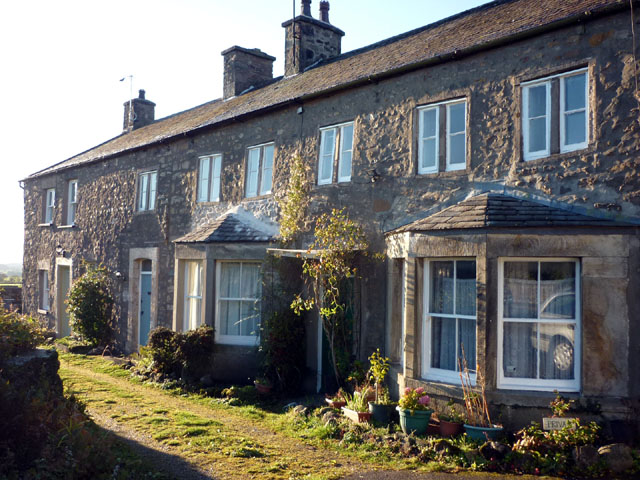
Cowan Bridge School, the grim boarding school for clergy daughters where the young Brontë sisters were sent, and which inspired the hellish Lowood School in Jane Eyre Cowan Bridge via Wikimedia Commons (CC BY-SA) -
How grim? The headmaster at Cowan Bridge wrote a book called Child's First Tales featuring such uplifting stories as "Dead boy", about a kid who skips prayer on Sunday to go ice skating and immediately falls into the pond and dies as god's retribution. This was for 8-year-olds.
-
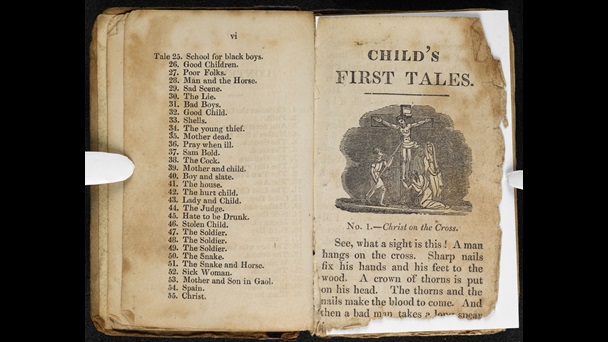
Child's First Tales, the cheerful book of religious cautionary tales written by the headmaster of Cowan Bridge School for the children in his care Child's First Tales, public domain -
More seriously, the conditions at the school were cold and damp, the food rotten and unsanitary. An outbreak of disease killed several children, including the two oldest Brontë sisters, Maria and Elizabeth, aged just 11 and 10 at the time, just 4 years after their mother's death.
-
The surviving children, already traumatized by watching their mother's painful death, were now even more so by the death of Maria, who had become a substitute mother to all of them. She and Elizabeth had probably died of tuberculosis, which it appears all the children carried.
-
In response to this trauma the family retreated in on itself. Unable to secure a wife, Patrick instead invited his wife's sister Elizabeth to come and live with them and take care of the children. This she did, dutifully, but never with the warmth and affection of Maria.
-
The girls were homeschooled mostly by Elizabeth, and Patrick tutored Branwell, the only boy, of whom he was immensely proud. A combination of awkwardness and being physically miles away from anyone, and having no transport other than walking, meant they seldom socialized.
-
Branwell was deeply loved and admired by all of his family and they all had great expectations for him, and that was the problem. Home-schooled with people who consistently assured him he was brilliant, he expected the world to fall at his feet, and became arrogant and entitled.
-
During this period of isolation the children invented an enormous, complex, shared literary universe. Branwell had been gifted a set of 12 toy wooden soldiers and the children each adopted one, gave them a back story, and began to write books for and about the characters.
-
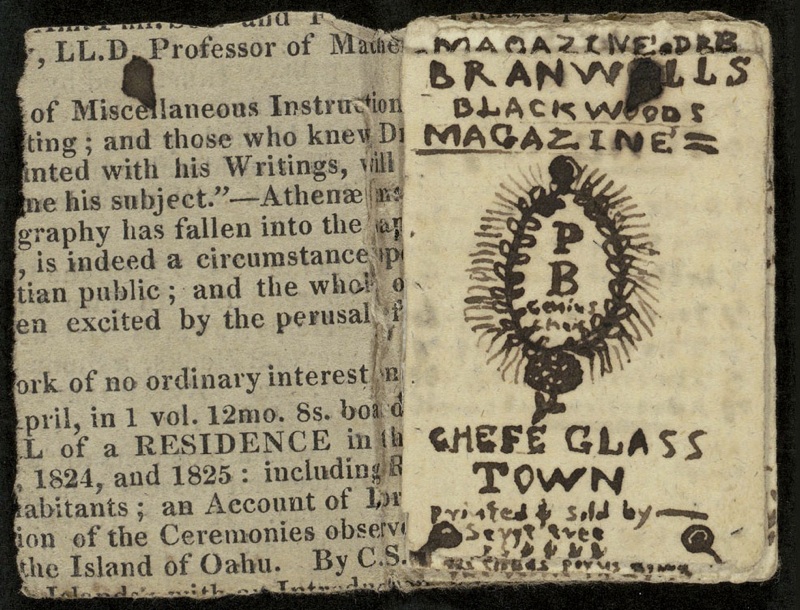
One of the Brontë children's tiny handmade magazines, in this case 'Branwell's Blackwood's Magazine', sized to be read by toy soldiers Brontë juvenilia via Wikimedia Commons (CC BY-SA) -
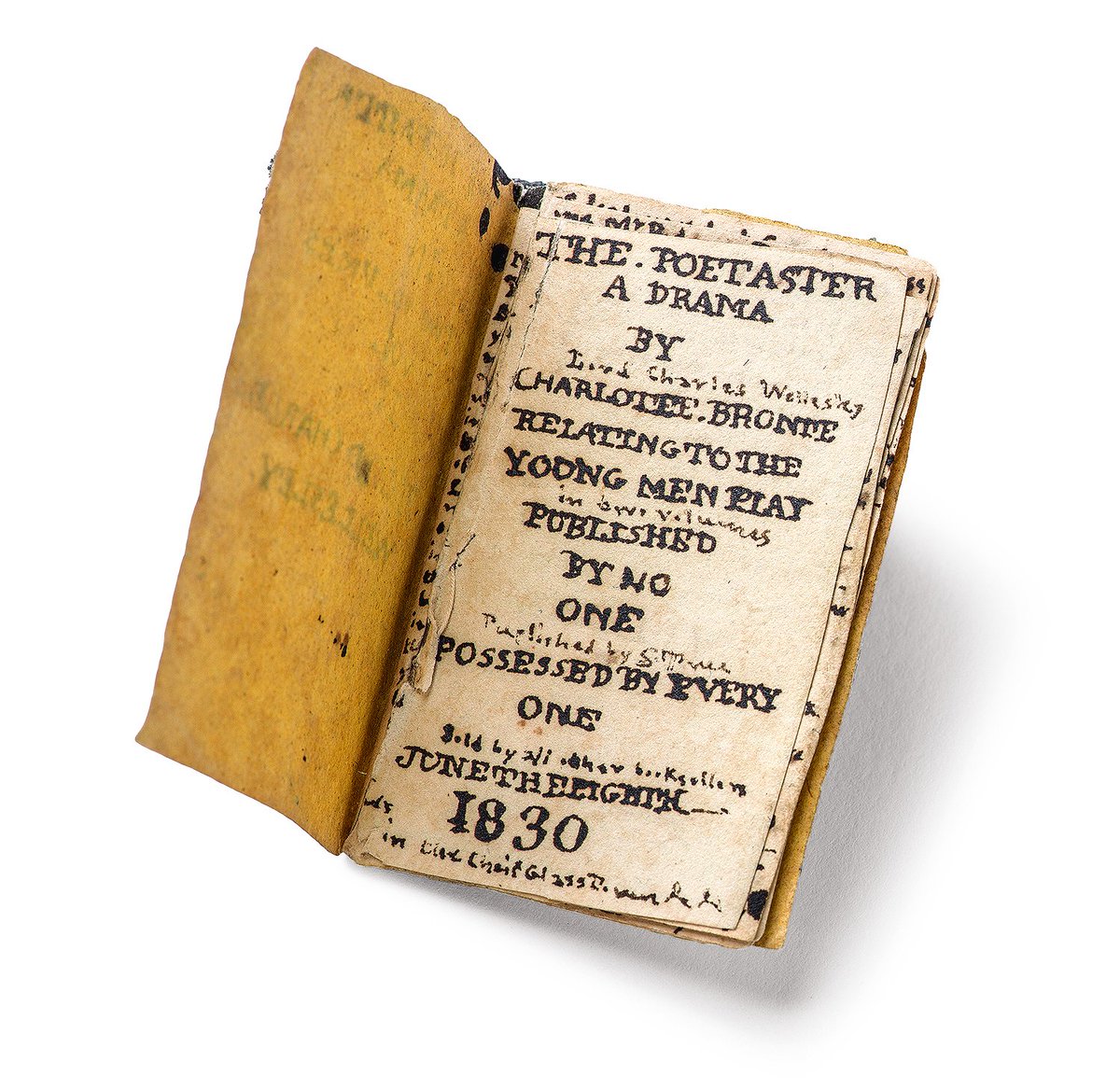
The Poetaster, a tiny hand-stitched book by Charlotte Brontë, 1830, one of the many miniature stories the Brontë children wrote for their toy soldiers Charlotte Brontë juvenilia, public domain -
When I say "for" the soldiers: not only were the books about the invented soldiers' personalities, they were also sized to be read *by* the soldiers. Using miniscule handwriting, the kids collaboratively published whole novels in serial "magazines", complete with advertisements.
-
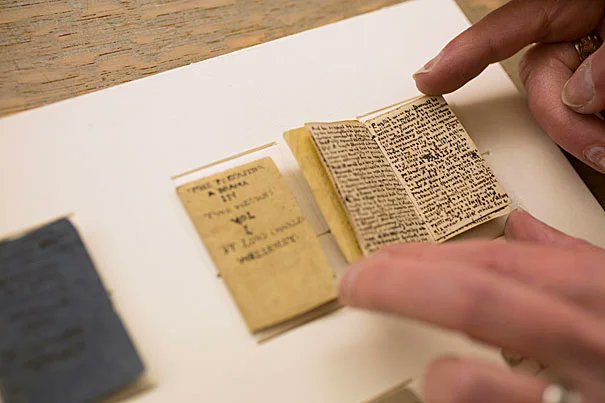
The Brontë children's minuscule handwriting in one of their tiny collaborative books, sized to be read by toy soldiers Brontë juvenilia via Wikimedia Commons (CC BY-SA) -
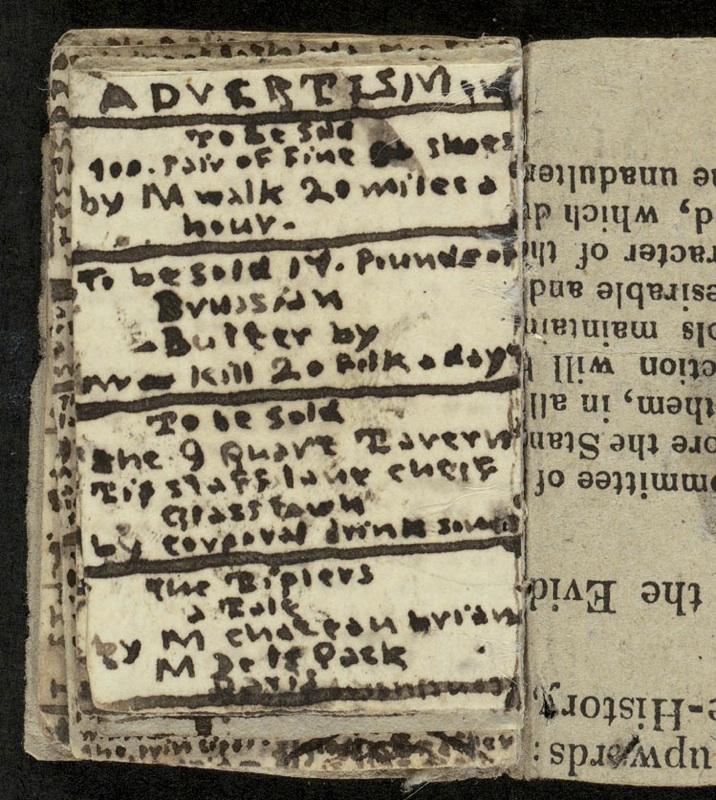
A page of advertisements from one of the Brontë children's miniature magazines, showing the extraordinary detail of their shared literary universe Brontë juvenilia via Wikimedia Commons (CC BY-SA) -
The depth and complexity of these books, known misleadingly as "Juvenilia", can't be overstated. The stories went on for years, a combination of literary competition and collaboration that sparked amazing output, longer than the actual published works of all the Brontës.
-
The books were set in a loosely-defined parallel universe and featured the Duke of Wellington as a sort of Superman character, all powerful. Charlotte's favorite character was called the Duke of Zamorna, in the fictional kingdom of Angria. They experimented with writing styles.
-
This amounted to a self-education in writing, collectively engaged in by all the Brontë children, heavily influenced by the kinds of books they were reading at the time, such as the popular Romantic novels of the 1800s, including our friend Mary Shelley:
-
But literary success was still far in the future. In the meantime, the teenaged sisters were faced with dwindling family funds. They needed to pay their own way, and their employment options as women in the 1800s were slim: you could be a teacher, or maybe a governess.
-
Charlotte dutifully went to a new school at Roe Head, much closer to home and notably less fatal to the children who attended. The goal was to educate her sufficiently that she could become a governess, which she did, and so at various times did Emily and Anne.
-
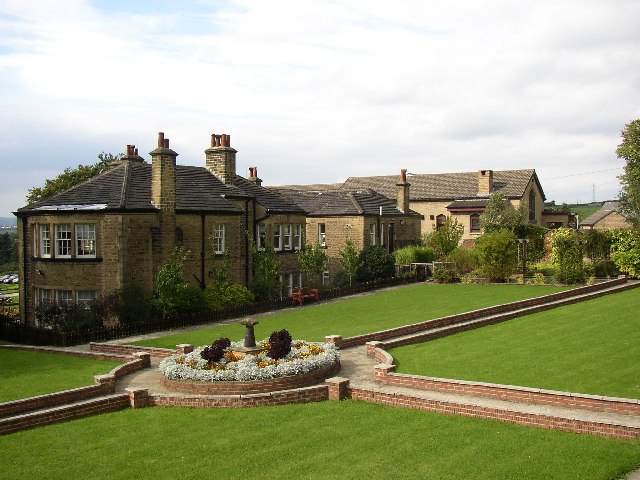
Roe Head School, where Charlotte Brontë received a proper education and trained to become a governess Roe Head School via Wikimedia Commons (CC BY-SA) -
Branwell meanwhile had decided to become an artist. He sent a series of incredibly presumptuous letters to various institutes of art, not so much asking to be admitted as assuming he would be and asking when to show up. This did not work, and he was rubbish at art anyway.
-
Branwell Brontë's most famous painting, and that's really stretching things, is a portrait he made of his three sisters. It's terrible. Originally he painted himself into the group as well, but than ham-handedly erased it. But the family continued to act like he had real talent.
-
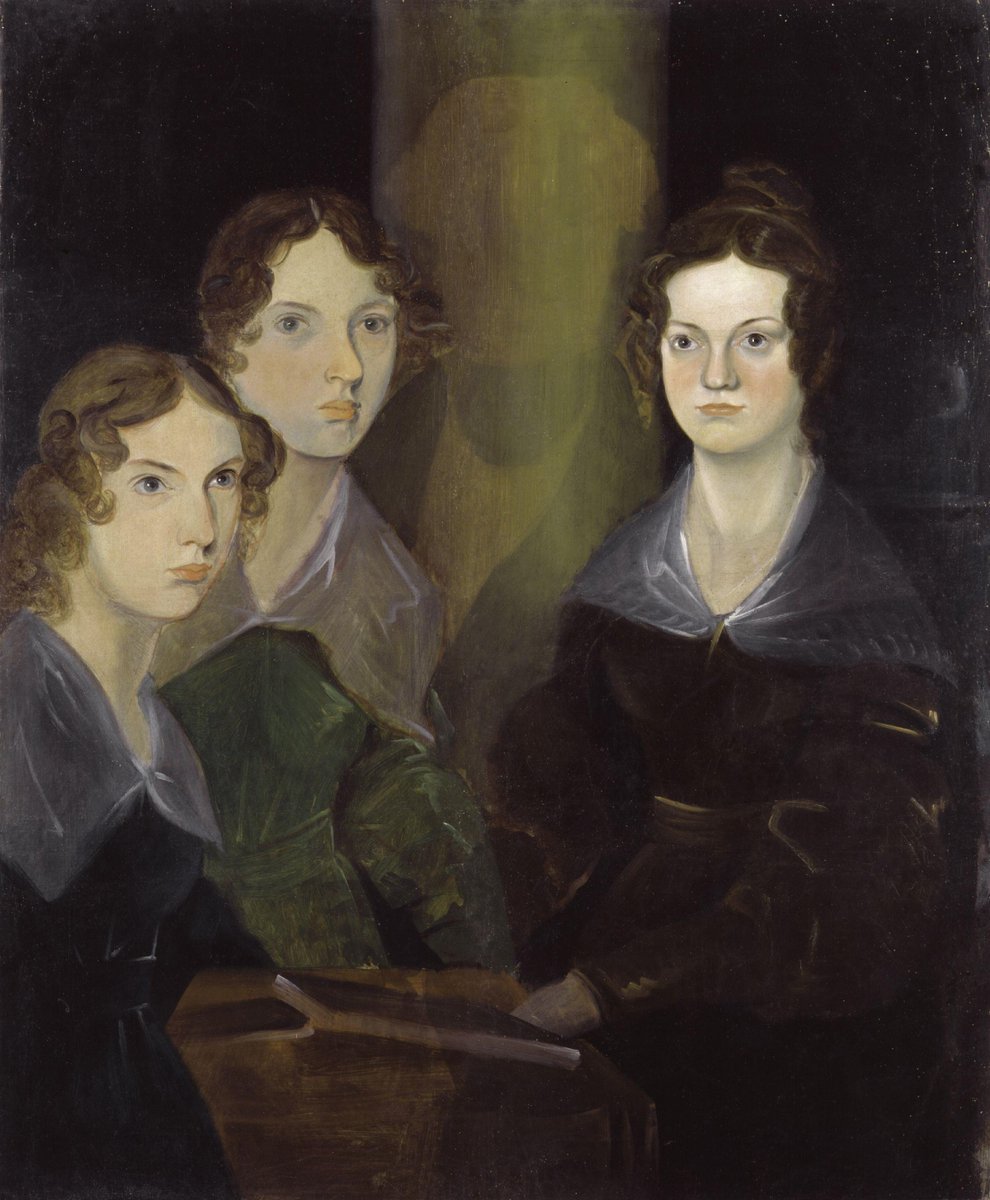
The Brontë Sisters, painted by their brother Branwell Brontë, c. 1834. From left: Anne, Emily, and Charlotte. Branwell originally painted himself in the center but clumsily erased himself from the canvas Branwell Brontë, The Brontë Sisters, c. 1834, public domain -
Charlotte did exceptionally well at the Roe Head school, where she was acknowledged as brilliant and recognized as weird, but celebrated for it rather than shunned. Their father arranged for Charlotte and Emily to continue their education at a school in Brussels.
-
The school had been started by Claire Zoë Parent. In 1836 she married Constantin Héger, who became a teacher at the school. The school building was also the Héger's home; the staff room was their living room, with their six children constantly running around.
-
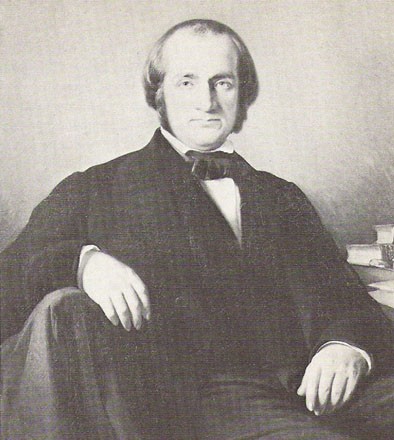
Constantin Héger, the teacher at the Brussels school Charlotte attended, for whom she developed an obsessive unrequited attachment that inspired several of her novels Portrait of Constantin Héger, public domain -
Charlotte became obsessed with Constantin. Absolutely, over the top, wildly obsessed. He was an erudite, kindly, charming man, with an intensely friendly manner, and Charlotte wildly misinterpreted what was apparently a parental affection for romantic interest.
-
Emily did not enjoy Brussels and returned to Yorkshire, but Charlotte returned to the school, taking on a dual role, partly still as student but partly as English teacher, with Constantin one of her students. Their relationship deepened until Claire advised him to end it.
-
Constantin, whom it does not appear was trying to have an affair, took his wife's advice and tried his best to limit contact with Charlotte. He was however a soft-hearted man and could not fully cut her off, and Charlotte clung to their few remaining contacts desperately.
-
After 2 years at the school Charlotte returned to Yorkshire to look after Patrick, who was going blind from cataracts. From home she began an increasingly desperate, pathetic set of letters to Constantin. He eventually told her she could write him no more than twice per year.
-
Emily and Anne had both loathed being governesses, and were now also back at home, as was Branwell, who had lost a series of jobs due to being drunk and dismissed from his final job for having an affair with his employer's wife, for whom he spent the rest of his life pining.
-
This woman, Lydia Robinson, after being discovered with Branwell by the gardener, confessed to her husband, was forgiven, and went on with her life. Branwell, a Brontë to the bone, absolutely refused to move on and convinced himself she was still in love despite all evidence.
-
The remainder of Branwell's life was not to be that long, however, because in addition to alcoholism he had become addicted to opium. This had started as treatment from the 1800s cure-all, laudanum — the same drug prescribed to our previous subject Mary Wollstonecraft in her final illness — but progressed into recreational use and then dependence.
-
The three girls, caring for an ailing father (though surgery corrected Patrick's cataracts, he remained frail) and with Branwell in a spiral of addiction that would end with his death, and sick of governessing, determined to support the family by becoming published authors.
-
They started what Charlotte's biographer describes as a "book factory": working from the dining room of their home, all three wrote poetry and prose during the day, then read it out to each other in the evenings, accepting critiques and suggestions. It was very productive.
-
As they had with the Juvenilia, their work was to some degree a collaboration with each other. They had their own subjects and writing style, but these three individually talented writers were constantly workshopping their texts with each other, with amazing results.
-
Their first real foray into publishing was a volume of poems by all three, writing under male pen names that preserved their initials: Charlotte Brontë became Currer Bell, Emily and Anne became Ellis and Acton Bell. They financed the publishing themselves; it sold just 2 copies.
-
It would appear at this point that the entire family were supporting themselves on money they had inherited from their mother and aunt, who in turn had inherited it from their wealthy father. They had stock in a railroad and the interest was keeping them afloat, barely.
-
Undaunted, or possibly desperate, they learned from the experience of interacting with publishers how to best present themselves, and began to shop around a three-volume book consisting of three stories: Charlotte's The Professor, Emily's Wuthering Heights and Anne's Agnes Grey.
-
This initial presentation of all 3 books was still under their male pseudonyms. Nobody wanted The Professor, but eventually persistence got Wuthering Heights and Agnes Grey accepted for publication as a single book with two stories (a common pattern at the time).
-
But Wuthering Heights and Agnes Grey got stalled in production, and meanwhile Charlotte had written Jane Eyre, drawing heavily on her experiences at school and channeling the anger of injustice she always felt so keenly. It was accepted and became an immediate best-seller.
-
(Extreme levels of sensitivity to injustice, incidentally, is another hallmark of the autistic mind, and I should know. All the Brontës set off every flag for autism you can think of.)
-
With one of the "Bell brothers" (as the sisters had become known) suddenly a celebrity, the publisher with the rights to Wuthering Heights and Agnes Grey got back into gear and released those two as well. Suddenly all three sisters were published, and money was rolling in.
-
It's at this point I want to take a break and point out that the books by all three women were only barely fictional. Every person and every event in every book seems to be drawn from their personal experiences and only lightly modified. Some examples:
-
Just in Jane Eyre: * The school is Charlotte's grim school experiences at Cowan Bridge * Helen Burns is Maria, their oldest sister * The "Child's Guide" is a parody of Child's First Tales, mentioned earlier * Mary Ann Wilson is another childhood friend of Charlotte's
-
* The character of Bertha is based on a story Charlotte had been told about a woman who had gone mad and been locked in a padded attic room, until the room caught fire and killed her. * The scene where the bed curtains are set on fire is something Branwell did while high
-
In Agnes Grey * The whole book is Anne's horrible governess job * Including the scene where the smashes a nest of baby birds with a rock to put them out of their misery, this was apparently a thing she really did
-
In Wuthering Heights * Heathcliff, with his mad schemes for revenge, is based on Jack Sharpe, Emily's boss when she was a governess, who was similarly obsessed with revenge * The entire novel is set in a thinly disguised version of their home district
-
And finally The Professor and Villette are both about Charlotte, Constantin and his wife, as told from Charlotte's perspective. Constantin becomes a seducer, his wife an evil demon. Constantin and Claire also appear again in Jane Eyre as her lover and his crazy wife.
-
Every person in every book the Brontës wrote seems to have a real-life equivalent, and every event a real world analogue. All authors obviously draw on their own life experiences but the connections here seem particularly direct and literal.
-
Meanwhile Branwell's spiral was finally over. His body weakened by drug addiction and alcoholism, the tuberculosis that all the Brontë children seemed to carry was triggered and he died aged 31 in 1848. But this was just the start of another cycle of Brontë tragedy.
-
At Branwell's funeral, Emily caught a cold. The infection triggered her own latent tuberculosis infection, which grew steadily worse and killed her just two months later, aged 30. The grief weakened Anne who herself died of tuberculosis six months after that, aged 29.
-
It's all extremely dramatic! There's unrequited love to spare, blasted moors, deep isolation, plague, suffering, death after death. The Brontë sisters are clearly incredibly talented but they were also to some degree just narrating their absolutely over-the-top personal lives.
-
Thus Charlotte, having spent her whole life deeply enmeshed in the lives of her siblings, found herself the only survivor just as years of mutual support and collaboration were finally bearing fruit. She emerged from her pseudonym and became famous as the author of Jane Eyre.
-
She outlived her siblings, but by only 7 years. In that time she agreed to marry Arthur Bell Nicholls, who had been hired as her father's assistant. He was head over heels in love with her and she was at best flattered, but agreed to marry anyway, and fell in love with him later.
-
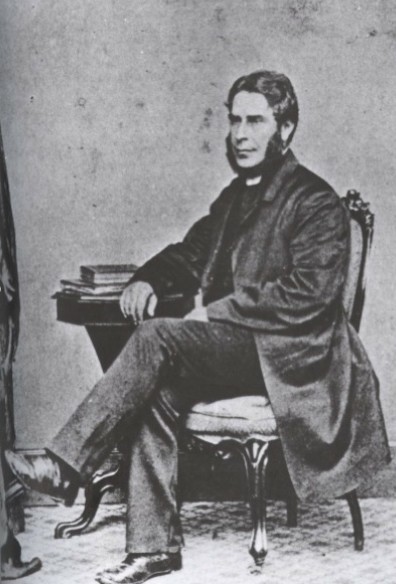
Arthur Bell Nicholls, the curate who was deeply in love with Charlotte and whom she eventually agreed to marry, coming to love him as well Photograph of Arthur Bell Nicholls, public domain -
Unlike her sisters, Charlotte's death was probably not tuberculosis, but hyperemesis gravidarum, an extreme form of morning sickness. Her body violently rejected a pregnancy, leaving her unable to eat even a little. There was no treatment known, and eventually it killed her.
-
In terms of legacy you can't beat the Brontës. They wrote only a handful of books between them but every one is famous, pored over and endlessly studied and re-created as movies and plays, over and over and over. The Brontë name died with them, but will be known forever.
-
But what's going to stick with me was not their books but instead the Juvenilia, an amazing pocket universe these close-knit siblings created for themselves in response to heartbreak and trauma and sustained for years, accidentally creating not one but three world-class writers.
-
(And Branwell)
- Previously: Ada Lovelace
- Next: Karl Marx
- Full list
Text and images copyright © 2020-2023 Laurie Voss
except where indicated
except where indicated