Copernicus
-
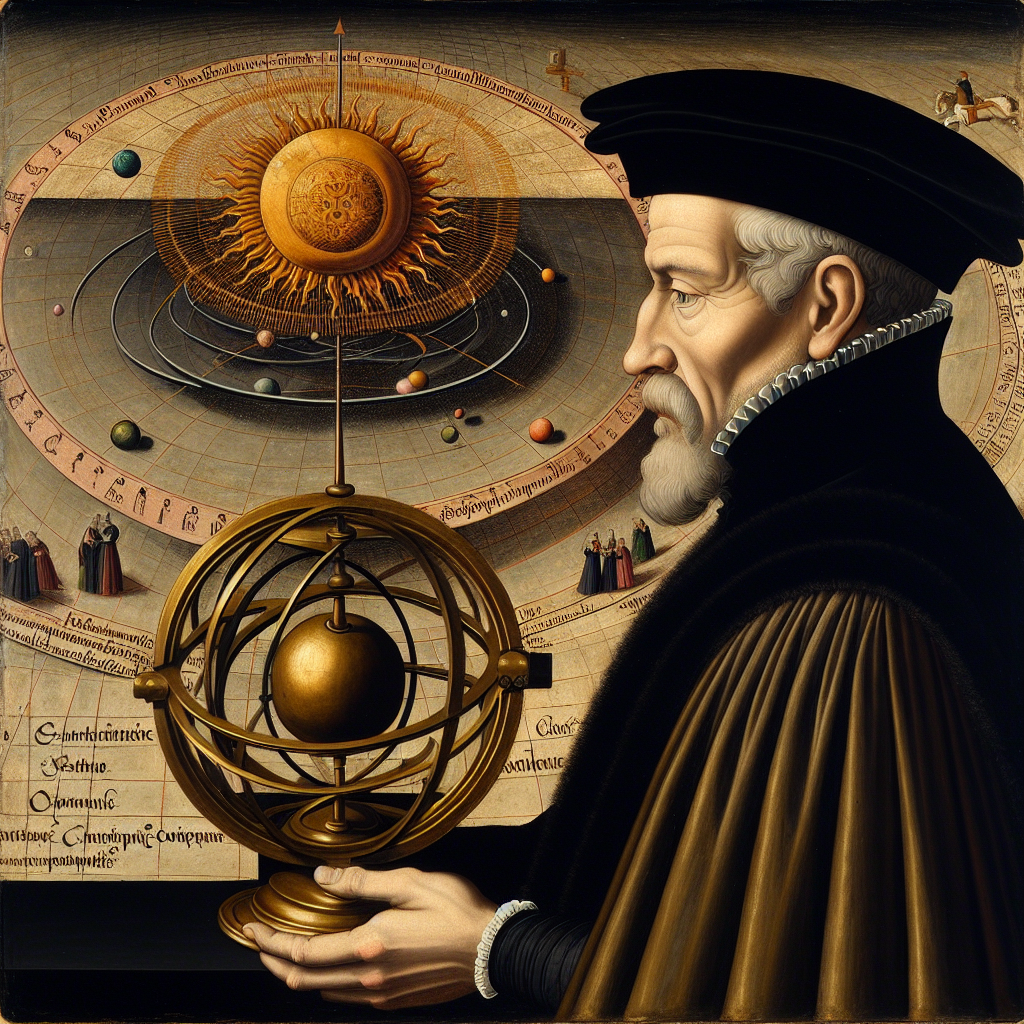
Entry #40 in project #EuropeanBios is Nicolaus Copernicus, a brilliant mathematician and observer of the stars who put forth the heliocentric view of the universe while also being kind of a privileged jerk most of the time. Luckily, there is some tangential gay stuff too.
-
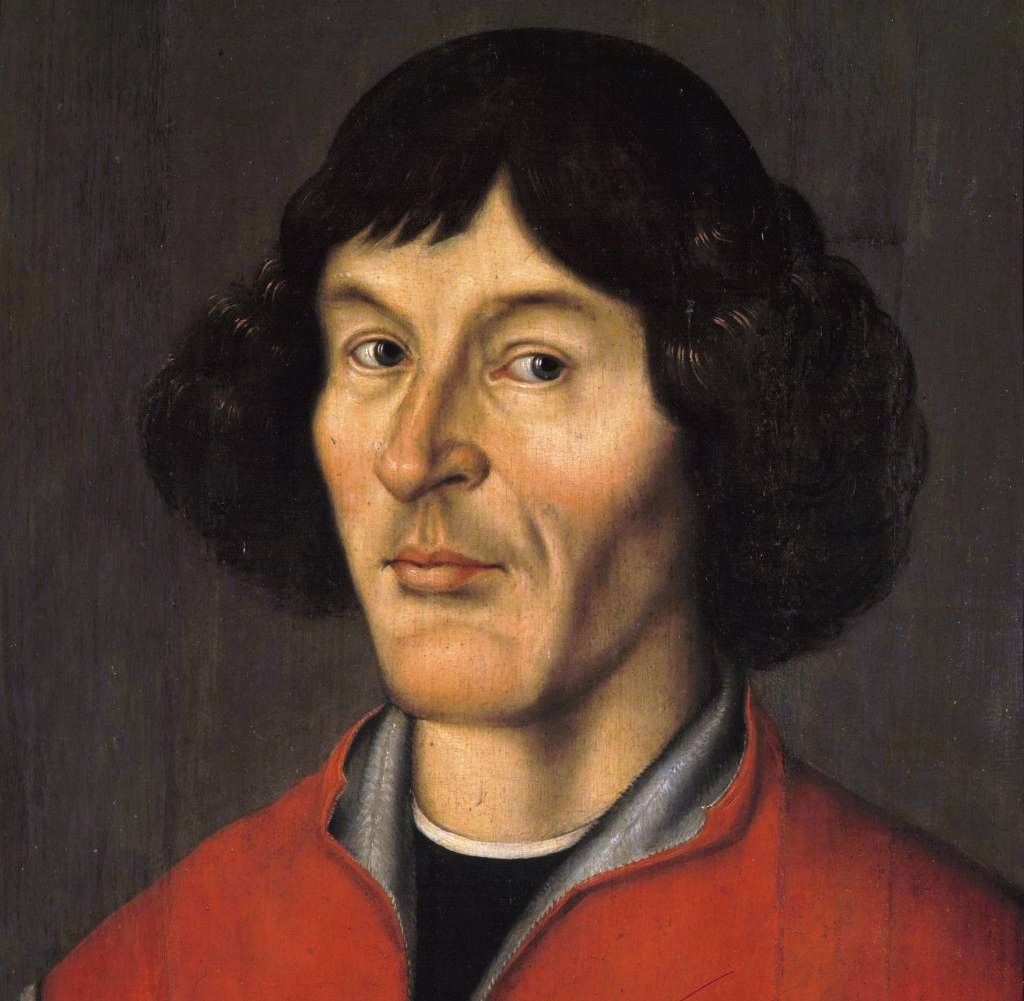
Portrait of Nicolaus Copernicus, artist unknown, c.1580 public domain -
Copernicus was born in 1473 in Torun, a town smack bang in the middle of modern Poland. Like most people of the 1400s and 1500s who had enough time and education to do novel thinking, he was born rich and stayed rich through family connections most of his life.
-
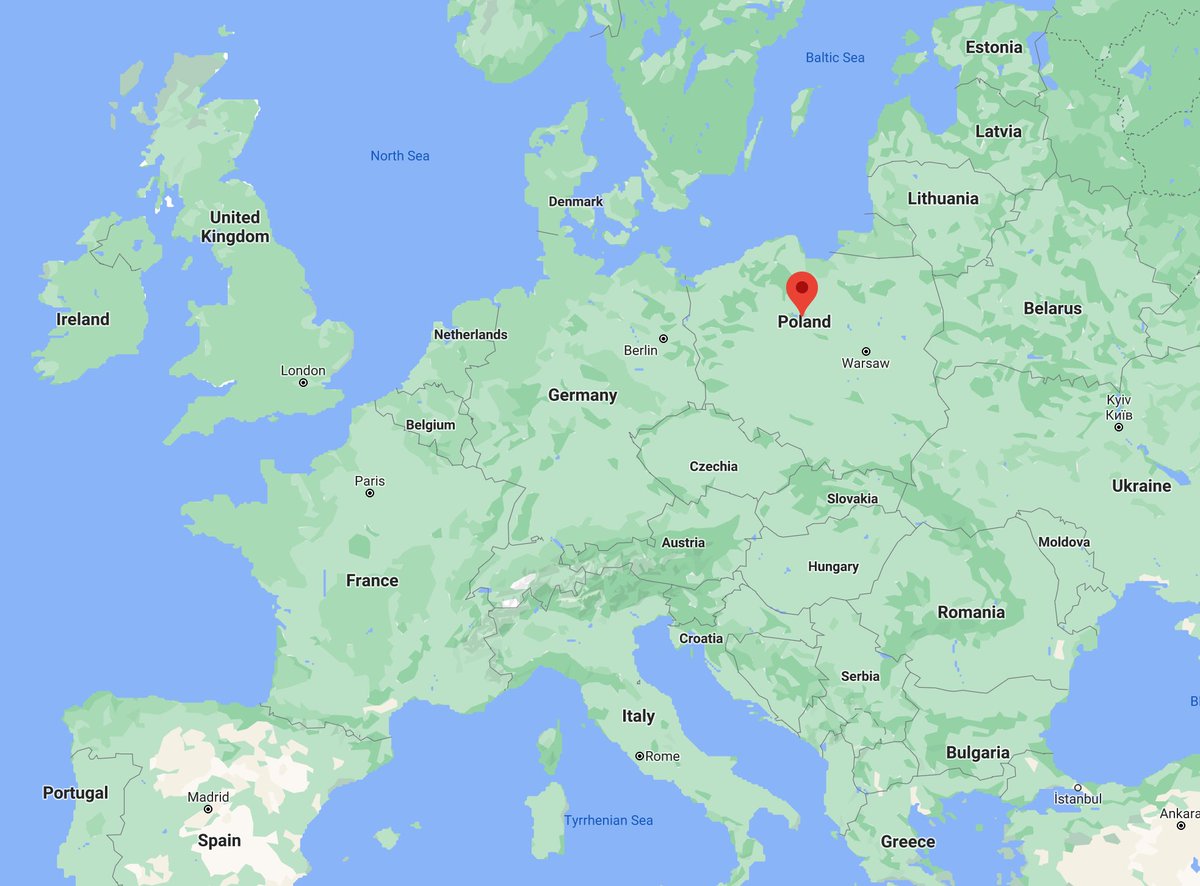
Map showing Torun, Poland, birthplace of Copernicus Google Maps data © Google -
"Copernicus" was a family name that, like "Da Vinci", started out as the name of the town his family was from, Koperniki, in what is now southern Poland. But unlike Da Vinci, Nicolaus' family had left long before he was born, so it was a name, no longer just a description.
-
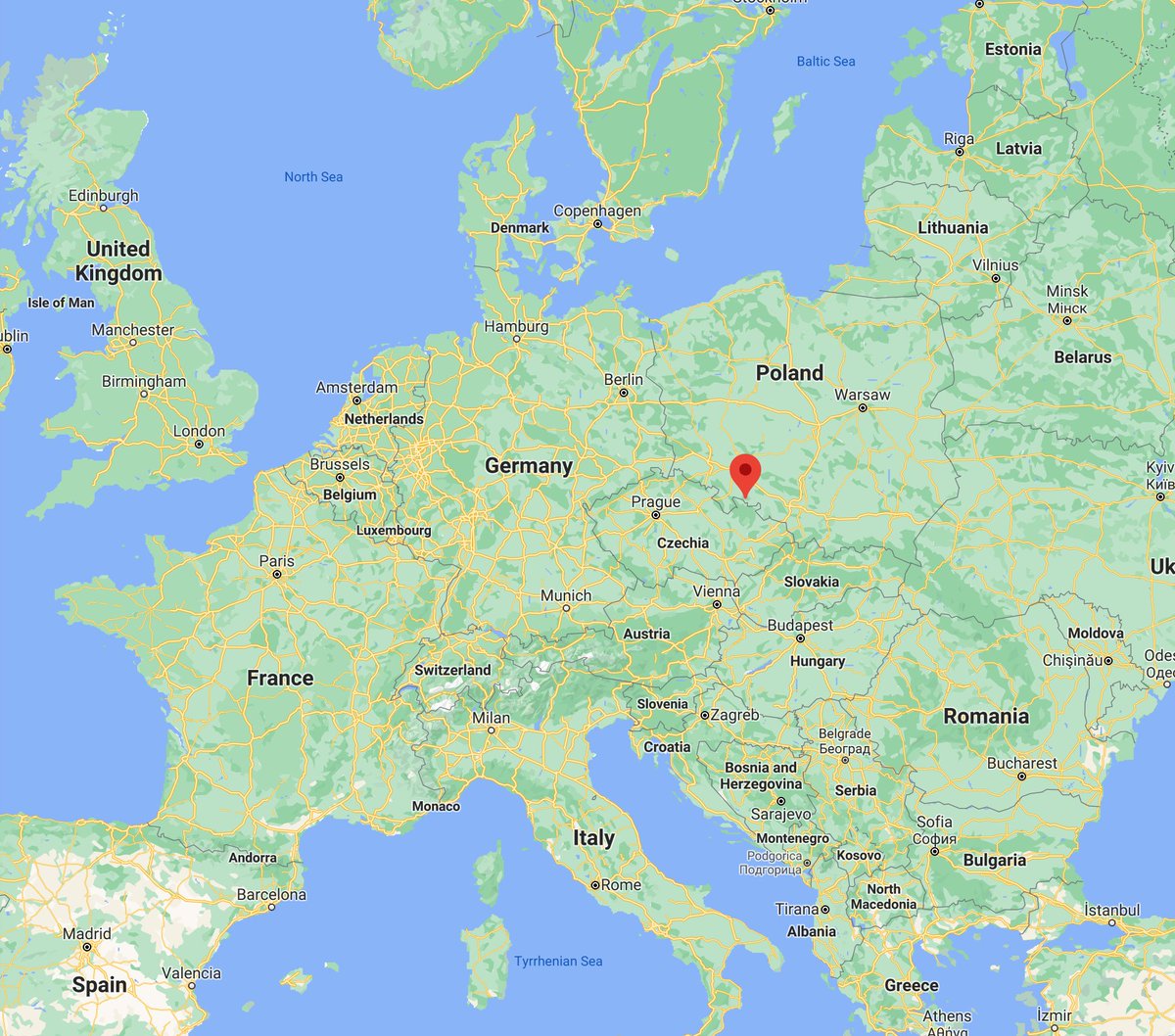
Map showing Koperniki, Poland, origin of the Copernicus family name Google Maps data © Google -
Through the influence of his father, Copernicus got a position as a sort of financial administrator of the local area. Local government at the time was a combination of religious and secular authority, so he was technically a church official but never really a priest.
-
His work was businesslike but, to modern ears, quite deeply unpleasant. All the local people were essentially landless serfs, and his job was to fund the church by extracting money from them as fast as possible without actually killing them. They did not have fun lives.
-
While heartlessly taxing peasants Nicolaus found time to pursue his true passion of mathematics and in particular watching the stars. He was a big fan of Ptolemy, an ancient Egyptian astronomer who established the geocentric view that the universe revolved around the earth.
-
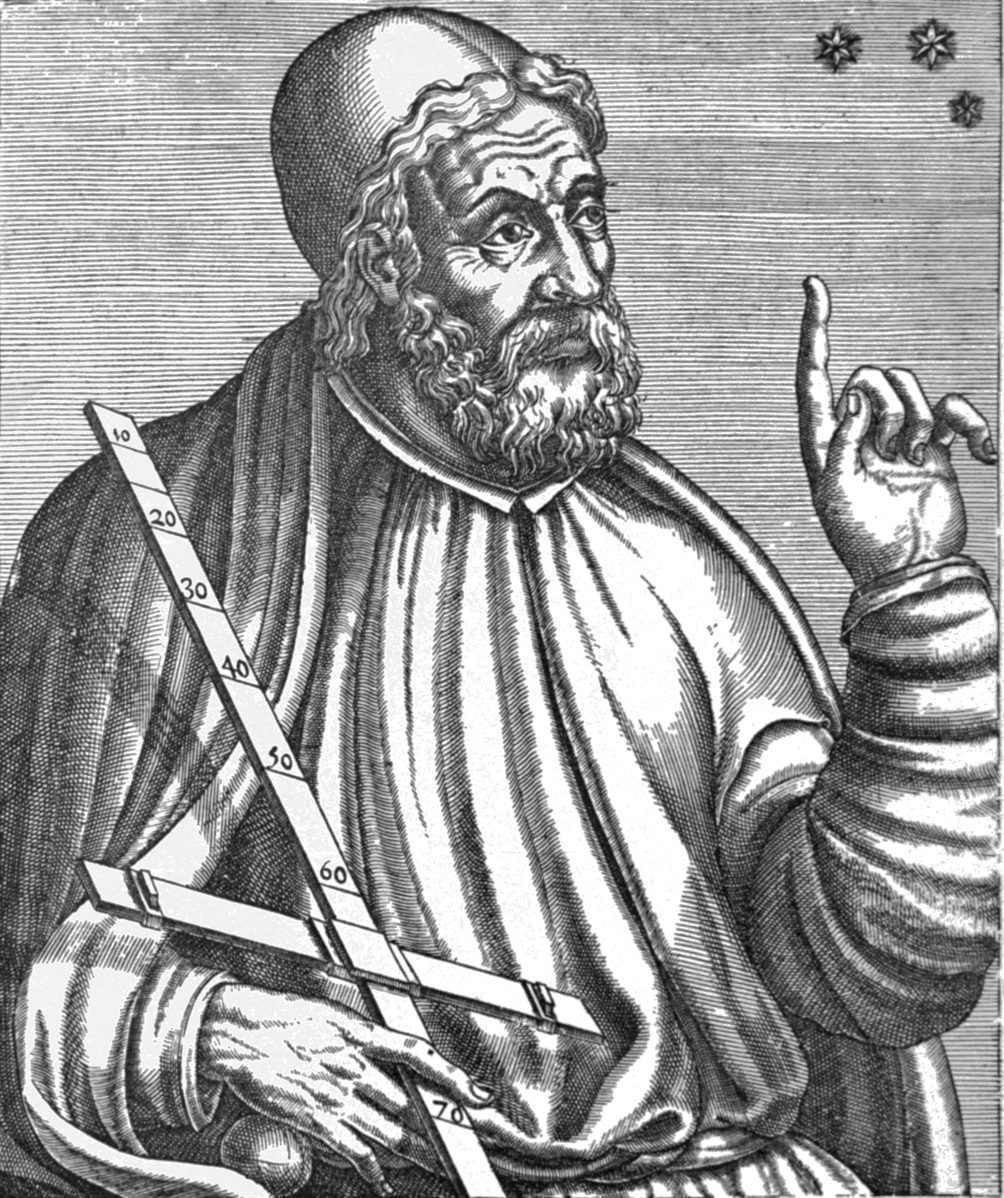
Portrait of Claudius Ptolemy holding an astronomical instrument, 16th century engraving public domain -
(Ptolemy, it should be noted, was Egyptian in the same way that Cleopatra was Egyptian, which is to say: not. He was Greek, installed as part of a parasitic ruling class over real Egyptians by our world-conquering homosexual friend Alexander the Great TKTKTK)
-
Ptolemy's system for predicting the positions of the stars and the planets was fearsomely complicated, involving weird counter rotations and loop-de-loop situations to account for planets appearing to move backwards sometimes. But it was mostly correct, most of the time.
-
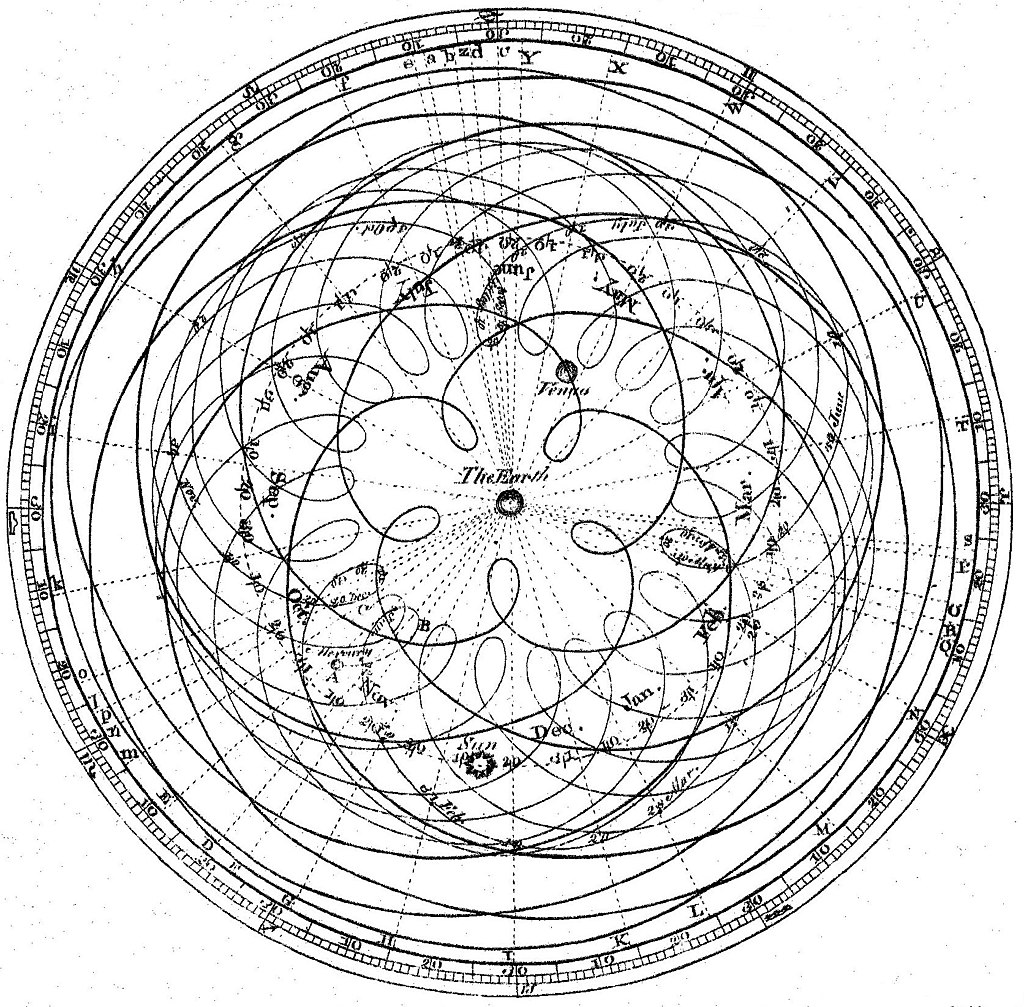
Ptolemaic geocentric model showing the complex epicycles of planetary motion public domain -
Predicting movements of stars and planets was not just an academic pursuit in Copernicus' day. Astrology was considered a key science at the time, and vital to determining when you should and shouldn't do things. People used Ptolemy's system every day, including in government.
-
Copernicus admired enormously the precision and accuracy of Ptolemy's observations of the stars, which even though made 1500 years before Copernicus were more reliable than many made more recently. However, he didn't like the Ptolemaic system, which was terribly complex.
-
Ptolemy's system was also not *always* right. It got most of the big things right most of the time, but it was wrong enough often enough that somebody with a mathematician's mind like Copernicus could sense that there was some kind of inaccurate approximation going on.
-
Copernicus came up with an idea of "heavenly spheres", something Aristotle had also come up with. But Aristotle had placed the earth at the center of all the spheres, like Ptolemy. Copernicus instead made a great leap, and placed the sun at the center. (This is Aristotle's)
-
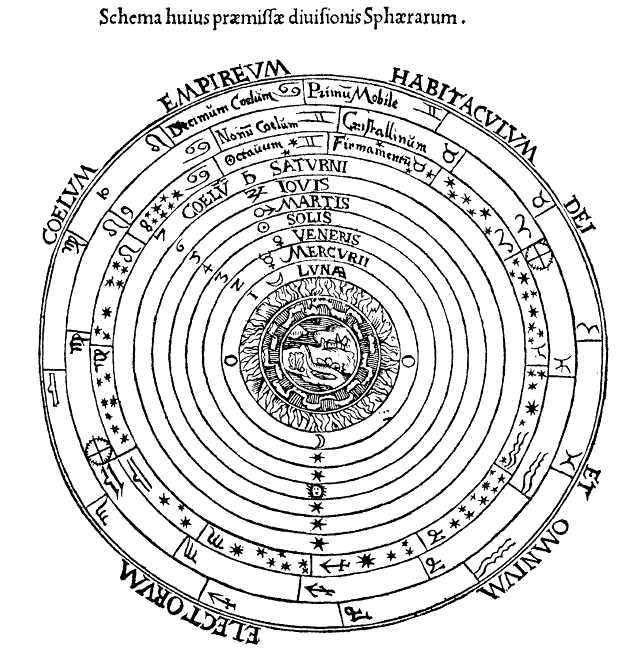
Aristotle's geocentric model of heavenly spheres, from Peter Apian's Cosmographicus Liber, 1524 public domain -
Putting the sun at the center of a series of spheres suddenly makes all the math a lot simpler. The spheres are all rotating at different speeds, backwards movement is because they are on the other side of the sun from the earth. It has the benefit of also being true.
-
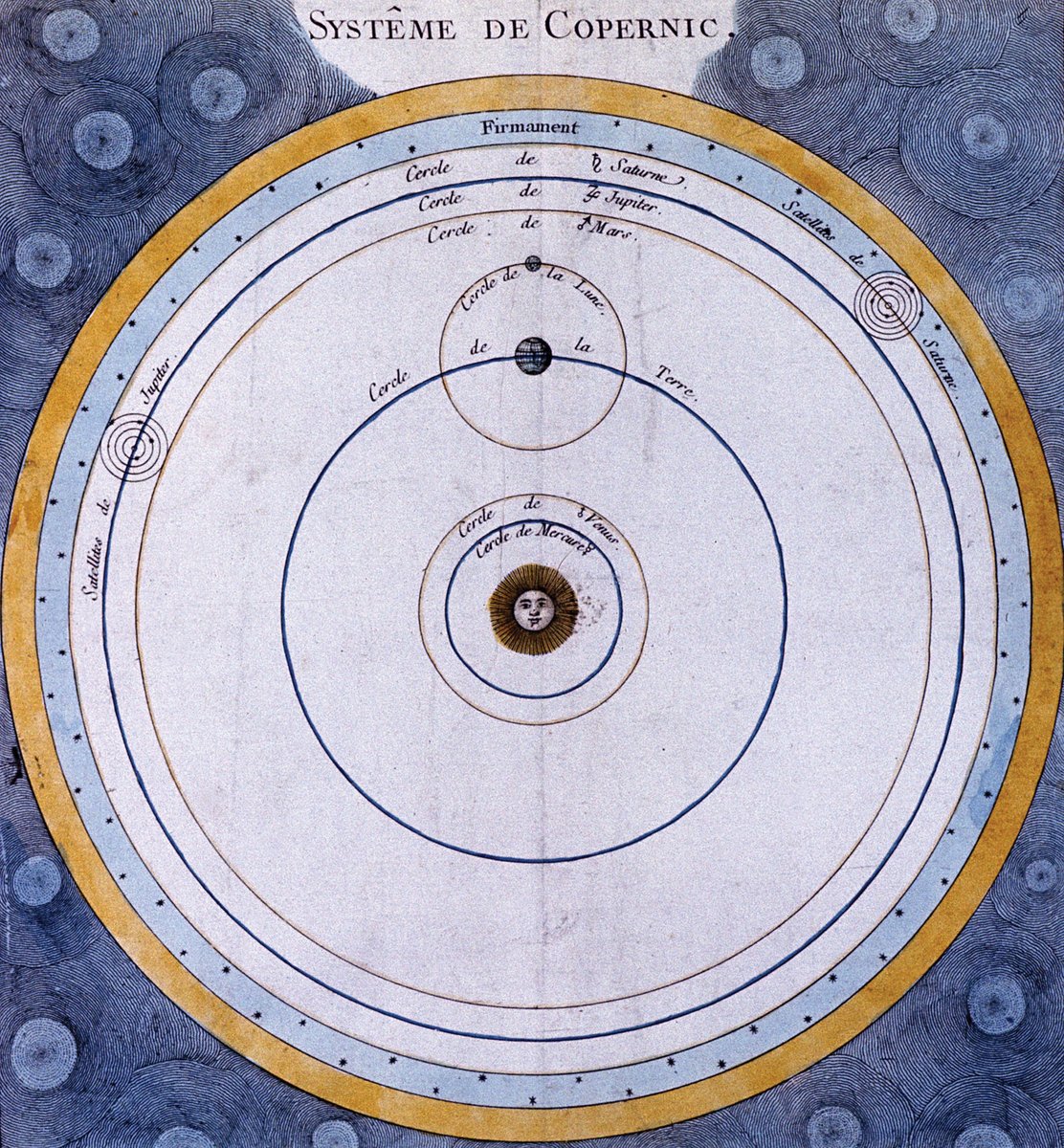
Copernican heliocentric model (Système de Copernic), 18th century engraving public domain -
But Copernicus made a second, less-famous leap. He originally put the stars as fixed onto an outermost sphere, but realized this caused problems. If the stars were only that far away, you'd get parallax effects -- they'd appear to move relative to the planets. But they don't.
-
Copernicus realized you could solve the parallax problem if it was still there but very small, and the way to do that is if the sphere with the stars on it was enormously bigger than the others, and the stars millions of times further away. Copernicus *made the universe bigger*.
-
This all gave his contemporaries quite a lot of trouble. The earth felt like it was still, how could it be moving? How could the universe be so big, what was the point of all that empty space between the planets and the stars? Copernicus' answer was essentially "why not?"
-
All of his life, Copernicus was writing down his astronomical observations and heliocentric theory and improvements to it. But he never published it, because he was afraid that it would be viewed as heretical, which is prescient because it absolutely was.
-
Who finally persuaded him to publish was his one and only student, a brilliant mathematician 40 years younger than him called Georg Joachim Rheticus. Rheticus was gay and a Lutheran, both of which were frowned upon at the time and got him into legal trouble on several occasions.
-
Rheticus cajoled Copernicus into organized his thesis into a real book, De revolutionibus orbium coelestium, and oversaw its publishing. Just as publishing was complete, Copernicus took ill. The printed book was rushed to his bedside; he saw it, held it, and then died. Bummer.
-
So Copernicus never saw any of the fallout from his publication, which was considerable. It was banned as heretical numerous times; copies were purged of offending material or destroyed altogether.
-
But the book presented a real problem for people who wanted to ban it, which was that it was obviously correct. Predictions of planetary motions made using the Copernican model were completely accurate, years in advance, and this was *extremely* useful to astrologers.
-
Several times publishers tried to cop out by declaring that, while of course the earth was the center of the universe, this little abstract model from Copernicus, while not *literally true*, was a very simple and useful mathematical construct and people should be able to use it.
-
It wasn't until more than a hundred years after Copernicus died that Newton published his own worth on planetary motion and gravity, adding even more weight to the evidence, that the heliocentric view from our friend Nicky was properly accepted.
-
In terms of legacies, Copernicus is way up there. He rearranged the stars and the planets, he moved the sun and the earth, and he expanded the universe a million times. He did it by watching the skies and doing math, and he was right. It's a real shame about the serfs tho.
- Previously: Leonardo Da Vinci
- Next: Michelangelo
- Full list
Text and images copyright © 2020-2023 Laurie Voss
except where indicated
except where indicated