Isaac Newton
-
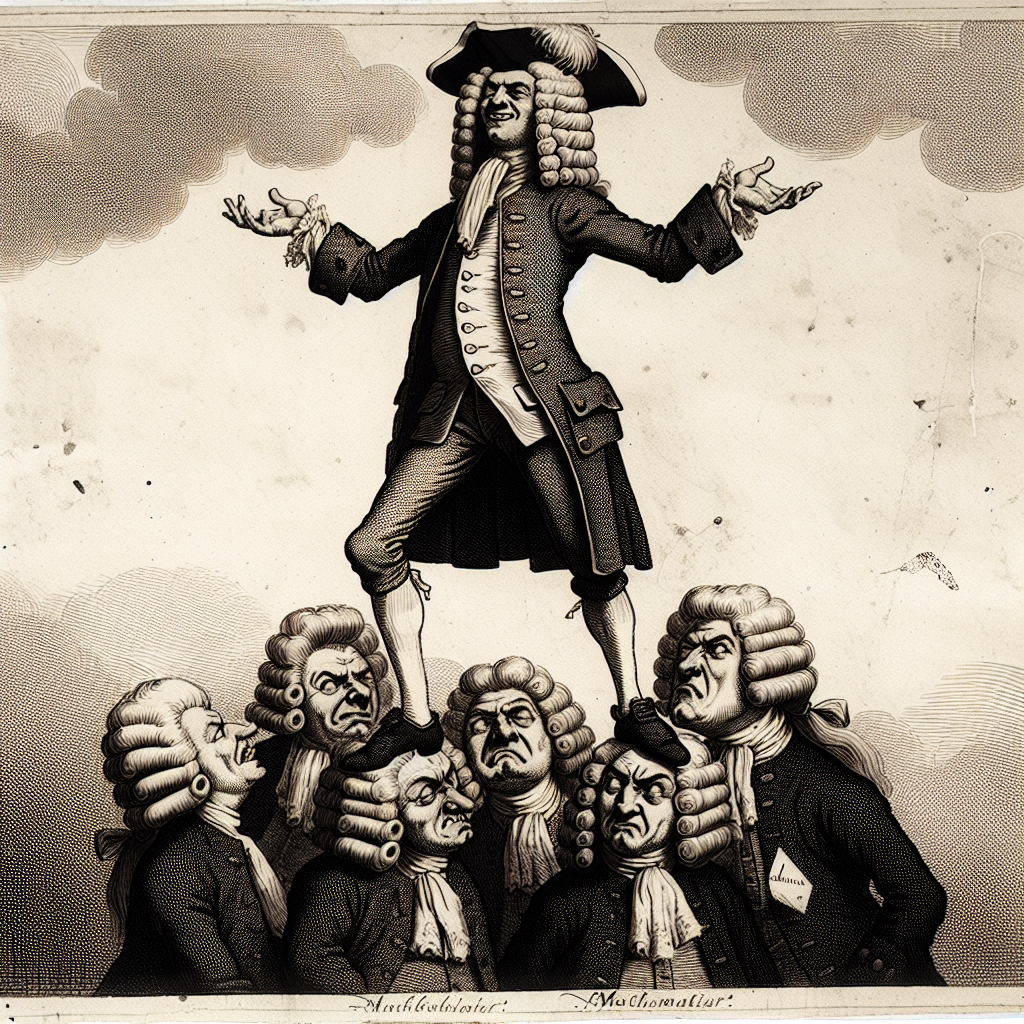
I have some down time so today's a good day for #EuropeanBios entry #54, Isaac Newton, a not-quite-scientist who stood on the shoulders of giants, much to the annoyance and loud complaints of the giants involved, and gave gravity its name.
-
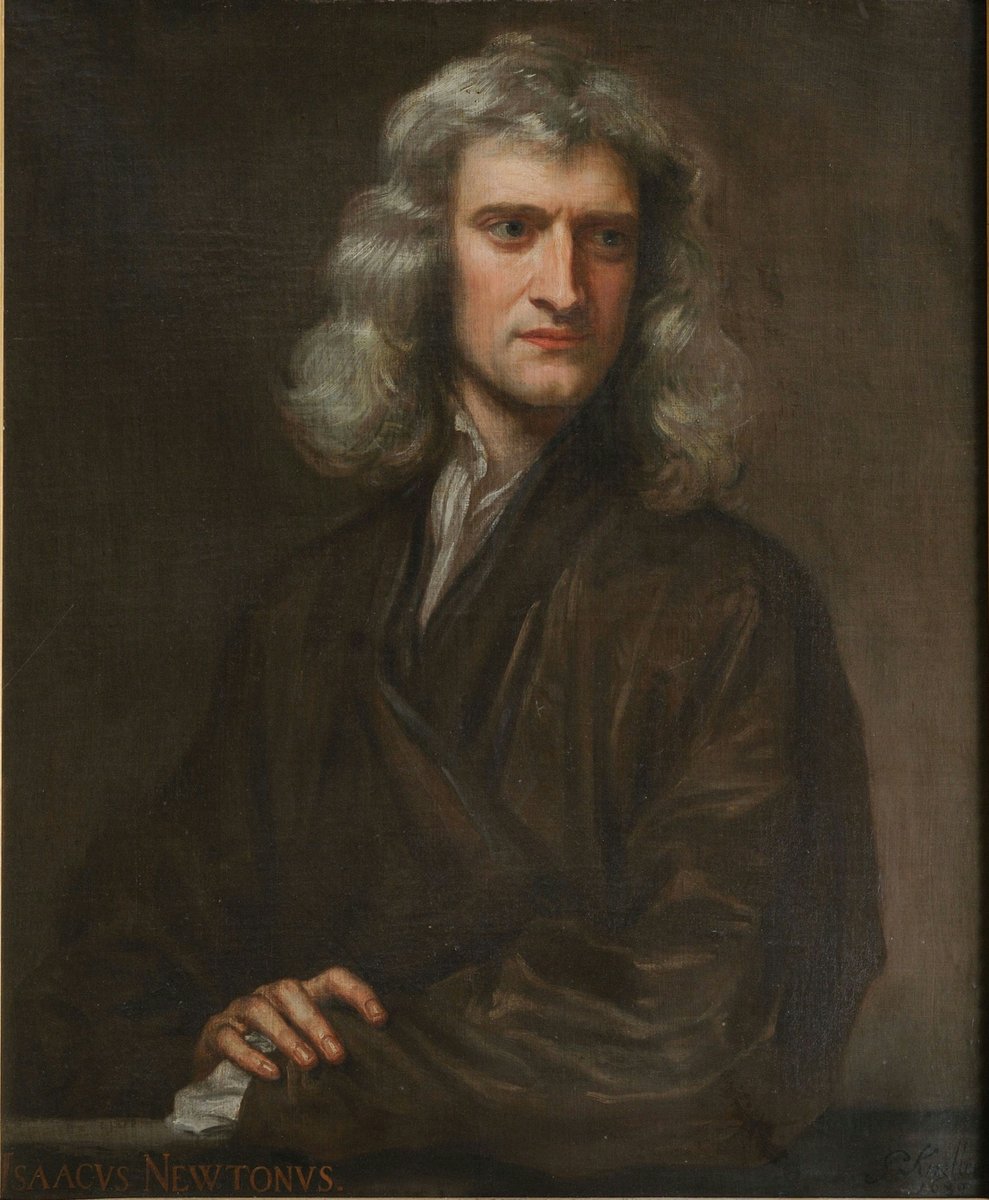
Portrait of Isaac Newton by Godfrey Kneller, 1702 Godfrey Kneller, 1702, public domain -
If you'd asked me prior to this what Newton was famous for, I would have said "discovering gravity", but this is not really what he did. Galileo, Kepler, Copernicus and others had noted the *need* for something like gravity. What Newton did was figure out the math.
-
Isaac Newton was born in 1642 at Woolsthorpe Manor, making him technically a sort of feudal lord, but as you can see it was not exactly a castle, and the lands it "commanded" were just a handful of other houses. He was not considered nobility, but he was a bit posh.
-
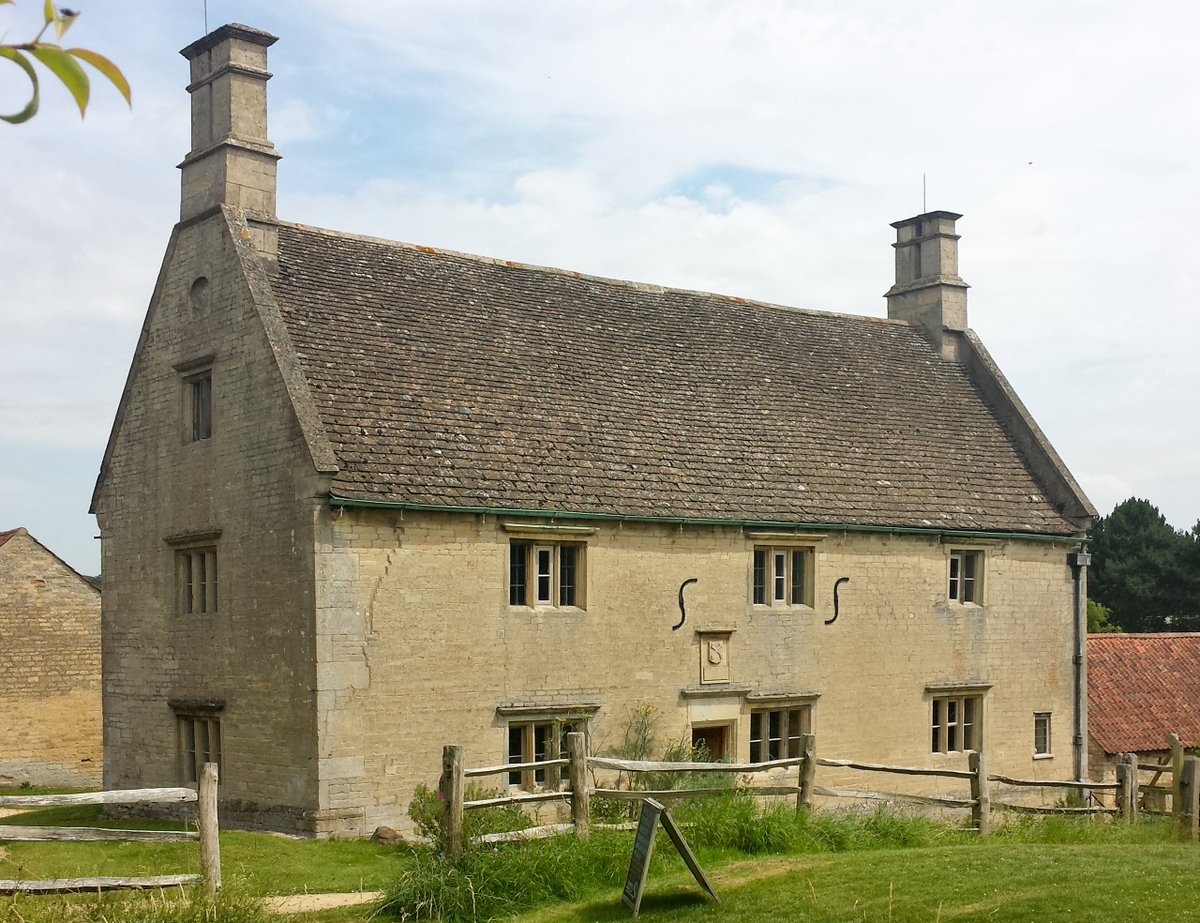
Woolsthorpe Manor, Newton's birthplace in Lincolnshire Woolsthorpe Manor by Netean via Wikimedia Commons (CC BY-SA 3.0) -
Isaac's father, also called Isaac, died three months before he was born. His mother remarried a man called Barnabas Smith who was not interested in having a step-child, so she went to live with her husband and Isaac was left at the manor in the care of his grandmother.
-
Understandably he resented this abandonment, and was lonely and frequently depressed as a child. His mother paid for an excellent education at the King's School, which still exists and educates children today. Isaac's (disputed) signature is carved into the wall there.
-
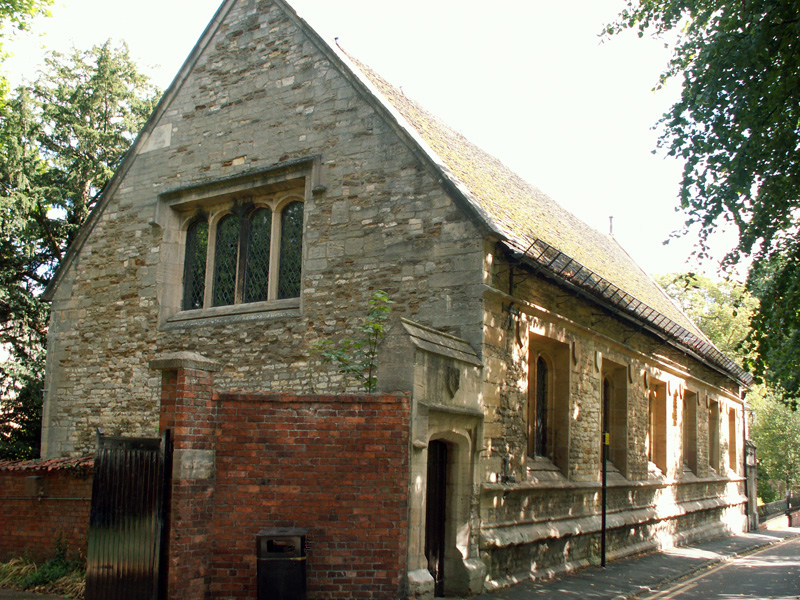
King's School, Grantham, where Newton was educated King's School Grantham by Acabashi via Wikimedia Commons (CC BY-SA 3.0) -
At age 19 he was admitted to Trinity College, Cambridge, which even in Newton's day was already an institution over a hundred years old. They were still teaching Aristotle, but Isaac supplemented his learning with Galileo and Kepler.
-
Newton was extremely gifted at mathematics, and this was obvious to everyone from the start. He was given scholarships and then a professorship just one year after he graduated, with a brief 1-year break due to the great plague of 1666, which closed down the universities.
-
(The discovery, in bios starting in the 1500s, that Europe was constantly having pandemics, and reading in passing of various historical figures reacting and adapting to them, has been fascinating, and I should probably do a side thread about it)
-
In Newton's time science was just beginning to come into its own as "science", separate from "philosophy". All of Newton's theoretical predecessors were called philosophers, those after him were called scientists, and Newton himself was never fully one or the other.
-
One example: in the hundreds of years prior to Newton, European science has considered itself "rediscovering" knowledge lost from the Greeks and Romans. The idea of making *new* scientific discoveries was not popular and considered a bit suspect, including by Newton himself.
-
So even late in his life, when he was one of the most famous scientific minds in Europe, Newton went looking in ancient texts for evidence that the things he had discovered had been known before. He thought that would validate them and prove he was right.
-
Another example: Newton took religion very seriously, though he had a very different take on some key theological points, in particular about Homoousion, an obscure question that absolutely consumed our previous subject Theodosius the Great, 1,300 years previously:
-
A third example: Newton was an alchemist. This was not a hobby or mere dabbling; he took alchemy extremely seriously, as seriously as he took the mathematics of gravity, and worked on it for a huge part of his life, despite it having no basis in science at all.
-
Nobody knew how serious an alchemist Newton had been until hundreds of years later, because he kept all his papers secret. He hated publishing, so the same would have been true of his mathematical discoveries if not for another development at the time, the Royal Society.
-
The Royal Society was a sort of proto-scientific member's club dedicated to sharing scientific discoveries. It included a publication, the very first scientific journal, that was widely read and became the source of Newton's fame and also a huge irritant to him.
-
The problem was a question of precedence, aka "publish or be damned". Newton was making a variety of important discoveries in optics, physics and mathematics that others were making roughly around the same time. Unless he published first, they would claim all the credit.
-
His first publications were about optics. He proved that white light contains all the other colors of light. He predicted that telescopes made of glass would suffer from color distortion, and invented the first mirrored telescope, a huge leap forward in the art.
-
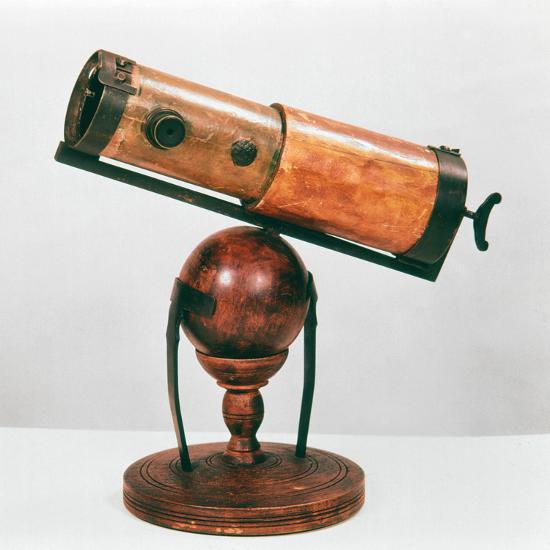
Replica of Newton's reflecting telescope, ca. 1671 Replica of Newton's reflecting telescope by Andrew Dunn via Wikimedia Commons (CC BY-SA 2.0) -
His optical work got him into repeated conflict with Robert Hooke, another genius mathematician, a few years older than Isaac and influential at the Royal society. Newton took Hooke's scientific criticisms so personally that he stopped communicating with the society for a while.
-
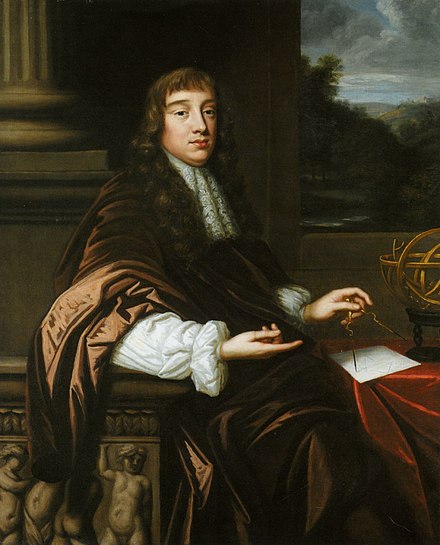
Portrait of Robert Hooke, Newton's great rival Portrait of Robert Hooke, public domain -
Eventually he resumed correspondence, and it was in a letter to Hooke he wrote one of his most famous phrases: "If I have seen further, it is by standing on the shoulders of giants". This is traditionally taken as a sign of his humility, but it is... not so much, in context.
-
What he wrote to Hooke was: "What Descartes did was a good step. You have added much ... If I have seen further, it is by standing on the shoulders of giants". He wasn't being humble. The person he had seen further *than* was Hooke; the point of the letter was to make that clear.
-
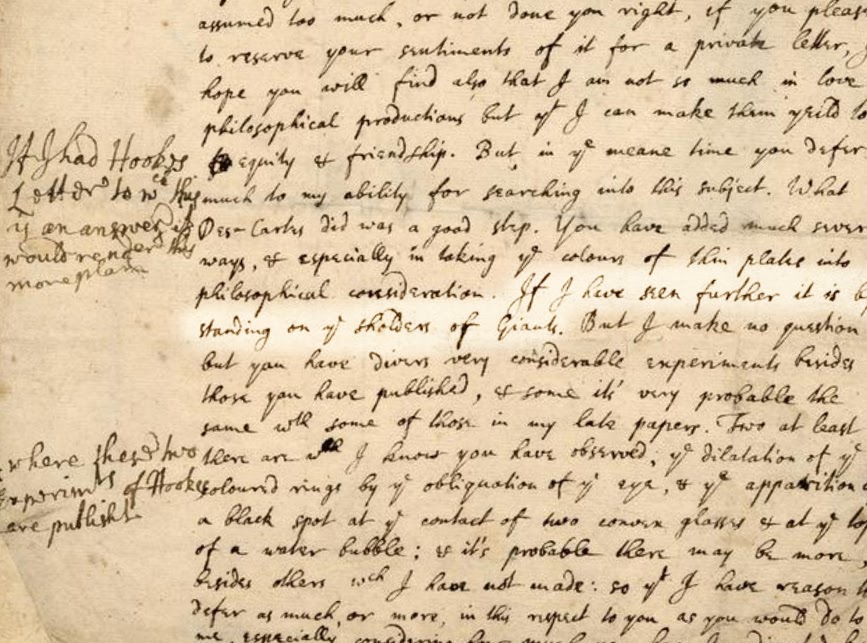
Newton's 1676 letter to Robert Hooke containing the "shoulders of giants" quote Newton's letter to Hooke, 1676, public domain -
The other fun fact about the "shoulders of giants" quote is that it is not original to Newton. It dates from nearly 500 years earlier, to 1159, and had been repeated hundreds of times since. There's even art which takes the phrase quite literally. The phrase was a cliché.
-
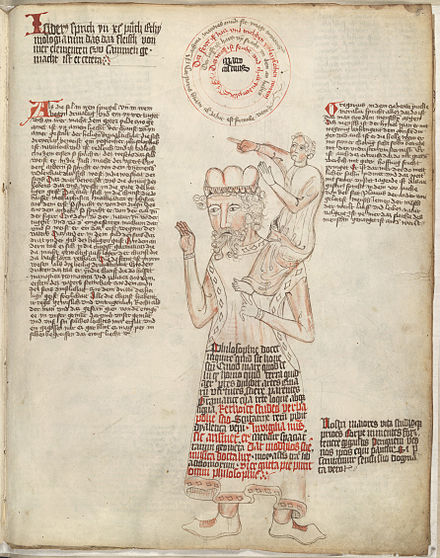
Medieval illuminated manuscript depicting dwarfs standing on the shoulders of giants, illustrating the famous phrase Medieval illuminated manuscript, public domain -
It was fellows of the Royal Society who asked him to get to work on gravity, or rather, since it didn't have that name yet, on the problem of the motion of planets. It was a problem he'd worked on earlier in life, but not published his results, which were wrong in any case.
-
Galileo's telescopes had seen mountains on the moon and this had upset humanity's view of the cosmos. If the moon was just another planet, not a perfect celestial orb, there must exist some force that pulls things back down to the moon's surface, as well as the earth's.
-
Tycho Brahe and Kepler had pushed the mathematics of planetary motion forward a great deal with their observations. It was clear that there was some kind of attractive force keeping the planets together, but how did it work? The society was sure Newton could get it.
-
In genuine flashes of genius, Newton pulled together disparate mysteries – the motion of planets, the speed of falling objects, the appearance of comets, the rise and fall of tides – and came up with a single, coherent theory that explained all of them at once. It was staggering.
-
In fairness to Hooke, he got quite close. He figured that attraction between planets might be related to double the distance between the two, and asked Newton, who had earlier invented calculus, to use it to verify this. Newton did, but kept it quiet because Hooke irritated him.
-
To describe his work, Newton invented new words. For the first time he gave precise, scientific definitions to words like "time" and "space". He invented the scientific meaning of "gravitational mass" (to distinguish it from "weight"), thus also inventing the term "gravity".
-
An often-repeated myth about Newton is that he got the idea for gravity when an apple fell on his head. Whether it's true or not, the story was told by Newton himself, though he said it was from watching an apple fall from a tree, without it landing on him.
-
Coming up with a single set of laws of motion that described everything from comets to tides to eclipses was truly awe-inspiring; it was described as "A System Of The World", and all of Europe recognized it at the time. Newton became famous and was praised by scholars and poets.
-
But while Newton's genius is undeniable it's also true that he had a lot of help. Not just Tycho, Kepler and Galileo, but also contemporaries like Hooke and Haley (he of the comet). These people were not happy to be left in the shade, in particular Gottfried Leibniz.
-
Newton and Leibniz, it's widely agreed, independently developed calculus at the same time, but Leibniz published first, and people have forever preferred his notation for describing it. At the time, Newton accused Leibniz of having seen and stolen the credit for his own work.
-
Being much more famous, people tended to believe Newton's take and the controversy went on for the rest of Leibniz's life, to his everlasting disappointment. Newton, who had discovered any number of other important things, could easily have just let it go.
-
Towards the end of his life Newton was made master of the Royal Mint, in charge of making England's money, and took it very seriously. Since he earned a percentage of all the coins minted this made him very, very wealthy. He lived to the ripe old age of 84 and died in 1727.
-
Newton's legacy is hard to beat! Nobody improved upon his system of the world until Einstein, and even Einstein didn't throw it away, he just added new subtlety. Many of his contributions to mathematics, optics and above all physics survive to this day.
-
But honestly it's that letter to Hooke that sticks in my mind. Newton was an alchemist, a religious heretic, a philosopher, a mathematician, and a scientist, but above all those to my mind he was a truly epic thrower of shade.
-
"Than *you*, Robert. I have stood on the shoulders of giants and seen further than *you*."
-
P.S. Emily's take on why Newton hated publishing (and how much) is spot on:
- Previously: Louis XIV
- Next: Maria Sibylla Merian
- Full list
Text and images copyright © 2020-2023 Laurie Voss
except where indicated
except where indicated