Julius Caesar
-
Entry number 6 is Julius Caesar. At my current rate the whole project should take about 2 years(!), so maybe we'll be out of lockdown by then.
-
There were a bunch of things I thought I knew about Caesar and most of them turned out to be wrong, but honestly Caesar's life is kind of short on fun facts. His 66-year life was basically one long military campaign and wars aren't often funny.
-
Like a lot of folks back in antiquity, we know Julius Caesar by a name that wasn't quite right: his full name was Gaius Julius Caesar. Roman naming conventions are complicated, though, so even at the time most people called him Julius Caesar.
-
You may have heard that the Caesarean Section was named after Caesar because he was born this way, but it's not true: until the 1500s the c-section was fatal to the mother (in fact it was usually only performed if the mother was already dead) and Caesar's mother lived to old age.
-
It's actually more likely that Caesar was named after the operation than the other way around. It's possible that one of his ancestors was born by c-section and the family got the name that way; "caesus" is the past tense of "to cut" in Latin.
-
A surprise to me was that Caesar's family was broke (unlike Hannibal and Alexander, who grew up rich). Julie's family were "patrician" (meaning an old and respected Roman family) but broke and he grew up in the slums of Rome.
-
As I was hoping, Julius has fun connections to others in my #EuropeanBios series. First, Caesar's childhood tutor, Marcus Antonius Gnipho, was trained in Alexandria, founded by Alexander the Great. (Also, he would conquer Alexandria later)
-
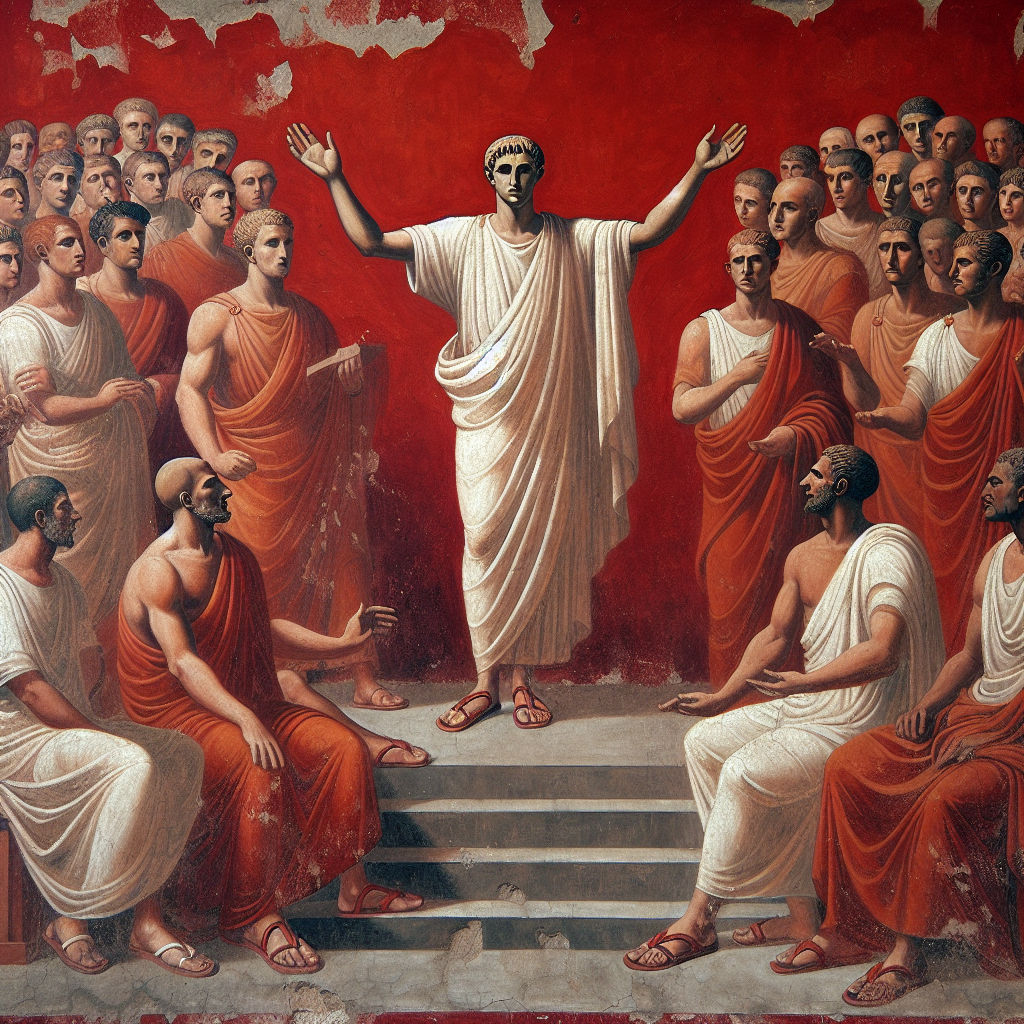
Second fun connection: one of Caesar's school subjects was rhetoric, or the art of speech. He was assigned to write a stirring speech to deliver in a historical situation. Specifically, he had to imagine what Hannibal would have said to persuade his troops to cross the Alps.
-
Caesar had essentially unlimited ambition and drive, and was ruthless to get it. A lot of his 20s consisted of various complicated political wrangling for position and patronage. But by age 30 he wasn't yet powerful and he compared himself unfavorably to Alexander at that age.
-
During this period he supervised the construction of the Appian way, a famous Roman road that is still visible in places even today. He learned a lot about engineering from this, a skill that would come in handy later.
-
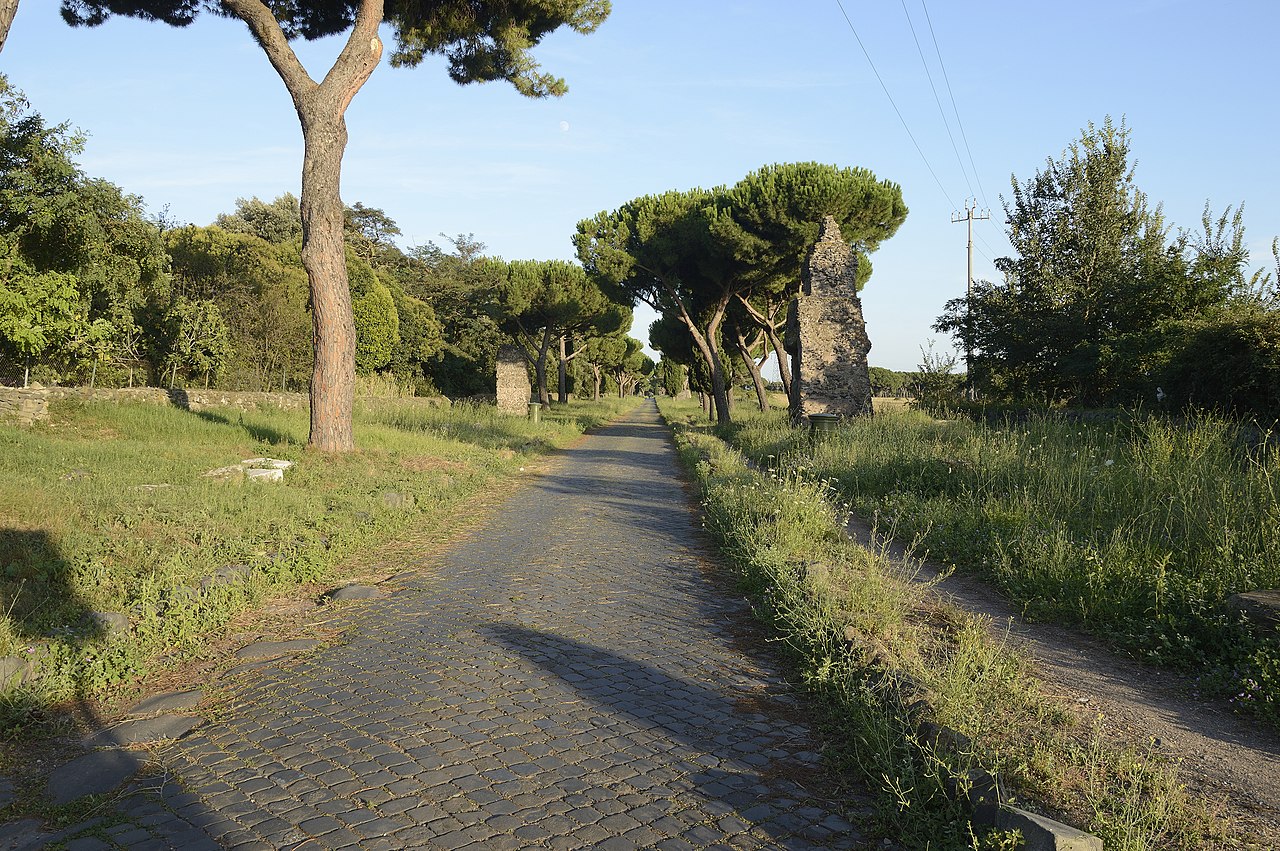
A surviving stretch of the Appian Way, near Casal Rotondo, south east of Rome. CC BY-SA by Livioandronico2013 via Wikimedia Commons -
At one point Caesar was kidnapped by pirates. He befriended his captors and told them to raise his ransom. When the new, higher ransom was paid, he went home, raised an army, came back and slaughtered all the pirates, taking back the ransom and all the rest of their loot.
-
He managed to get himself appointed the governor of the province bordering Gaul (France), allowing him to come up with imaginary incidents that gave him an excuse to attack and conquer Gaul, and also Germany and, why not, Britain as well.
-
He spent 8 years conquering Gaul. It makes for tremendously dull reading. The Gauls were a ton of separate Celtic tribes who took turns swearing loyalty to Caesar, betraying him, begging forgiveness, allying with each other, betraying each other, repeat. For years and years.
-
Fun fact: when Caesar conquered Britain it was so far away that not everybody in Rome was sure it really existed. This involved a lot of naval battles, which he sucked at initially, partly because he had never encountered tides before (the Mediterranean doesn't have them).
-
Like all the great generals I've read about like Alexander, Hannibal and Napoleon, Caesar's primary advantage over his rivals was that he moved faster than anybody at the time believed was practical. It's interesting how often this comes up!
-
Also like Alexander, Caesar won military victories through engineering. He memorably once built a bridge across the Rhine in a single day, marched over it, conquered a bunch of Germans just to show them he could, then marched back over the bridge and tore it down behind him.
-
In another notable engineering feat, in the last major battle of conquering Gaul, he laid siege to the town of Alesia by building a gigantic wall all the way around it so they couldn't escape, and then another circular wall around that so nobody could break in to help them.
-
It's worth noting that, like all military generals, Caesar was a vicious bastard. His troops routinely sacked towns, killing women and children. By Caesar's own estimate his campaign across Europe killed north of 1 million people.
-
Until Gaul, Caesar had been in huge debt, but the loot of conquest made him extremely wealthy. Now he had an army and could afford to pay them himself. This scared the shit out of the senate in Rome, who correctly feared that once he was done in Gaul he'd try to take over Rome.
-
By this point Caesar was 50, and he returned to Italy and "crossed the Rubicon": generals of Rome were supposed to stand down their armies before crossing this river, but he didn't, and it kicked off a gigantic civil war between Caesar and, well, all the rest of Rome.
-
Another long and boring military campaign ensued. This included conquering Alexandria, where Caesar met Cleopatra (then aged 21) and fathered a child with her (much to the annoyance of his wife).
-
A fact I hadn't realized is that Alexandria, while obviously in Egypt, was not really culturally Egyptian: having been founded by Alexander, it was mostly Macedonian, and they spoke Greek. Cleopatra was the first Alexandrian monarch to even bother to learn to speak Egyptian.
-
After conquering Alexandria, Caesar weirdly took a month-long break in the middle of a war to go on a luxury cruise up the Nile with Cleopatra. Since he took 400 ships full of Romans with him, this probably wasn't just pleasure but also served to intimidate all of Egypt.
-
Finally he won and came back to Rome and went mad with power. He had four separate triumphal parades. In the first he displayed his conquered rival from Gaul, Vercingetorix, who he'd kept in prison for 6 years solely to have this parade, then immediately executed him.
-
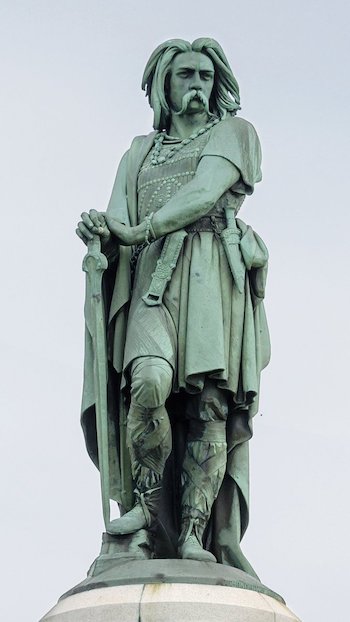
Vercingetorix does look a lot like Gauls do in the Asterix comics. CC BY-SA Wikimedia user Myrabella -
His other parades went less well. In particular, he displayed elaborate pictures of the respected Roman generals he'd beaten in the civil war, including one who'd disemboweled himself. The people had respected these generals and they were disgusted by these displays.
-
But the senate — many of whom he'd appointed — showered him with honors, including making him dictator for life. His birthday became a national holiday, and the month of his birth, until then called Quintilis, was renamed "July" after him.
-
Eventually the senate got sick of him and, famously, stabbed him to death on the Ides of March. When his beloved Brutus stabbed him he did not say "Et tu, Brute?" in Latin but instead in Greek he said "You too, child?"
-
Like the other famous generals I've covered in this series, Caesar had trouble translating his success as a general into success at politics. He tried to run Rome like he'd run his armies, through direct and absolute power, and it didn't work.
-
Unlike Hannibal and Alexander's empires, Rome survived Caesar's fall, though it was permanently weakened by the civil war he started and political instability caused by his death. All in all, Caesar was a selfish, power-hungry bastard who was just really good at killing people.
Text and images copyright © 2020-2023 Laurie Voss
except where indicated
except where indicated