Maria Sibylla Merian
-
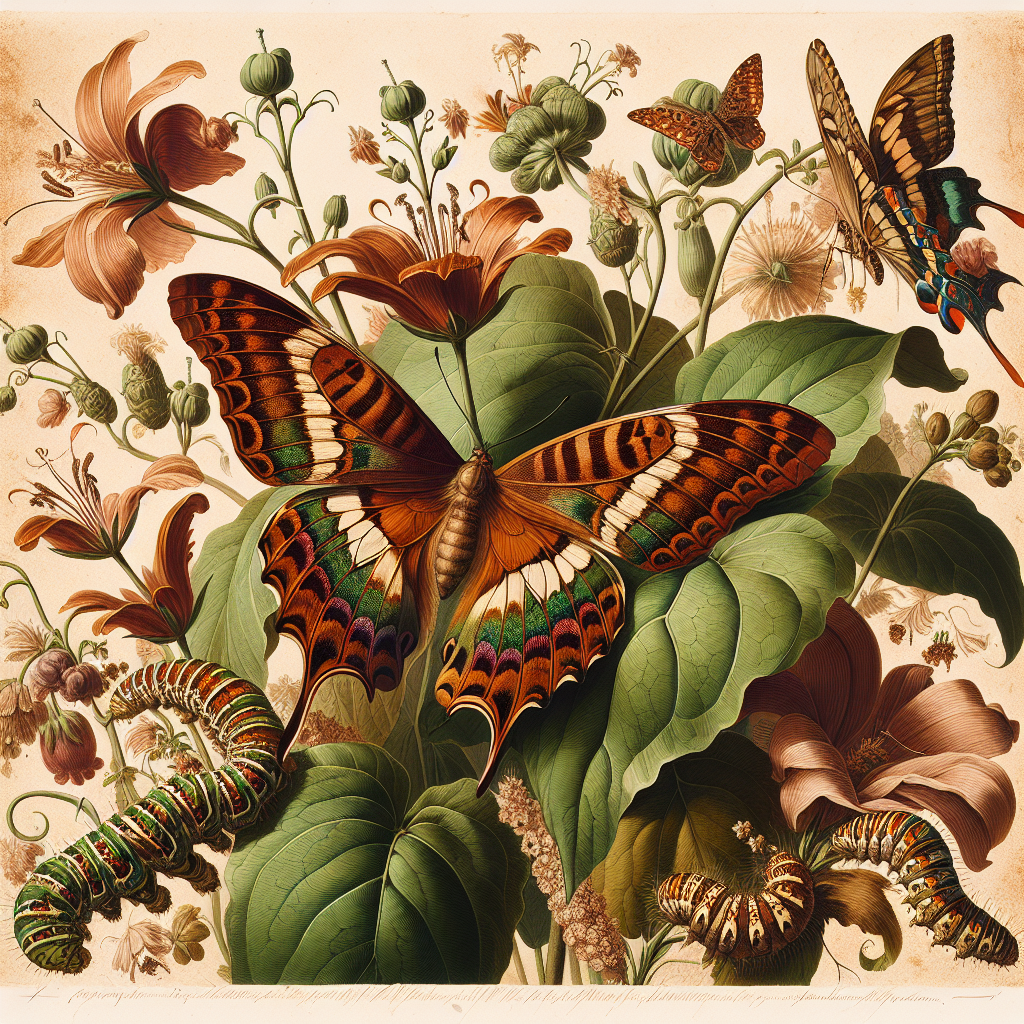
Entry 54 in #EuropeanBios will be short and mostly sweet, about Maria Sibylla Merian, a determined and deeply nerdy woman who hugely upset the patriarchy by drawing pictures of butterflies.
-
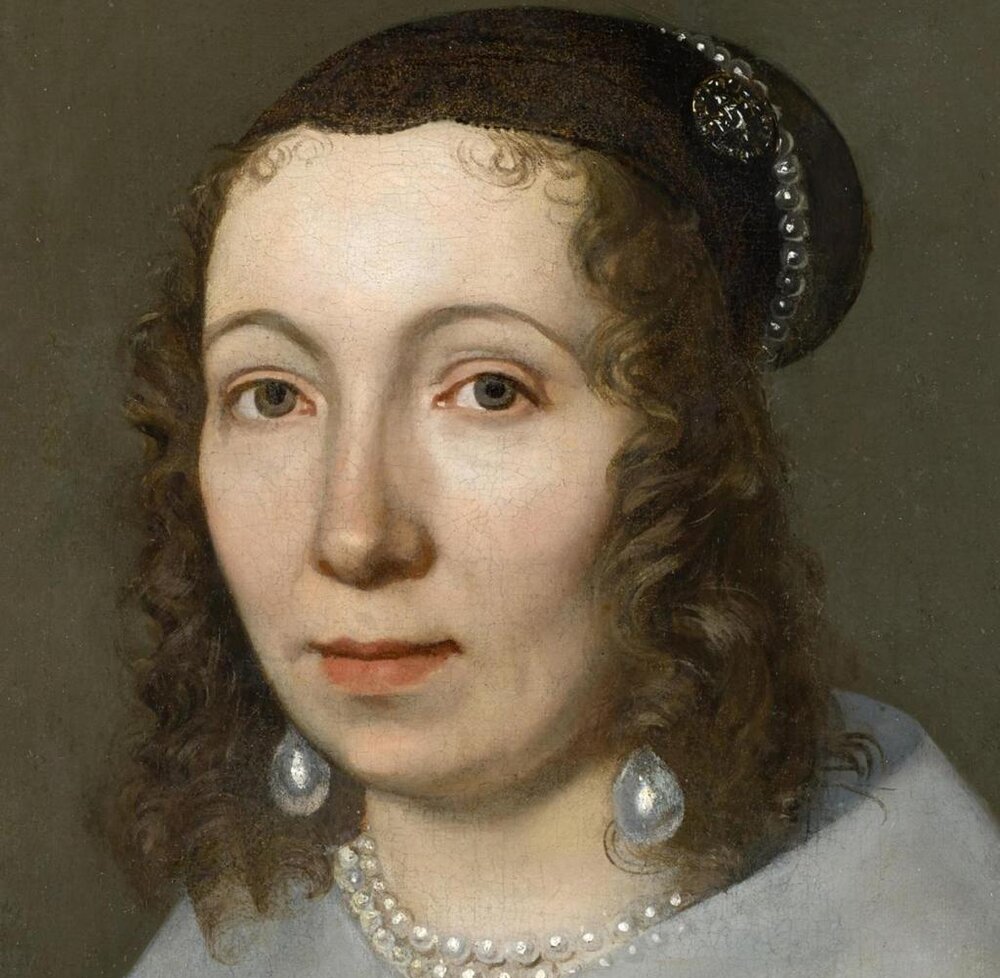
Portrait of Maria Sibylla Merian Portrait of Maria Sibylla Merian, public domain -
Born in 1647 in Germany, Maria was the daughter of a publisher. Her family was relatively well-off, as is true of essentially every accomplished scientist we've covered, because having time to do science requires that you are rich enough to not worry about food first.
-
Her father died when she was 4 and her mother remarried, this time to a minor artist, Jacob Marrel. He encouraged her to learn to draw and paint, which she became very good at, assisting him in his work.
-
Jacob sold popular art for mass consumption, primarily "still lifes" of fruit and especially flowers, which were very popular at the time. It was fashionable to include a small insect in the painting to liven it up, such as in this example of Marrel's work.
-
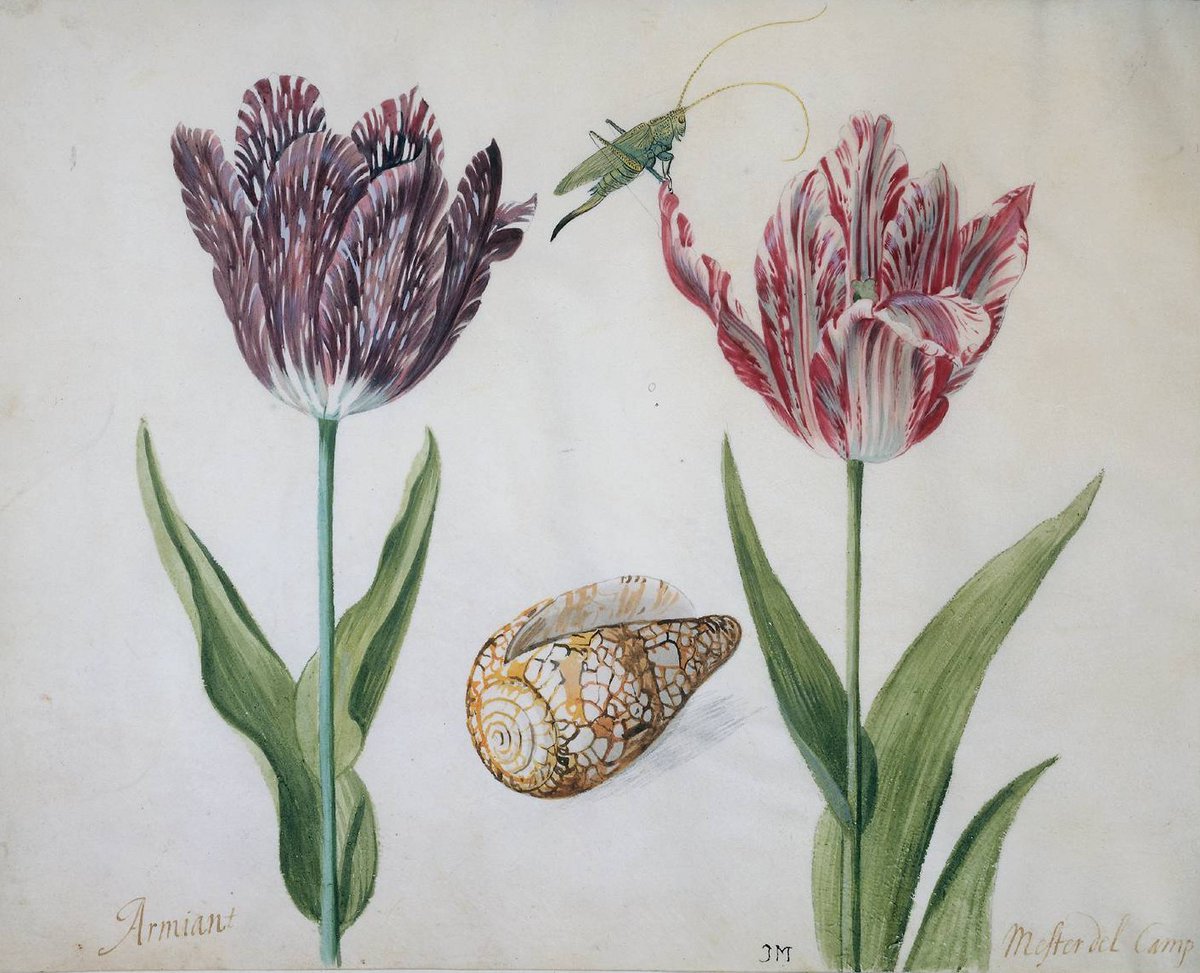
Tulips with grasshopper and snail, still life by Jacob Marrel, ca. 1650 Jacob Marrel, ca. 1650, public domain -
From a very young age, Maria was fascinated by the life of insects, and in particular butterflies. She collected insects of all kinds and drew detailed pictures of them. She observed caterpillars metamorphosing into butterflies and moths. She kept silkworms.
-
This put her considerably ahead of scientific understanding at the time. It was widely believed that caterpillars spontaneously generated from the dirt (an idea of Aristotle's, like so many of his, pulled totally out of his ass and not seriously questioned for centuries).
-
The connection of caterpillars to butterflies was also not understood. Called "summer birds" in German, butterflies were assumed to be migratory and to fly in from somewhere else with the seasons. Nothing about their life cycle was known until she began to observe them.
-
(Maria's biographer claims, but I have been unable to confirm, that in the German language in the 1600s every crawling thing was called a "worm" and every flying thing a "bird", and this presented a barrier to scientific discussions of insects, since they all had the same name)
-
At age 18 Maria married her stepfather's apprentice, also an artist. It was an arranged marriage and they were never very close, though they did have two daughters. She was unhappy and moved away with her daughters to live in a religious commune. They divorced in 1692.
-
With family connections to the publishing world and her stepfather's training in art, she wrote and published truly beautiful illustrated books about insects, showing for the first time all the stages of metamorphosis and making the connection from butterfly to caterpillar.
-
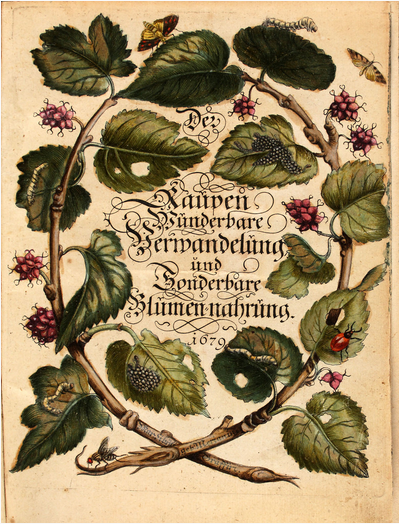
Title page of Der Raupen wunderbare Verwandlung (The Wonderful Transformation of Caterpillars) by Maria Sibylla Merian, 1679 Maria Sibylla Merian, 1679, public domain -
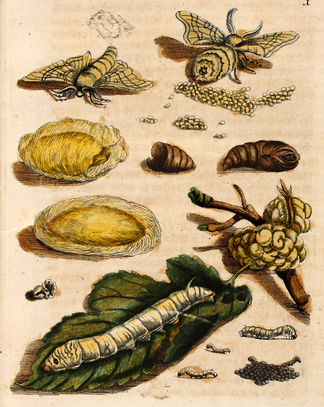
Plate from Der Raupen wunderbare Verwandlung showing caterpillar, cocoon, and butterfly metamorphosis stages Maria Sibylla Merian, 1679, public domain -
She published a whole series of these books and they were hailed across Europe, occasionally as a scientific accomplishment but usually for their quality as works of art. Nevertheless she gained enough of a reputation for it to be practical to strike out on her own.
-
She moved with her daughters to Amsterdam even before her divorce. She made a living selling illustrations and paintings of, mostly of flowers, using the money to support her family while always continuing her scientific research into the lives of insects.
-
This was, it's worth noting, all wildly unexpected behavior for a woman in the 1600s. German women were not permitted to own or run a business, although Amsterdam had no laws against it. Divorce was very unusual, and so was her remaining unmarried. People did not approve.
-
One of her daughters married a merchant who made his money trading to the dutch colony in South America, Suriname. Hearing stories of the wildlife there totally unknown to European science, she became determined to visit, and traveled there with her daughter in 1699.
-
In Suriname she set up house and began to study local wildlife but especially insects, doing pioneering research into tropical plants and animals and giving many species their first names and descriptions in European science.
-
This involved a certain amount of unabashed colonialism. She bought an enslaved person to do work at her house in Suriname, and used them to learn about local medicine from natives. There is no apologizing for these actions, which were not considered unusual at the time.
-
In Suriname she became ill, which forced her to return home in 1701. She labored mightily over a book that encompassed all of her Surinamese research, which she published in 1705. It was hailed as a scientific accomplishment but was not a financial success, to her disappointment.
-
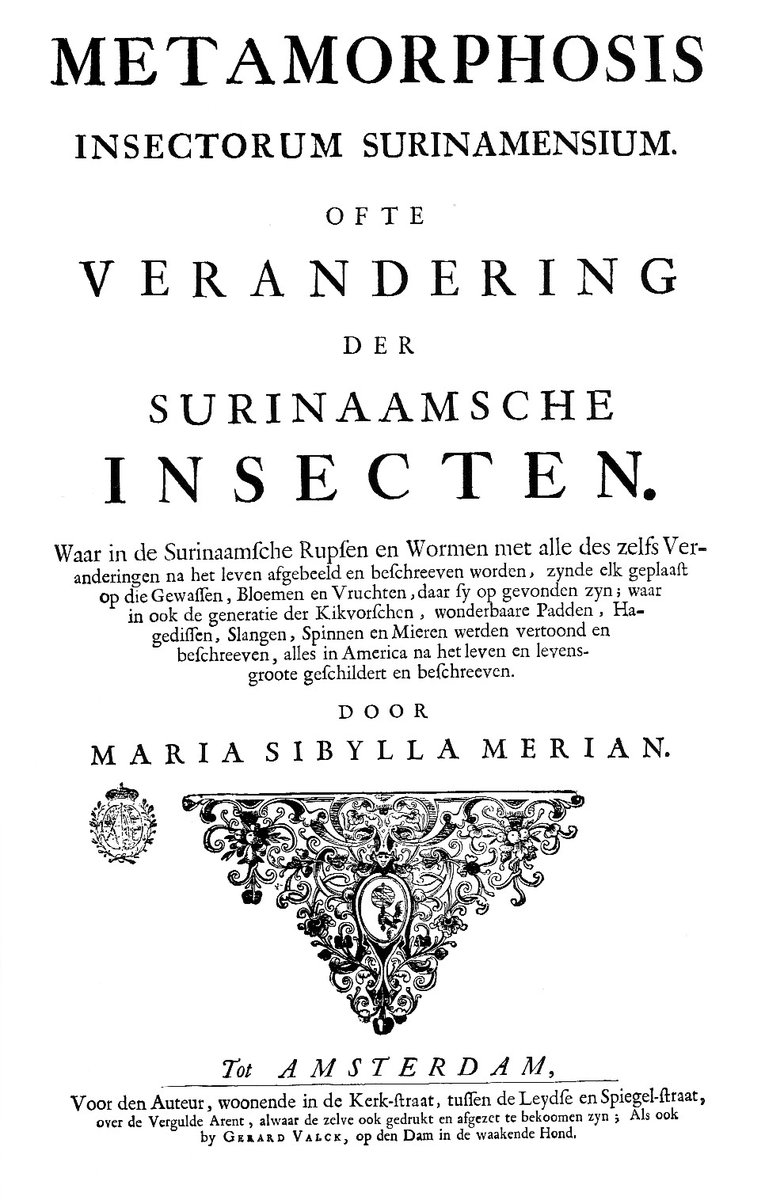
Title page of Metamorphosis Insectorum Surinamensium by Maria Sibylla Merian, Amsterdam, 1705 Maria Sibylla Merian, 1705, public domain -
She died at the age of 70, having contributed a great deal to European science's understanding of plants and animals. Biology at the time was obsessed with cataloging and classifying animals; she instead thought of them in terms of a full ecological web.
-
Her accomplishment in striking off to Suriname solo and doing her own research there was so unusual that for years men simply refused to believe that she had really done it, insisting she had stayed in Amsterdam and made paintings based on stories and specimens returned.
-
Her legacy is a modest but solid advancement of science in the particular field of the life cycle of bugs, made significantly more impressive by the fact that nobody wanted her to do it, nobody helped her do it, and nobody believed her even after she was done.
-
P.S. After her death a great number of her paintings were purchased by Peter The Great of Russia, who we'll be covering a few bios from now, so it's worth making the connection.
-
P.P.S. Oh shit that was entry #55, not 54, this is the third time I have fucked this up, so actually it was number 57, this is so annoying, fuck it, the next one is going to be called #58.
- Previously: Isaac Newton
- Next: Queen Anne
- Full list
Text and images copyright © 2020-2023 Laurie Voss
except where indicated
except where indicated