Marie Antoinette
-
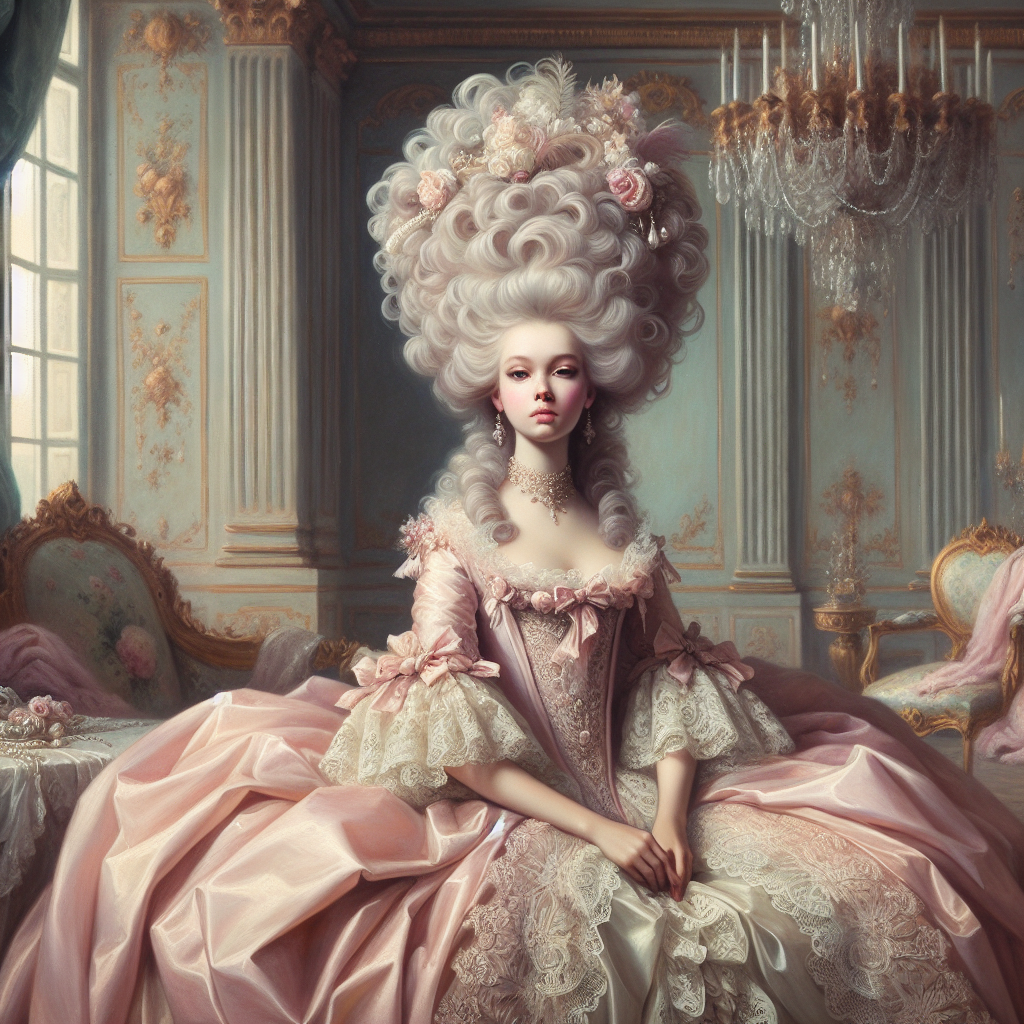
Our 62nd entry in project #EuropeanBios is Marie Antoinette. Her reputation is that of an arrogant, stupid, decadent queen of France who got was coming to her in the French revolution and all of this is arguably true but the reality of the situation is merely very sad.
-
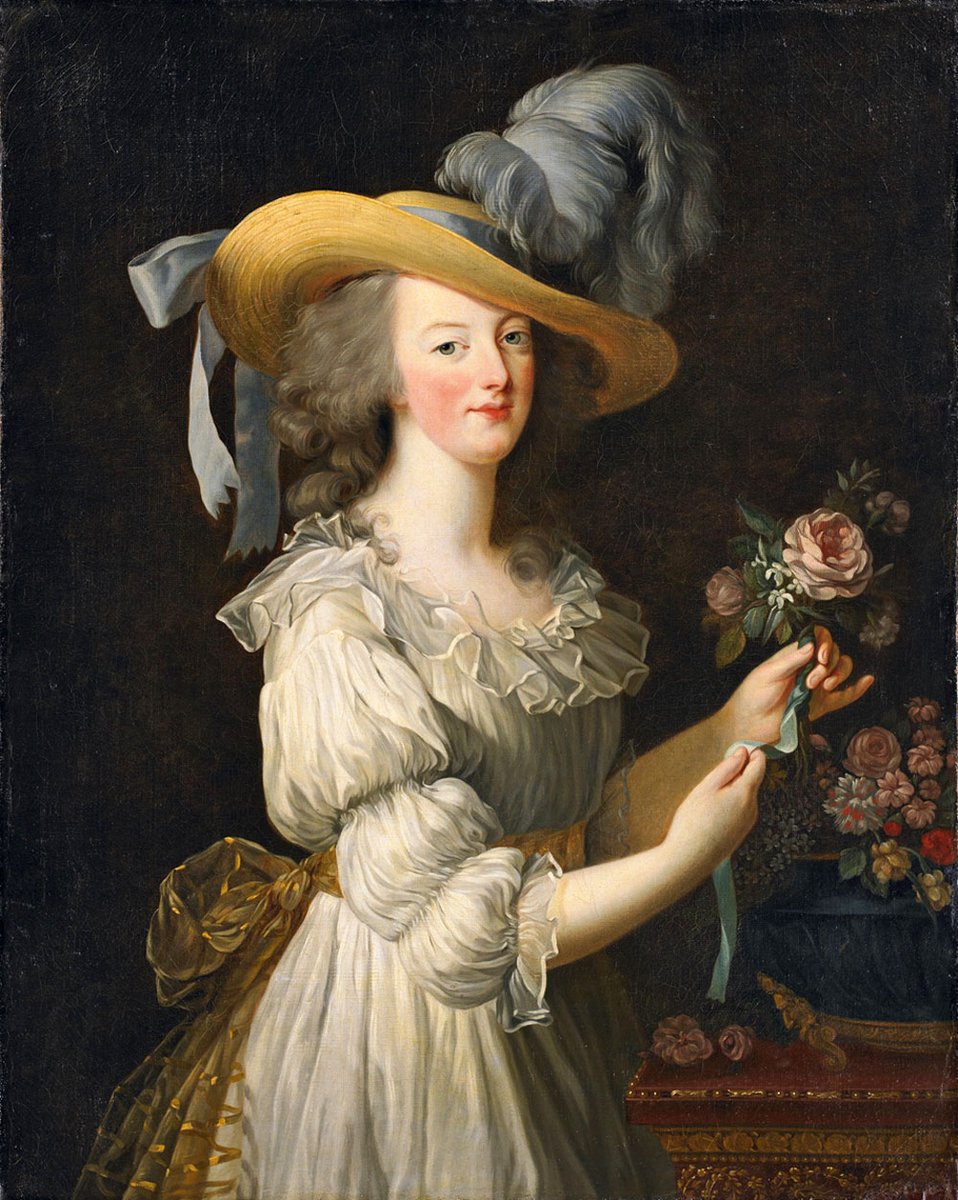
Portrait of Marie Antoinette with a Rose, by Élisabeth Vigée Le Brun, 1783 Élisabeth Vigée Le Brun, 1783, public domain -
We start, as we so surprisingly often do, by correcting her name. She was born Maria Antonia but it was the tradition in her family that every girl was "Maria" something, so she was known as Madame Antoine growing up, and would only sign her name as "Marie Antoinette" much later.
-
It's worth noting that we also don't really know what she looked like. She was a Habsburg, a famously inbred royal line whose distinctive feature was the "Habsburg jaw", pictured. Unsurprisingly her portraits omit this feature, but it means none of them are at all accurate.
-
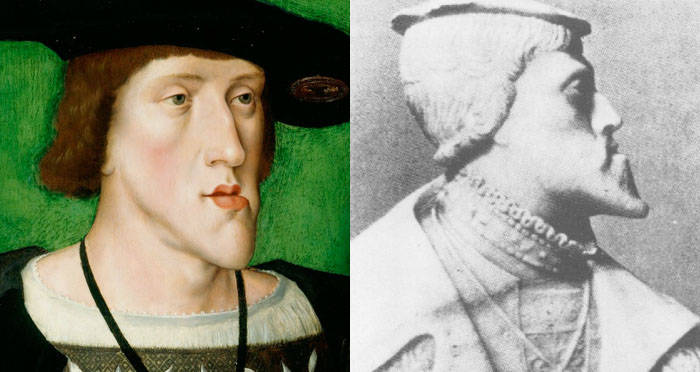
The distinctive Habsburg jaw: a historical portrait (left) and a modern example (right) of the genetic trait common in inbred European royalty Habsburg jaw comparison, public domain (left portrait) -
Antonia's mother was the formidable empress of Austria (and various other places), Maria Theresa (like I said, everyone was called Maria). Theresa had a great many children and used them to great political gain by marrying them off to various nobility across Europe.
-
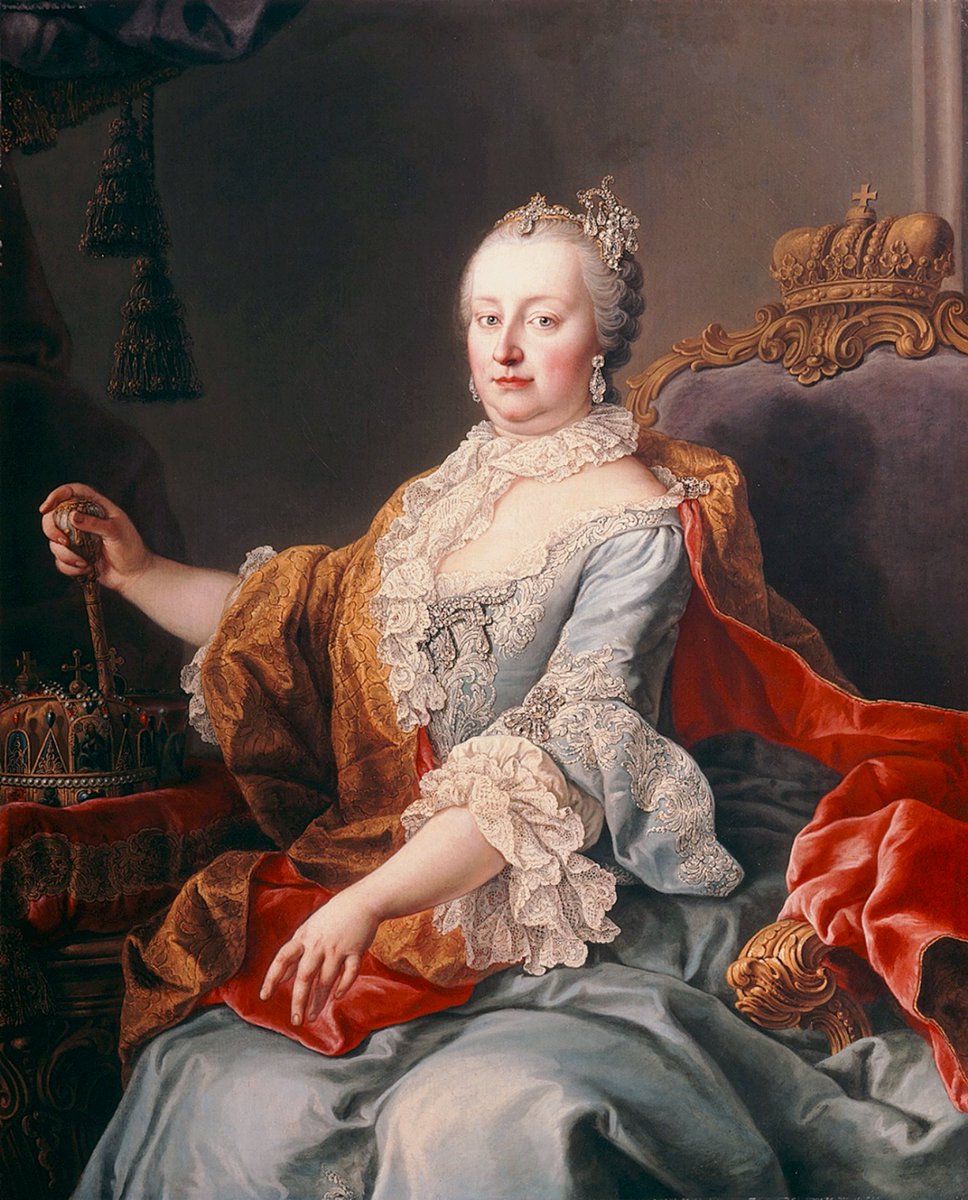
Portrait of Empress Maria Theresa of Austria, Marie Antoinette's mother, who used her children as diplomatic pawns across Europe Portrait of Maria Theresa, Empress of Austria, ca. 1750, public domain -
Thus it was that Antonia, born 1755, found herself married at age 15 to the heir to the throne of France, Louis-Auguste, the future Louis 16, himself only 16. He was described as stupid, lazy and unattractive but Antonia had been trained to do her duty, so she married him.
-
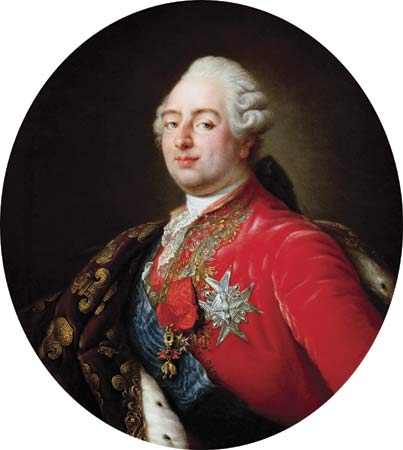
Portrait of Louis XVI of France as a young man, Marie Antoinette's husband Portrait of Louis XVI, ca. 1775, public domain -
Her duty, to be clear, was to have babies. Nothing else was expected of her and her education, such as it was, had prepared her for nothing else. She was not a good reader and so poor at writing that she smudged and mis-spelled her own name on her wedding certificate.
-
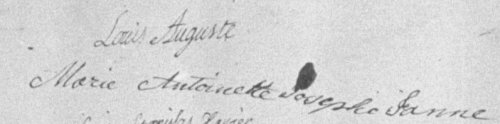
Detail of the royal marriage certificate of Louis-Auguste and Marie Antoinette, showing her smudged, misspelled signature Marriage certificate of Louis-Auguste and Marie Antoinette, 1770, public domain -
This is where the claim that she was "stupid" comes from. She may or may not have been stupid, but it's irrelevant, because she was so poorly educated that it didn't matter. Her family expected her to wear pretty dresses and have babies and that is all she'd been equipped to do.
-
Their wedding was a lavish affair that incidentally resulted in the world's deadliest fireworks accident, killing more than 130 people after the fireworks were blown by a gust of wind into the crowd, resulting in panic and a stampede in which people were crushed to death.
-
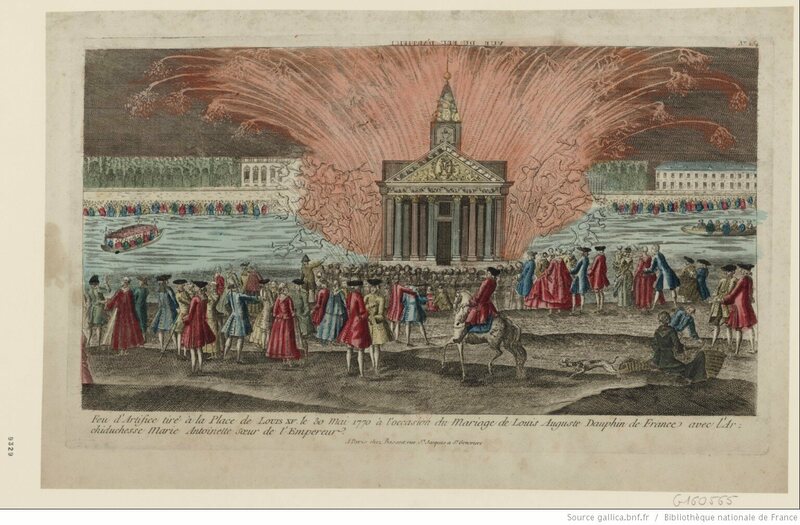
Fireworks at the Place Louis XV celebrating the marriage of the Dauphin and Marie Antoinette, 30 May 1770 — the same event that caused a fatal stampede killing over 130 people Feu d'Artifice, Place Louis XV, 1770, Bibliothèque nationale de France, public domain -
With this disaster to kick things off, Antonia and her teenaged husband joined the court of his father, Louis 15, at Versailles, which was at the peak of its decadence. Versailles was full of rich people engaged in unbelievably petty politics while ignoring issues facing France.
-
As an example of how petty: Louis 15 getting dressed every morning was a semi-public event, with dozens of nobles involved, some of whom had paid enormous sums for the privilege of being the one to hand him his pants. They jealously guarded these rights.
-
Meanwhile the teenagers of Versailles were pretty much running amok. Amongst many other examples, they had a fashion for exotic pets, all of whom were poorly trained. It was a routine problem for their dogs and monkeys to get into fights and run around the palace, creating havoc.
-
After 4 years of Marie Antoinette basically hanging around bored at Versailles, Louis 15 died of the plague, which was at that time repeatedly sweeping through Europe carrying off millions of people. Aged 19, she was now queen of France; the pressure to have a baby grew.
-
This was a problem because her husband Louis-Auguste, now Louis 16, showed no sexual interest in her whatsoever. For the first 7 years of their marriage they had no sex at all, partly through lack of interest and partly through Louis not knowing what to do (he was pretty dumb!).
-
Eventually an older relative visited and had a frank conversation with Louis about the basic mechanics ("don't just stick it in and leave it there for 2 minutes, you have to move it in and out" was apparently the root of the misunderstanding) and pregnancies began to happen.
-
Finally giving birth to an heir to the throne cemented Antoinette's popularity with the French public, which initially was enormous. She was cheered in the streets and whenever she visited the theatre. But this was not going to last.
-
The deciding factor behind the change in public opinion seems to have been the birth of the tabloid press, known as "libelles". These were salacious, entirely fictional pamphlets printed and sold to the public for profit, the same root word as the legal term "libel".
-
At this stage of history in France the cost of printing had fallen radically, but rather like social media today, public perception of how reliable something in print was had not caught up to this reality. Totally fictitious tales of salacious orgies were taken at face value.
-
There was no precedent for this kind of thing, so there were no legal tools to fight slander of this kind short of censoring the pamphlets, which merely increased their popularity. Antoinette's strategy was to attempt to ignore them, but this did not limit public interest.
-
The stories bore no relationship to reality. Antoinette did not drink but was accused of drunkenness, was chaste to the point of being totally inept but was accused of sexual depravity (including being a lesbian, for which there is no evidence whatsoever).
-
At a certain point, the profit-driven incentive to smear Antoinette took on a life of its own. The public, primed now to dislike her, began to blame everything bad that was happening in France on her, which further accelerated the decline in her reputation.
-
And there was a LOT going wrong with France at the time. Chief among these was that it was bankrupt, largely as a result of profligate spending on a proxy war with England known as the American Revolution. But that was popular so they blamed Marie Antoinette's spending instead.
-
I don't know about you but this timing was surprising to me. I think of Marie Antoinette and the French revolution as happening *very* long ago, but in fact George Washington was a solid 23 years older than Marie Antoinette. Lafayette and Jefferson were hanging around Versailles.
-
The other thing driving the decline in Antoinette's reputation was that people still had a lot of lingering respect for the king, in concept, although not Louis 16 specifically. Unable or unwilling to criticize him for misrule, they blamed his bad decisions on Antoinette.
-
Attempts were made to rehabilitate her image, including emphasizing her role as mother to the "children of France". A portrait was painted of her and her 4 children, but after it was complete the youngest died and was *erased from the portrait*, hence the hauntingly empty cradle.
-
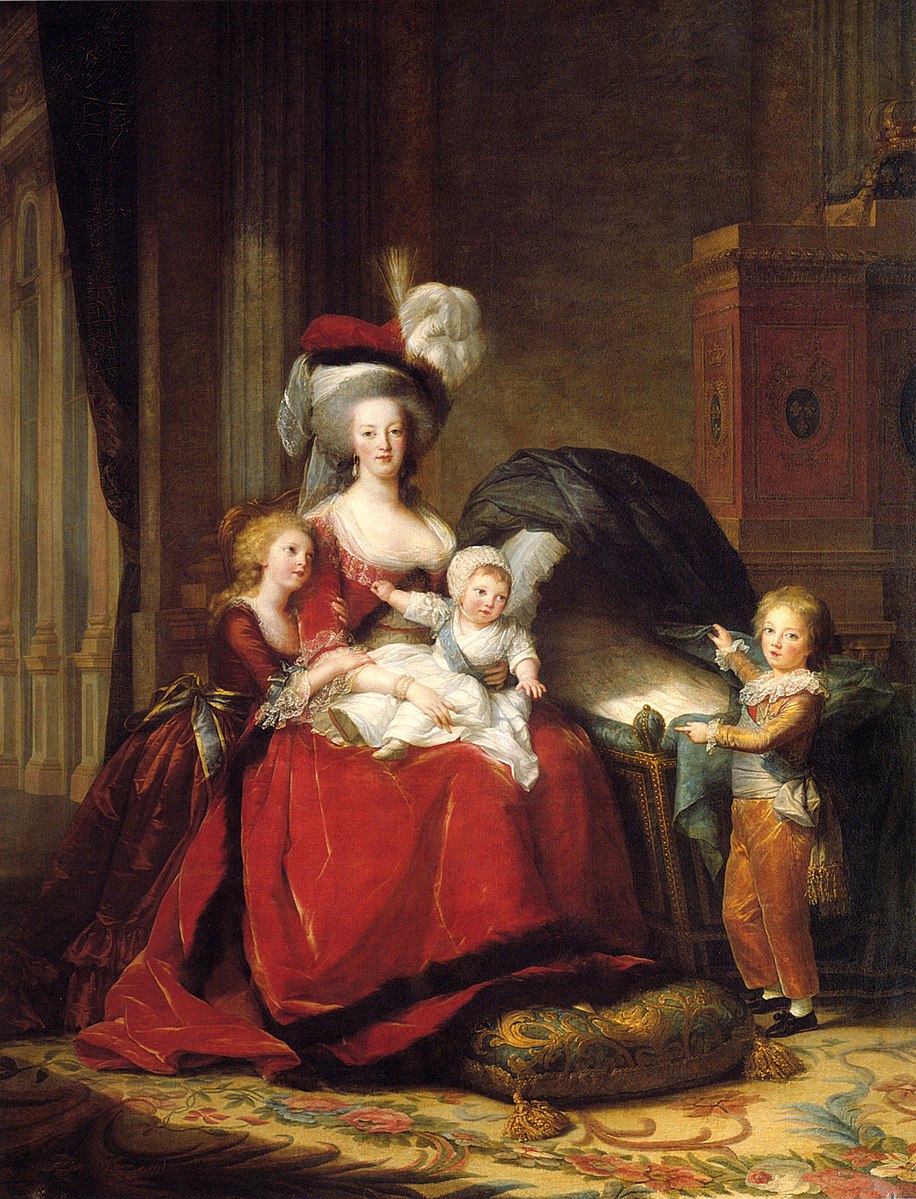
Marie Antoinette and Her Children, by Élisabeth Vigée Le Brun, 1787 — the empty cradle at right marks where the youngest child was erased after dying Élisabeth Vigée Le Brun, 1787, public domain -
One might have expected the death of a child to perhaps soften people's attitudes to the royal couple, and it might have worked had the public not been distracted by unrest that was about to turn into the French revolution.
-
I am not going to attempt an analysis of all the myriad causes of the French revolution, but certainly a big part of it was that France had just gone broke funding a democratic revolution in America, and people reasonably asked why they couldn't have some democracy too.
-
We have already seen why Antoinette was called stupid and decadent, both arguably fair, and this is where "arrogant" comes in. She and Louis simply could not, would not, until the very end believe that the people of France could take all of their power away.
-
In fairness it took the people of France forever to fully do this. It took years and years of revolts that slowly eroded the power and freedom of the king of France until finally they decided that they didn't want him at all and couldn't leave him free to try making a comeback.
-
First the public stormed Versailles; Louis and Antoinette fled to Paris and were held in semi-captivity in the Tuileries. But they were still rich and very comfortable and some sort of constitutional monarchy was envisioned. They stayed there for several years.
-
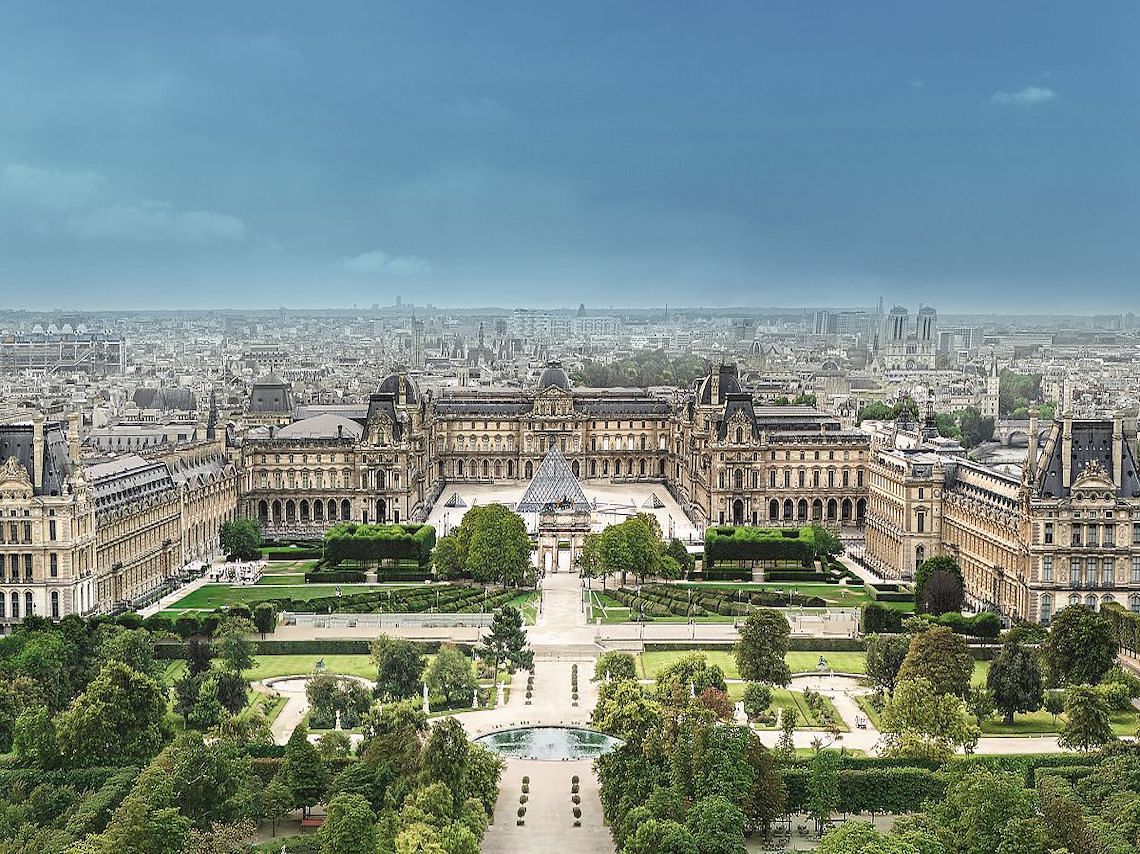
Aerial view of the Louvre and Tuileries Gardens in Paris — the Tuileries Palace (now demolished) was where the royal family was held captive during the Revolution Aerial view of the Louvre, Paris, Licensed from iStockPhoto -
During this period they made an escape attempt. They actually got out of town (in considerable comfort in a carriage custom built for the purpose) but Louis' inept planning and total inability to make independent decisions meant it went wrong and they were dragged back.
-
They were put under further restrictions following the escape. Then there was another revolt and the public stormed the Tuileries; the royal couple and their children again fled and this time were imprisoned, in considerably less comfort, at the Tower of the Temple.
-
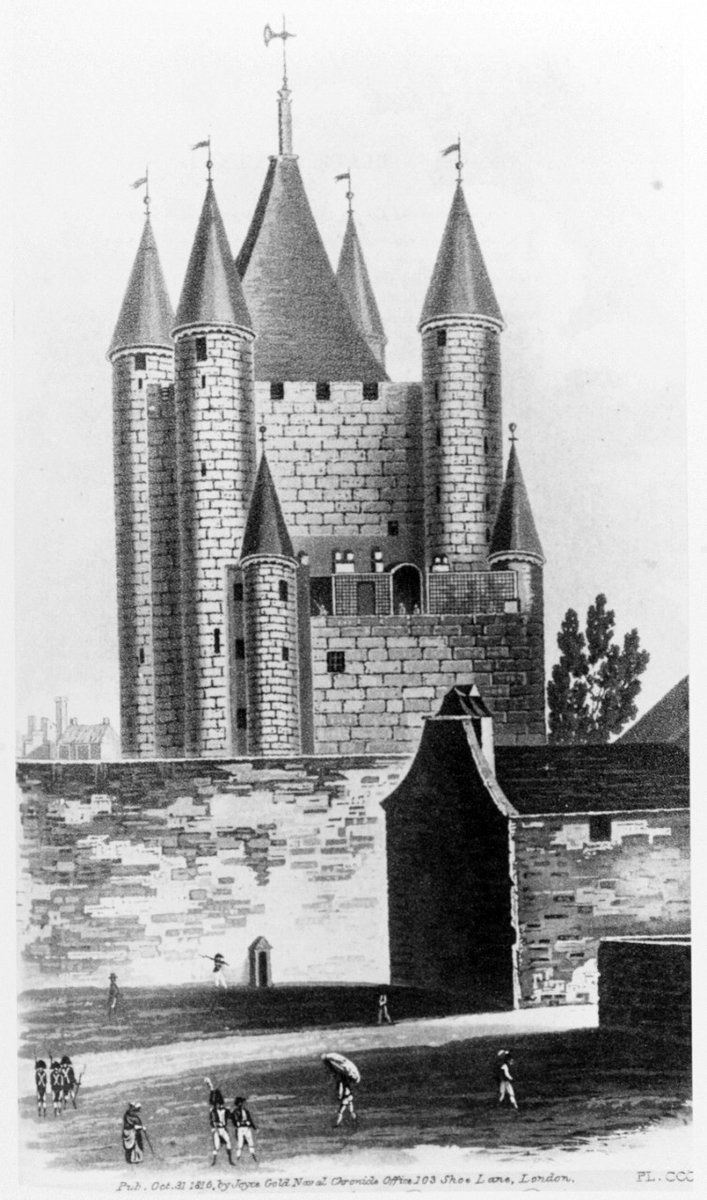
Engraving of the Tower of the Temple in Paris, the medieval fortress where Louis XVI and Marie Antoinette were imprisoned, 1818 Engraving of the Tower of the Temple, Joyce Gold, 1818, public domain -
Further escape plans were made and abandoned. Exile to North America was considered and rejected. They had many, many chances to escape, and even more chances to simply give up power forever. But they could not envision doing so. They could not imagine not being royalty.
-
Eventually the revolutionaries got sick of having this problematic king hanging around and killed him. After less than a year, a sick and haggard Antoinette, still only 38, was given a sham trial and also executed. Of her 4 children, only one survived to adulthood.
-
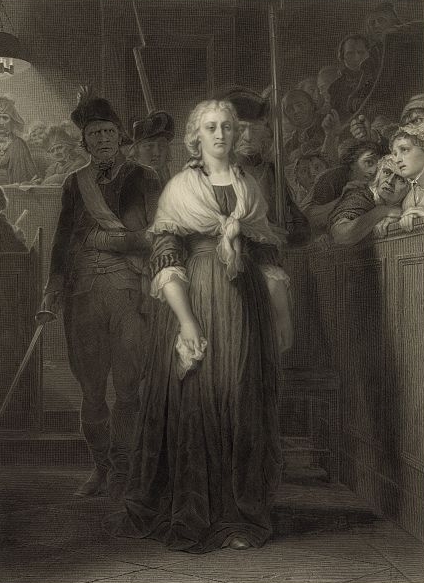
Marie Antoinette before the Revolutionary Tribunal, an engraving depicting her trial before she was guillotined in 1793 Marie Antoinette before the Revolutionary Tribunal, public domain -
It is also worth noting that she was thrown to the wolves by her family, who were very much still in charge of Austria. They were in fact already at war with France, but didn't consider it worth the sacrifice of territory or prisoners to get her back from her captors.
-
It's just sad. Marie Antoinette was given no tools in life to be anything other than a pampered royal baby factory. She did this job, and then circumstances far out of her control thrust her into a radically different situation, to which she was unable or unwilling to adapt.
-
The contrast to our earlier subject, Catherine the Great, is stark. Likewise a teenager in an arranged marriage thrust into power with a husband who was not up to the job, their trajectories could not have been more different.
-
If Marie Antoinette had risen to the challenge, her story would have been one of triumph. Instead she merely met expectations, and those expectations were rock bottom, and the result was tragedy. She did nothing to save herself, but she was never really equipped to do that.
-
In terms of legacy, what Marie Antoinette is most remembered for is the line "let them eat cake". She never said this, and in fact it was totally out of character. She was known for being very charitable and down to earth and was beloved by the servants who worked for her.
-
In fact, the phrase "let them eat cake" was already in use before she was born, in an apocryphal story attributed to "a great princess". It was tied to her later by the same tabloids who tied her to incest and orgies. It was a lie, and all but the most credulous knew that.
-
She was neither villain nor saint. She was a creature of her surroundings, and Versailles at the time was debauched and decadent. She spent lavishly; she was not the cause of France's poverty but she did not help. She loved her children and was loyal to her husband to the end.
-
Was she stupid? Uneducated, at least. Was she decadent? Yes, but she was raised to be. Was she arrogant? Totally, but mostly through a lack of imagination of how things could be different. Marie Antoinette's life is mostly just sad.
- Previously: Catherine the Great
- Next: Mozart
- Full list
Text and images copyright © 2020-2023 Laurie Voss
except where indicated
except where indicated