Mary Wollstonecraft
-
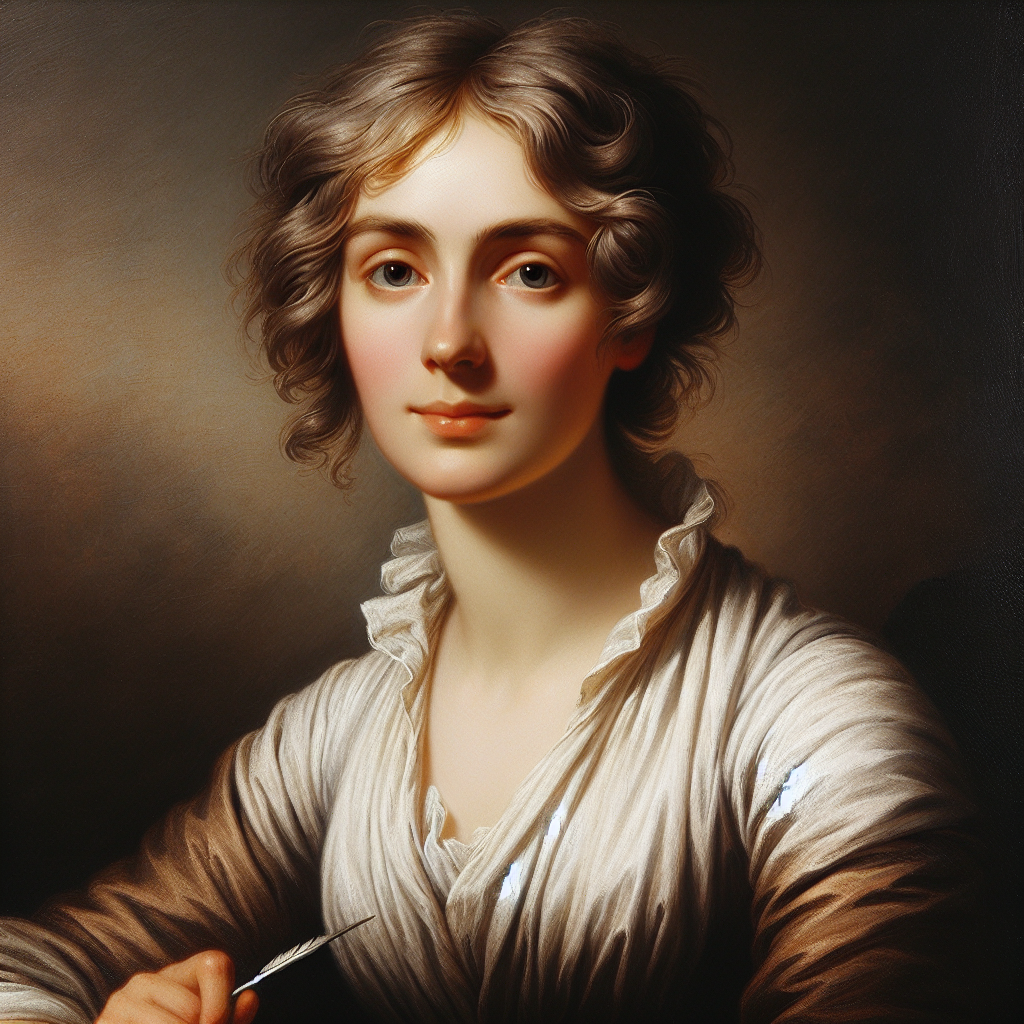
Today's entry in #EuropeanBios is number 66, Mary Wollstonecraft, born 1759, an English writer, philosopher, and early feminist. She is also incidentally the mother of Mary Shelley, born 1797, author of Frankenstein, who I'll be covering in entry 67 very soon after this one.
-
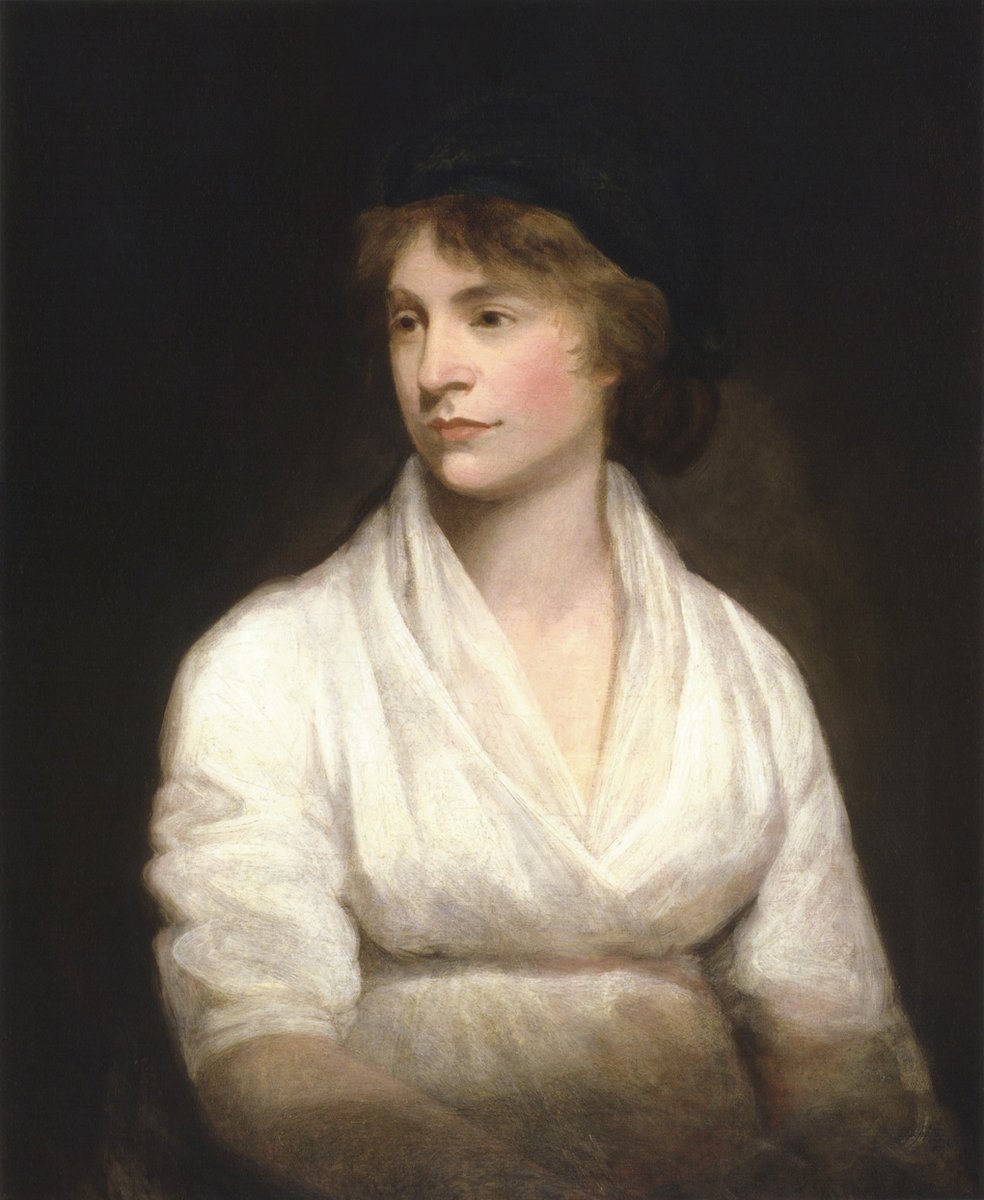
Portrait of Mary Wollstonecraft by John Opie, ca. 1797 John Opie, ca. 1797, public domain -
I'm pairing mother and daughter here because the biography I read covered both, simultaneously, in interleaved chapters. The author thought this was very important because their lives have important parallels and they influenced each other and this is sort of true?
-
But also true is that Mary Shelley is pretty famous while Mary Wollstonecraft is unknown to at least half of you. The author is a big fan of Mary Wollstonecraft, and I get the impression the combined book is an attempt to raise her profile somewhat.
-
It's also VERY confusing to read about mother and daughter interleaved because Mary Wollstonecraft marries William Godwin, becoming Mary Godwin, while her daughter is born Mary Wollstonecraft Godwin and then marries Percy Shelley, becoming Mary Wollstonecraft Shelley.
-
There are also an absurd number of people in their combined lives who share the same names. There are 3 Marys, 2 Fannys, 4 Janes, 2 Claires (one of whom starts out as a Jane), 2 Williams and 2 Percys. This is clarified in no way by the least helpful diagram I've ever made, here:
-
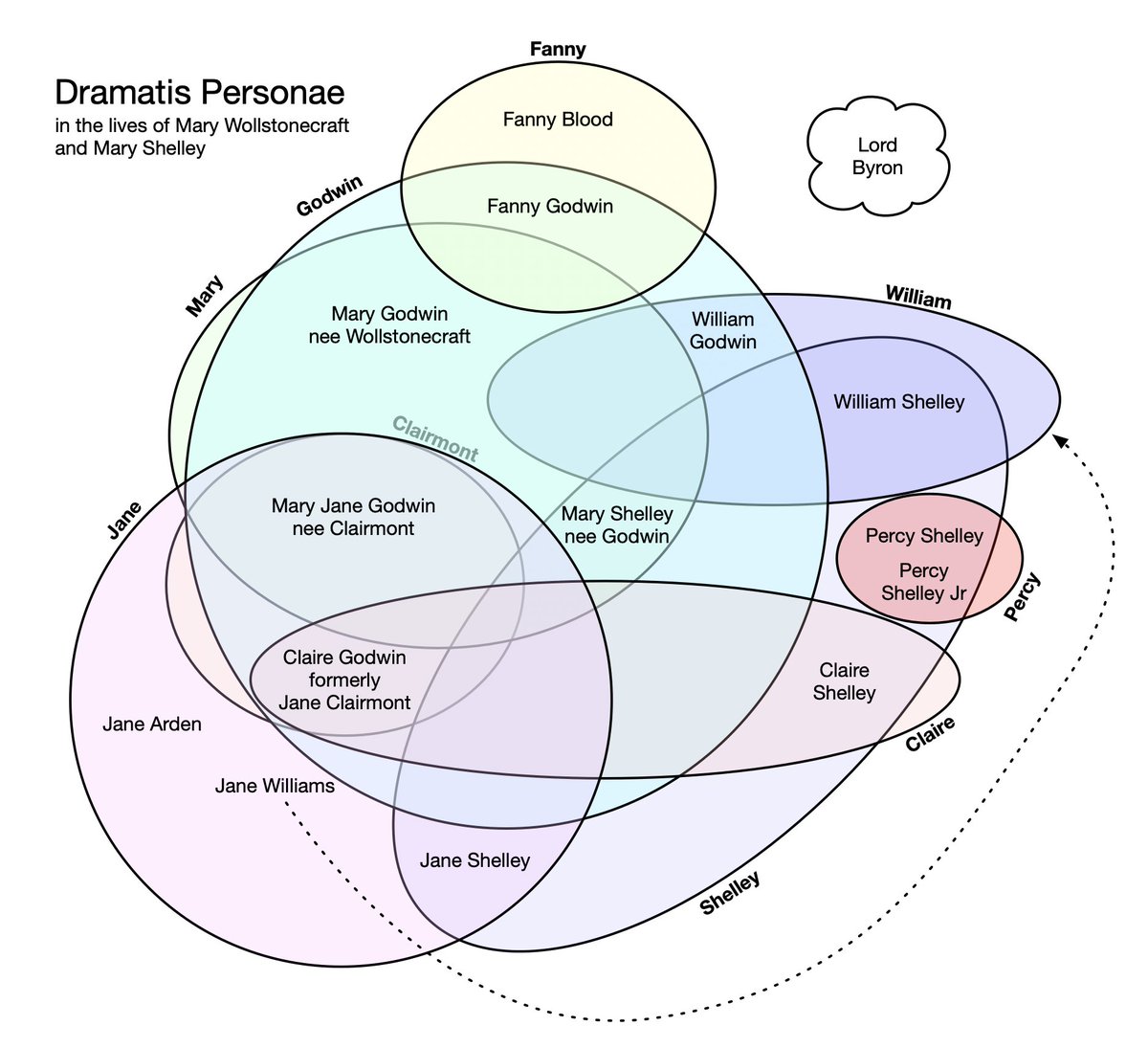
A Venn diagram showing the bewildering overlapping names and relationships in the lives of Mary Wollstonecraft and her daughter Mary Shelley Dramatis Personae diagram, via Wikimedia Commons (CC BY-SA) -
So anyway. Mary W, as I'll be calling her to disambiguate her from Mary S, her daughter, had a pretty shitty start to life. She was born in what was then a poor and violent London neighborhood, Spitalfields, although her family itself made a lot of money in the silk trade.
-
Her grandfather resented that British society meant aristocrats looked down on him no matter how much money he made, so he set his son up with a lot of money in a much fancier part of town, hoping to purchase social mobility that way. It worked, at least initially.
-
Unfortunately Mary W's father suffered from alcoholism and had a violent temper. He repeatedly raped her mother, attacks that Mary would attempt to stop by physically blocking his path when he came home drunk, which would make him even angrier and more violent.
-
In addition to being abusive, Mary's father squandered the money he received, forcing them to repeatedly move house to cheaper and cheaper parts of England to escape bills and creditors. Mary's education was consequently minimal, and she was forced to be mother to her sisters.
-
Understandably these traumatic formative years shaped her. She was forever a champion of the rights of women, a crusader against injustice in general, deeply suspicious of the institution of marriage, and deeply skeptical of the value of men in general.
-
This crystallized early in life into a strong resolve to be independent, legally and financially, but this was an extremely tricky goal in the 1700s. Women were legally speaking almost property, first of their fathers and then of their husbands.
-
Her younger life was also shaped by a pair of extremely intense attachments to other women. While school-aged to her friend Jane Arden, then in her early 20s to Fanny Blood, with whom she made plans to live together in an apparently non-sexual but all-female domestic utopia.
-
We know of the strength of her attachment from letters to both. "I am a little singular in my thoughts of love and friendship; I must have the first place or none" she said to Jane. To Fanny she described her affection as "almost (but not quite) that of an intending husband".
-
This all sounds quite queer, but as you'll recall from our earlier coverage of Queen Anne "there is much debate about the existence of lesbianism" at that time (I'm kidding. There is not). Regardless, as we'll see, she took enthusiastically to men later.
-
Her first attempt to make her own money was to be hired as a "lady's companion" (a servant treated as a sort of pseudo-friend) by Sarah Dawson, a rich widow. However Mary found her extremely dull and snobbish, and quit when Mary's mother became ill and needed care.
-
Around this time she started writing. One of her first works was called "Mary: A fiction", a semi-autobiographical tale that spent quite a lot of time making fun of a character who bore a lot of resemblance to Sarah Dawson, a literary revenge she would pull off several times.
-
Her second attempt was to start a school for girls, which she did with the financial backing of a wealthy widow. The school was in Newington Green, considered at the time to be a hotbed of radicalism, an idea that anyone who has visited the area recently will find hilarious.
-
While in Newington Green she may have met John Adams, future president of the United States, who stayed there with his wife Abigail precisely because it was full of his fellow radicals. Whether or not they met, John and Abigail were later huge fans of Mary's writing.
-
Fanny Blood meanwhile got married and followed her husband to Portugal. While there her always poor health worsened. Mary abandoned the school to run to Portugal to be with her, but Fanny died before Mary arrived. The school, never financially successful, was closed.
-
After Fanny Blood's death Mary got work as a governess in Ireland. She adored the girls she was in charge of but disapproved of their parents, who were English colonizers actively oppressing the Irish, and she wrote another book that made veiled fun of them.
-
At this point she decided to become a full-time author, an entirely unheard-of career for a woman in 1700s England. She moved to London and met a radical liberal publisher, Joseph Johnson, who started regularly buying her work and helped her make contacts in the industry.
-
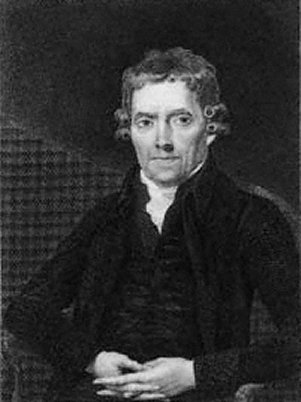
Portrait of Joseph Johnson, the radical publisher who helped Mary Wollstonecraft launch her career as a professional author Portrait of Joseph Johnson, public domain -
Given her experience it's unsurprising that one of her first works was about how to educate young girls, a book called "Thoughts on the education of daughters". Its contents are mundane now, roughly: "we should teach girls like we do boys". But at the time this idea was radical.
-
"At the time this was a radical idea" is a pretty good summary of Wollstonecraft's whole authorial career, really. She was one of the very first feminists, and incredibly influential, but none of the ideas she promulgated at the time are remotely radical now.
-
These were ideas like "women should have rights and control their own lives". There is no overstating how offended the establishment was to hear this suggested. Everything she wrote was mercilessly mocked and ridiculed by deeply condescending, thoroughly sexist critics.
-
To be able to let her ideas stand on their own, she sometimes wrote as the gender-free initials "MW". As MW her ideas were often hailed by critics as forward-thinking liberalism, only for those same critics to call the same work ridiculous when she revealed herself as the author.
-
She snuck her ideas under the radar in other ways as well. Hired by Johnson to translate books into English, she didn't just translate them but also embellished them, adding paragraphs of her own thoughts and sometimes reversing the authors' own sentiments.
-
She was very much aware that she was breaking new ground. Of her career as an author, she called herself "the first of a new genus". Of her views on what would become feminism, she understood change would be slow, and said "others write of what is; I write of what will be".
-
One of the contacts Johnson made for Mary was to Thomas Paine, the famous author of "Rights of Man". She famously attended a dinner party with Paine, also attended by her future husband William Godwin, where she dominated Paine's attention, much to Godwin's consternation.
-
Inspired by Paine, she wrote "A Vindication Of The Rights of Men", a defense of his work against contemporary criticism. Paine himself loved it, and it was hailed by critics until they figured out that it had been written by a woman, at which point they mocked it.
-
Undeterred, two years later she wrote "A Vindication of the Rights of Woman", a foundational text of feminist philosophy. Again, its ideas today are mundane or even regressive (she advocated educating the poor and the rich separately) but it was earth-shakingly new back then.
-
Inspired by the ideals of the French revolution, she traveled to Paris as a sort of foreign correspondent. She arrived at the peak of the turmoil and witnessed in person the downfall of our previous subject, Marie Antoinette and her husband Louis.
-
In Paris she met an American man called Gilbert Imlay, with whom she fell passionately in love and had sex, apparently for the first time, at age 33. Love apparently dissolved a lot of her convictions about useless men, and she became highly emotionally dependent on him.
-
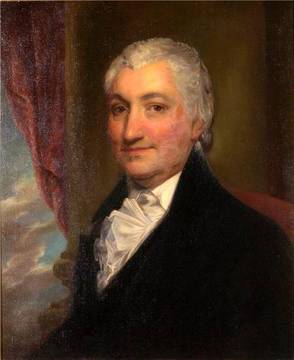
Portrait of Gilbert Imlay, the American adventurer with whom Mary Wollstonecraft fell passionately in love in Paris Portrait of Gilbert Imlay, public domain -
Paris was an absurdly dangerous place to be in the 1790s. Another of our subjects, Maximilien Robespierre, was busily murdering anyone who crossed him or seemed insufficiently revolutionary. It was especially dangerous to be English, since England opposed revolution.
-
Despite the danger, she was enthralled, meeting various revolutionary figures and touring the empty palace of Versailles, untouched since the royal family had been abducted to Paris. She became pregnant by Imlay, who was initially delighted and planned a life together in America.
-
But it didn't work out. After the baby was born Imlay, who was involved in various risky smuggling schemes, went to London for business. His letters back to Mary and her new daughter Fanny became increasingly distant, and hers to him increasingly desperate and frantic.
-
Unable to work and care for a new baby at the same time, she ran out of money and spent the last of her funds to meet Imlay in London. But when he got there he rejected her. Despairing, Mary took a course of action we're going to hear a lot about: she drank laudanum.
-
Laudanum is 10% liquid opium, basically morphine. In the 1700s it was used to treat basically every affliction, at which it was moderately successful, since when you're on morphine you don't really care how sick you feel. It was also a common method of suicide.
-
Imlay somehow prevented Mary's suicide. In a final attempt to rescue their relationship, she went to Sweden to attempt to track down some silver that had gone missing in one of his smuggling deals. She didn't get the silver but she did write a very successful book about the trip.
-
Returning again to London she discovered why Imlay had drifted away: he was having an affair with a young actress. Her reaction to this was atypical, to say the least.
-
Mary believed passionately in freedom, and she believed that should include the freedom to love whoever you liked. However, she wanted a father for her daughter. She suggested all three of them live together in a ménage à trois. Imlay was surprisingly open to this possibility.
-
But the actress, whose name has been lost to history, was not jazzed and rejected the idea. Once again driven to suicide, Mary attempted to drown herself in the Thames, but was rescued by some local fishermen hired by a charity specifically to prevent this kind of suicide.
-
She finally gave up on Imlay and resumed her career as a writer. Joseph Johnson continued to introduce her to contacts, and it was through his circle that she was re-introduced to William Godwin, whom she had so offended at the dinner party with Thomas Paine years earlier.
-
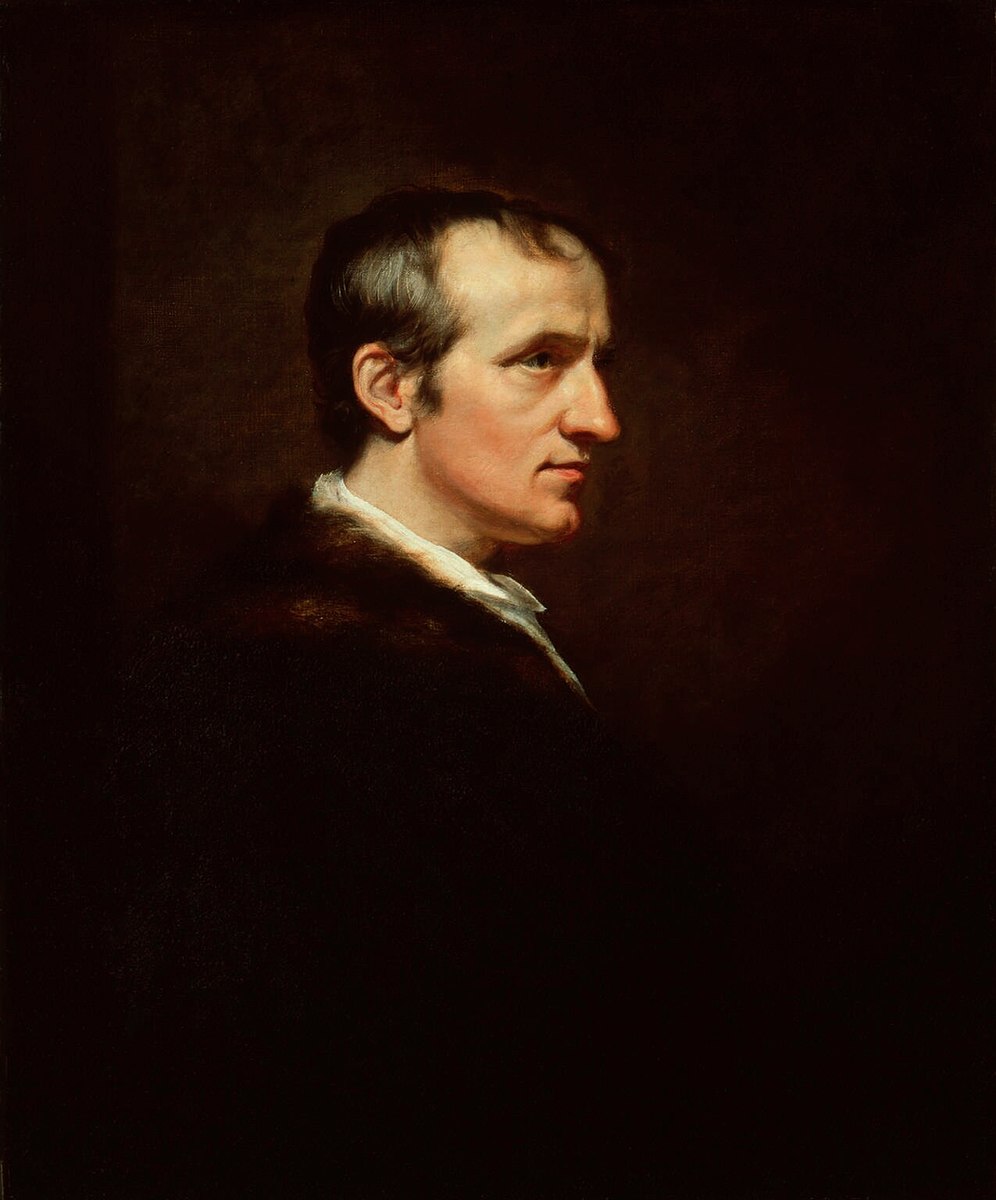
Portrait of William Godwin, the philosopher who became Mary Wollstonecraft's partner and eventually her husband, by Henry William Pickersgill Henry William Pickersgill, public domain -
Godwin was a weird, extremely uptight, self-important man who was also a brilliant philosopher. He, emotionally repressed and she, emotionally damaged, began the weirdest, most hesitant, most British courtship you've ever heard of. It was months before they held hands.
-
Mary, whose education had been sparse, frequently made mistakes of grammar and punctuation while writing and was sensitive about it. A particularly poignant detail of their courtship is that she asked Godwin to read and correct her drafts, a very meaningful vulnerability for her.
-
Part of the reason for his hesitancy in wooing Mary was that Godwin, then aged 40, was still a virgin. It took them four tries to consummate their relationship, each of which Godwin meticulously documented (in a private code consisting of dots and dashes) in his diary.
-
Both radical liberals, Mary and Godwin disapproved of marriage, but then Mary became unexpectedly pregnant. They approached this as a logical problem: it would hurt their literary reputations to change their minds about marriage, but a child out of wedlock was a bigger scandal.
-
Godwin had previously written against marriage, and in fact in his book Political Justice he advocated for its total abolition. To get around this contradiction, he quietly released a new edition in which he changed his position on marriage to that of a necessary evil.
-
So they very reluctantly married. Far from celebrating, they merely announced the event to friends via letters. In an attempt to downplay the significance of the event, these letters are almost comically elliptical: in one, Godwin forgets to tell his friend his new wife's name.
-
And here Mary W's story ends abruptly. She gave birth to her daughter, Mary, but in the process she acquired an infection (from the unwashed hands of a pre-germ theory doctor) and, 11 days later, died. Godwin, emotionally repressed as he was, did not attend her funeral.
-
Godwin's grief combined with his self-importance to completely fuck things up for Mary W. In an attempt to turn his grief into a memorial, he tried to write a biography of Mary. But he wrote it in a huge hurry and in a way that conformed with his own views and self-image.
-
The result was a book that treated the brilliant, radical Mary as a sort of drug store romance novel heroine, running from man to man until rescued by the heroic Godwin. He made her sound absurdly dramatic, which in fairness was true, but far from the whole story.
-
The book also revealed that Mary had a child out of wedlock with Imlay and her two attempts at suicide. All of these were considered huge social scandals at the time, and destroyed her reputation, making it socially impossible for anyone to support her philosophical views.
-
The deeply sexist critics of 1790s England were all too happy to further tear down Mary, who they'd never liked anyway. For more than a century, their efforts successfully erased her views and accomplishments until 20th century scholars re-discovered and reconsidered her work.
-
But Mary Wollstonecraft's legacy today is much better. She is regarded as one of the founding philosophers of feminism. Her views also shaped the life of her daughter, Mary, one day to be known as the author of Frankenstein. But that story is for thread 67.
- Previously: Admiral Nelson
- Next: Mary Shelley
- Full list
Text and images copyright © 2020-2023 Laurie Voss
except where indicated
except where indicated