Napoleon
-
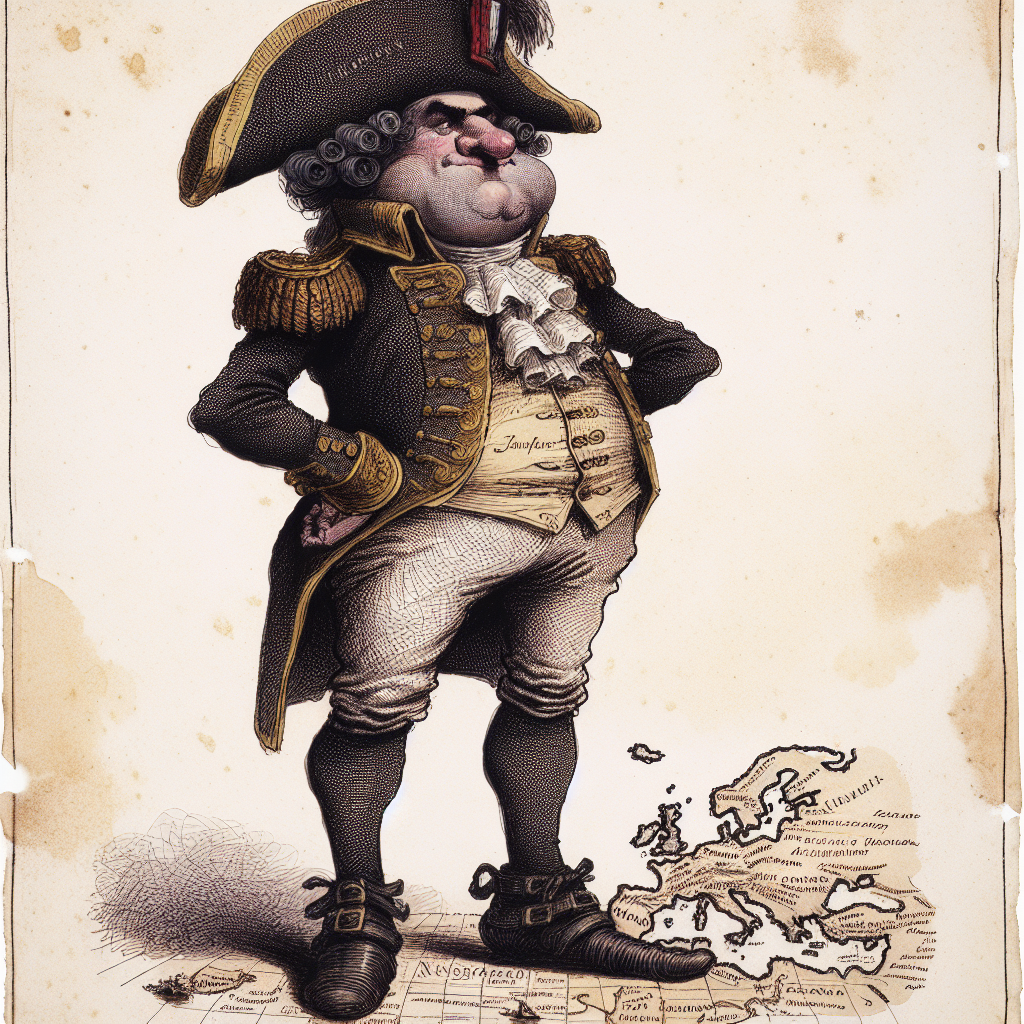
#EuropeanBios entry 68 is Napoleon Bonaparte, famous French general and complete monster, who like most of the famous generals I've covered was only really good at war and kept fighting bigger and bigger ones, conquering most of Europe, until he over-reached and it all collapsed.
-
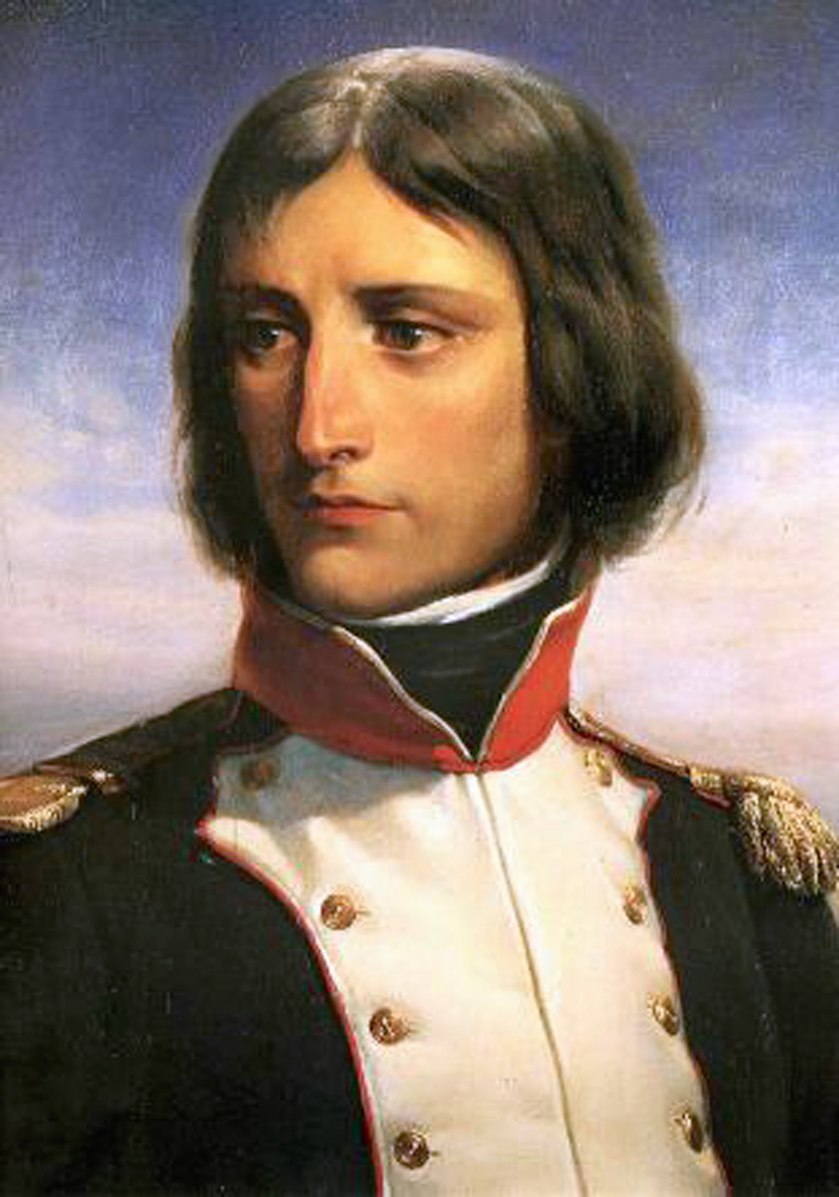
Portrait of Napoleon Bonaparte as a young officer Portrait of Napoleon Bonaparte as a young officer, public domain -
Our last entries were a pair of threads on Mary Wollstonecraft and her daughter Mary Shelley, so for the first time we're out of chronological order: Napoleon was born in 1769, 10 years after Wollstonecraft and 28 years before Shelley.
-
Great generals I've read about all share a story: - a new technology arrives - they are the first to get really good at that tech - it allows them to move faster than anyone else - they conquer everybody really quickly - they can't figure out how to govern - it all goes wrong
-
There's no shortage of examples. Alexander the Great was really good at, uh, spears? Honestly, it doesn't take much: TKTKTK Hannibal famously had elephants, specifically Indian elephants brought back by Alexander:
-
Julius Caesar was really good at engineering: TKTKTK Hadrian's gay adoptive father Trajan was too: TKTKTK Attila the Hun was better at archery than anyone has ever been, before or since:
-
William the Conqueror had castles: TKTKTK Frederick the Great had cavalry: TKTKTK Genghis Khan, by far the greatest general to have lived, had an "all of the above" strategy:
-
Which brings us to Napoleon, who had math. He also had artillery, and when you are good at math you can be very effective at artillery, which he was. But he used math in all sorts of other ways -- logistics, tactics, mapping -- and kicked everyone's ass as a result.
-
Napoleon is something of an exception in that he did get a certain amount of governing done once he was in power, but Genghis Khan was really good at that part while Napoleon was only able to manage it briefly before getting sucked back into war again.
-
But let's get back to the beginning, and as we so often do we must correct his name: he was born in Corsica, where his name was Napoleone di Buonaparte. The "ne" is quite significant because in French "nez" means "nose" so at school his nickname was "the nose", which he hated.
-
I could called Napoleone "Nez" for the rest of this thread, because he was a bastard and the least I can do is use a nickname he'd have me shot for using, but I decided it's probably bad to make fun of someone's physical characteristics. Instead I'll be calling him Nap.
-
Corsica was (and by all reports still is) a place quite culturally distinct from the rest of Europe. It had a small-island culture, which is to say: it was very crowded, resources were scarce, everybody knew everybody else's business, and people held grudges for generations.
-
(Don't look at me like that, I come from a small island)
-
A lot of Nap's family history is various parts of his family suing other parts of his family. Notably, at one point several branches of the family all lived in one big house. Somebody added a staircase and they spent *decades* suing each other over whose staircase it was.
-
Around the time Nap was born Corsica was in the process of being haphazardly colonized by the French. Corsicans fiercely resisted this process for years, including Nap's family. But then French won and Nap's family abruptly switched sides and started sucking up to the French.
-
Nap's dad Carlo (pic) was ambitious, a lawyer by trade (hence the many familial lawsuits). In particular he sucked up to the French general Charles de Marbeuf. Marbeuf was a big fan of Carlo's wife, to the point that it is rumored (probably inaccurately) that he's Nap's real dad.
-
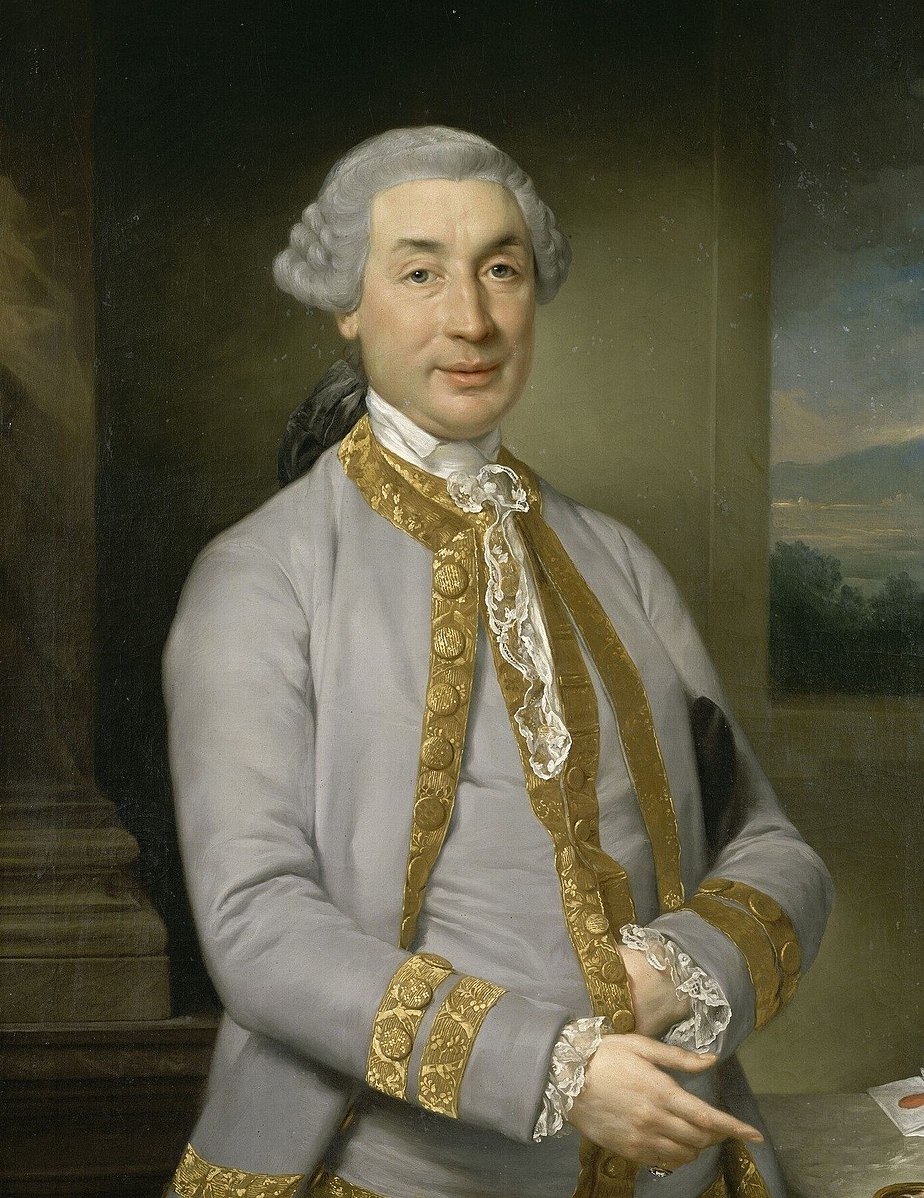
Portrait of Carlo Bonaparte, Napoleon's father, who was an ambitious Corsican lawyer and political opportunist Portrait of Carlo Bonaparte, public domain -
Through the patronage of Marbeuf and some forged documents, Carlo got his son Nap a scholarship to study at the French military academy. This is where Nap first learned to speak and write French, though he was never good at it and people always made fun of his accent and grammar.
-
While at school Nap considered himself a Corsican nationalist, supporting Corsican independence. He was unpopular and had basically an emo phase, writing bad poetry and stories featuring himself as the hero. He considered himself a philosopher; it must have been tiresome.
-
France was in the middle of getting sick of kings and killing Marie Antoinette and her husband. Nap enthusiastically adopted republican principles, and eventually convinced himself that France wasn't the problem, kings were the problem.
-
This allowed him to switch allegiance to "France" the concept, including colonized Corsica, without feeling like he'd betrayed his original conviction (though he had). This was a practical choice, since Corsica was not going to win independence and he needed a military career.
-
It should be clear that he was definitely just rationalizing his choice to himself here. He was never really in favor of democracy, with all of his writing from a young age being clear that he thought a benevolent dictatorship was the best form of government.
-
As part of his adopting a French identity, he made his very Corsican-sounding name more French by dropping the "ne" at the end of his first name and switching to a soft "te" at the end of his second, becoming Napoleon Bonaparte, a deliberate and cynical decision on his part.
-
But France was now a republic and had killed their king and the rest of Europe, still ruled by kings, was not having it. France was at war with everyone and this gave young Nap many chances to prove his skills and value as a military commander, which he did, in spades.
-
Nap was good at strategy and military tactics and, as mentioned, artillery in particular, but he was also great at organizing his men: he remembered their names and accomplishments, he addressed their needs, he flattered their egos. He inspired a great deal of loyalty.
-
He was also pretty good at managing his own PR. He sent exaggerated tales of his roles in battles and the degree or success, under-counting his own losses and over-counting those of the enemy. He began to gain a strongly positive reputation with the public.
-
Meanwhile the revolution was coming off the rails. Our former subject Maximilien Robespierre was getting completely carried away, executing people for no reason, the war was going badly, food was getting scarce, prices were high. People were sick of it.
-
So after Nap conquered Italy for the Republic of France he went back to Paris for a very awkward triumphal return. Awkward because he didn't like the ceremonial stuff and also because the people running France -- and so also the ceremonies -- felt threatened and wanted him dead.
-
This was not a metaphorical "I wish he would drop dead" but an extremely literal threat. Napoleon refused to eat or drink anything at the parties they threw for him, and in private only ate whole boiled eggs, which are pretty tamper-proof as far as poisoning goes.
-
Partly to keep him distracted and out of the way, the government of France sent Napoleon off to conquer Egypt. This went poorly. The army was not equipped for desert heat or conditions -- they had no water bottles -- and his men dropped like flies, of heat and of suicide.
-
Sick of losing in Egypt, he ignored orders and essentially abandoned his post, running back to Paris. There he pulled off a military coup, overthrowing the 3-man directorate that was running France at the time by basically bullying everyone into giving him power.
-
A coup is a really weird thing, because it's essentially a confidence trick: you convince every individual that everybody *else* is in favor of you being in charge, and that they'll therefore be in trouble if they go against the change, and if you're good everybody flips to you.
-
In Napoleon's coup he initially paid lip service to democracy, getting the senate to declare him "first consul" and nominally ruling in their name, but once he had consolidated his power he dispensed with those formalities and ruled directly by decree.
-
There are a lot of things about Napoleon that will remind you of Donald Trump. First were his speeches: he was very yelly and passionate, but his grammar and pronunciation were terrible and what he said often made no sense at all, or even contradicted itself. But it sounded good.
-
Another Trumpian quality of Nap's is that he trusted no one except his immediate family. He put his brothers, his mother or his wife in charge of anything he thought was important, including eventually making them kings of huge chunks of the empire.
-
Also Trumpian is that he was by all accounts a sociopath. He would negotiate in bad faith, make last minute demands, and then immediately break his word anyway. He was crude, misogynistic, and physically abusive when he thought he could get away with it. He was an asshole.
-
Yet another thing he had in common with Trump is that he was a crook. He embezzled, stole, bribed and cheated with no moral qualms, amassing enormous wealth for himself and his family over the course of his rule.
-
And his final and most Trumpian quality was his enormous, unconquerable inferiority complex. He needed everyone to look up to him, he wanted to be accepted by the elites, he needed constant attention and adulation and victory to prop up his own self image.
-
Now ruler of all of France, he put in place some important reforms that initially gained him a great deal of public support. He instituted the metric system, a new code of laws, and got the economy under control again by putting someone who knew what they were doing in charge.
-
But this wasn't enough -- nothing would ever be enough for his inferiority complex. So he went back to war, conquering enormous swathes of Europe. Victory after victory initially swelled France's treasury and his own ego. He promoted himself from "first consul" to emperor.
-
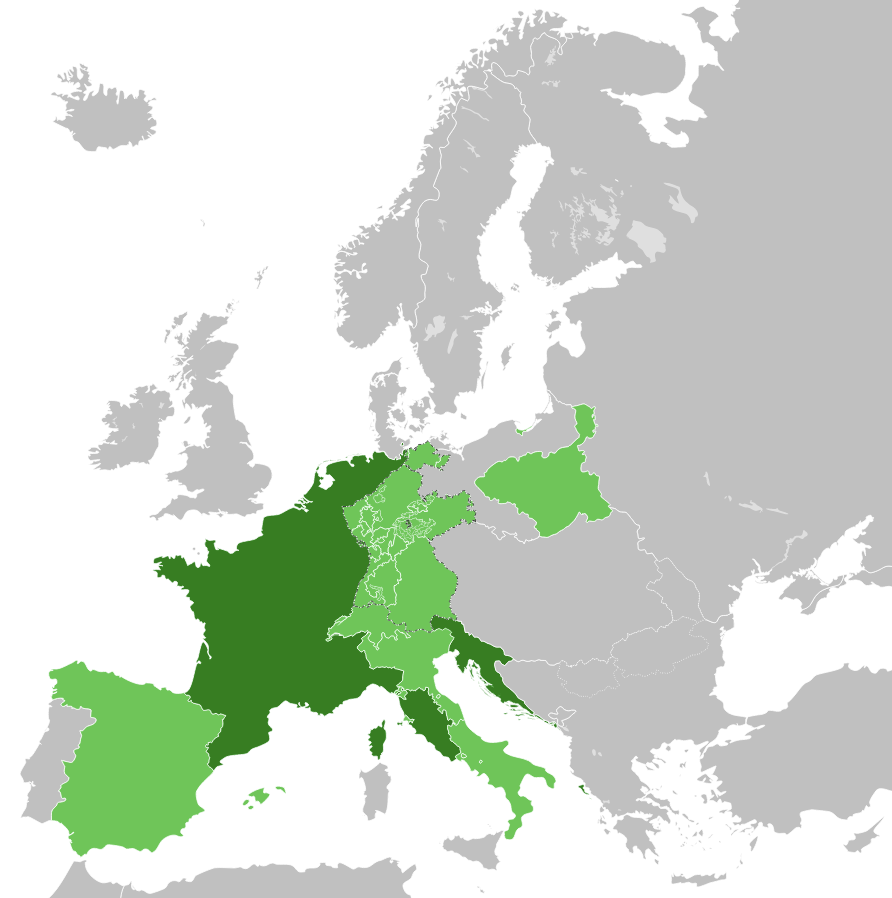
Map of the Napoleonic Empire at its height, showing French territories in dark green and satellite states in lighter green Map of the Napoleonic Empire (1812) by DIREKTOR via Wikimedia Commons (CC BY-SA 3.0) -
Thus the Corsican who hated French kings declared himself first French, and then king. Originally not a fan of royal splendor and decadence he enthusiastically embraced it, bringing back royal protocol around himself and spending lavishly on palaces and entertainment.
-
Now aged 40, up until this point his romantic life had centered around Josephine, whom he had met and married when he was 26. He was obsessed with her and she treated him like shit, openly and continuously cheating on him with a string of other men (he also had many affairs).
-
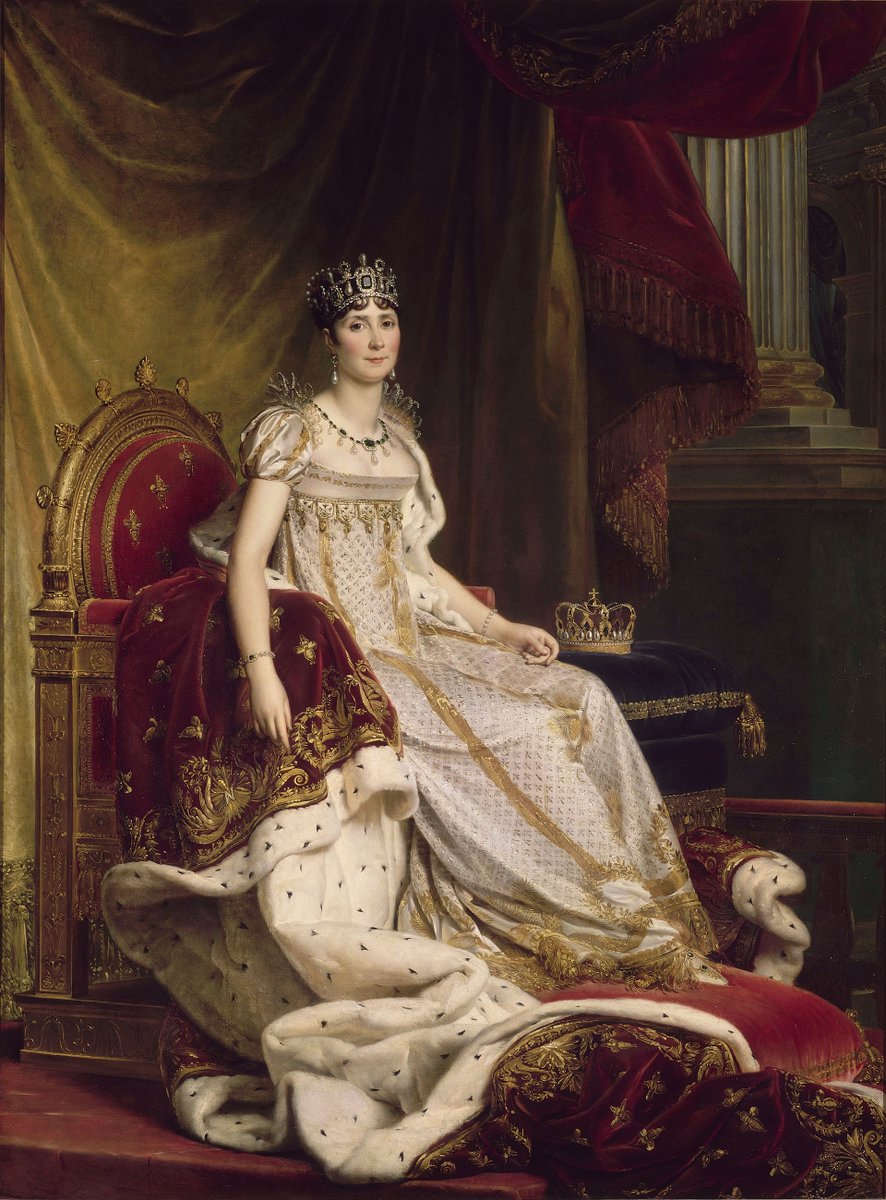
Portrait of Empress Joséphine in imperial regalia, Napoleon's first wife and great love François Gérard, Empress Joséphine, c. 1807, public domain -
Fun fact: Josephine's name was not Josephine. She was born Marie Josèphe Rose Tascher de La Pagerie, and was mostly called "Rose" until they met. "Josephine" was Nap's nickname for her, and she went by this name after they got married.
-
But Josephine was unable to have children, and Nap wanted to cement his empire by having an heir. For years Josephine had blamed Nap for their lack of children, accusing him of impotence, but he discovered this wasn't true when he accidentally got one of his mistresses pregnant.
-
So to get an heir, Nap married Marie Louise, an Austrian princess of the house of Habsburg, and therefore about as royal as it is possible to be. This annoyed the shit out of the kings of Europe because now he was, by marriage, effectively one of them, and they hated him.
-
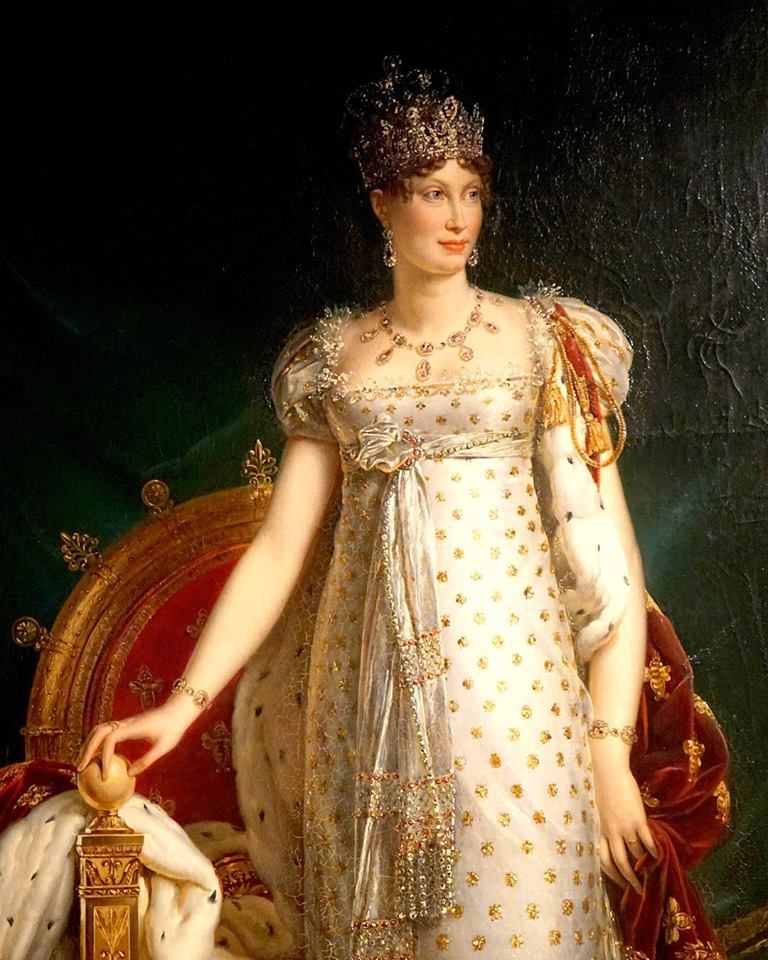
Portrait of Empress Marie Louise of Austria, Napoleon's second wife and mother of his heir Portrait of Empress Marie Louise, public domain -
This required divorcing Josephine, which he did with huge reluctance. He was truly in love with her, and he made sure she was wealthy and comfortable for the rest of her life. They continued to write to each other long after his new marriage.
-
Marie Louise dutifully gave birth to a baby boy, who through the Hapsburg connection and a great deal of arm-twisting of the Pope by Napoleon was dubbed King of Rome at his birth, a title dating all the way back to Charlemagne, our favorite nerd-king.
-
France improved under Nap's guidance, from the very low base of Robespierre's reign of terror. Roads were improved and other infrastructure was built, including an optical "telegraph" system consisting of towers with flags on top, that dramatically improved communication.
-
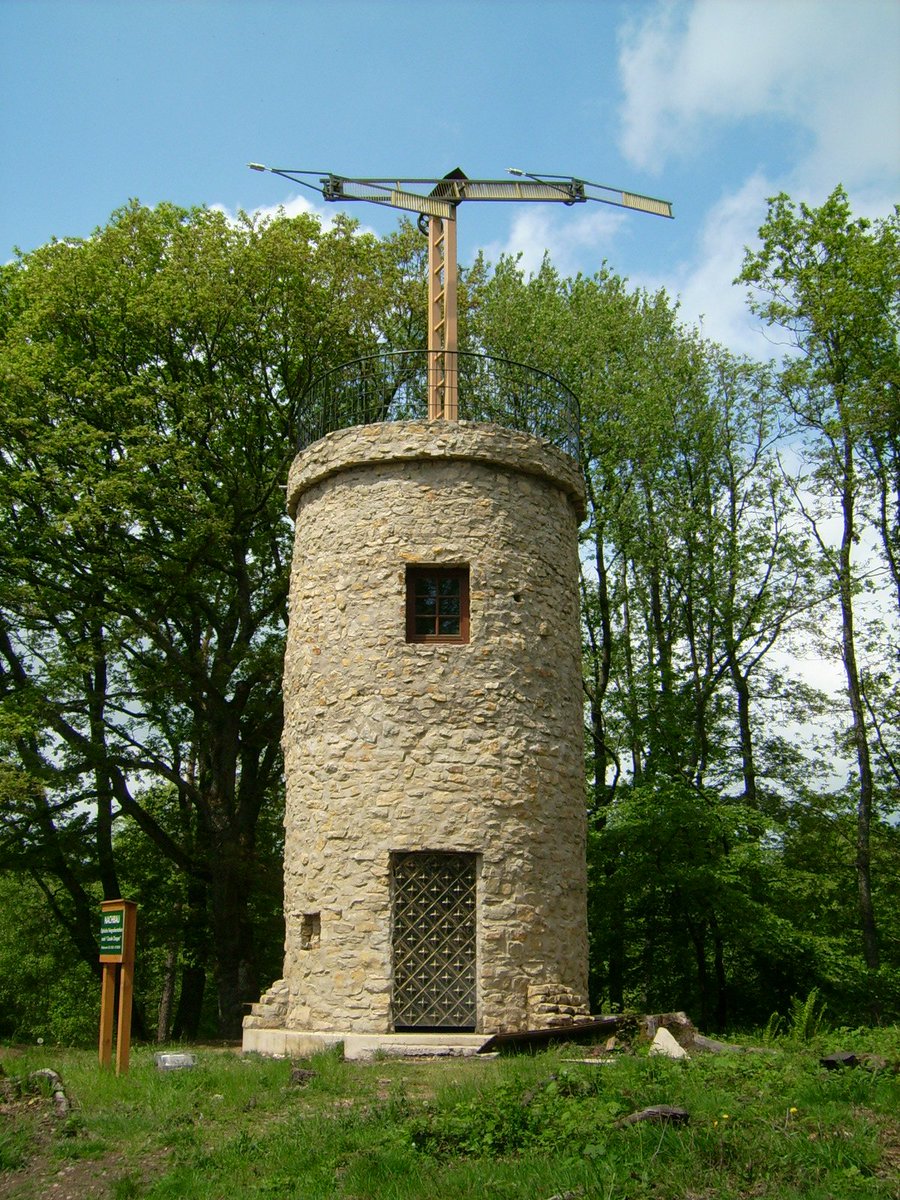
A reconstructed Chappe optical telegraph tower, part of the semaphore communication network Napoleon used to relay messages rapidly across France Chappe telegraph tower via Wikimedia Commons (CC BY-SA) -
It was at this point that Napoleon committed his fatal mistake, fatal that is for his career and also very literally fatal for hundreds of thousands of soldiers: under threat of invasion by Russia, he decided to take the offensive and invaded Russia with 450,000 troops.
-
The underlying problem is he had begun to believe his own hype. Remembering not the realities of battle but his own stories of how they'd gone, he abandoned his previous meticulous planning and fine-grained attention to detail, trying to take Russia by overwhelming force.
-
If he'd done anything like his previous levels of planning he would absolutely have won. His enormous army plowed through everything before it; the Russians didn't have anything like the training or material to combat the French army at the height of its power; they retreated.
-
But the Russians had two advantages: first, they were on their home turf and knew it better, and second, they were absolutely ruthless. Napoleon's armies usually foraged for food as they traveled; the Russians prevented this by burning everything behind them as they retreated.
-
Napoleon made it all the way to Moscow, but it was a Pyrrhic victory: the town was mostly evacuated and the Russians set all of Moscow on fire as they left, once again denying the French food, supplies, or a base of operations to ride out the winter.
-
Ah yes, the winter. It gets fucking cold in Russia in the winter, and the French army was as unprepared for this as they had been for the heat in Egypt. Nap lost almost no soldiers to battle but lost nearly everyone to cold and hunger; 90% of his army died or deserted.
-
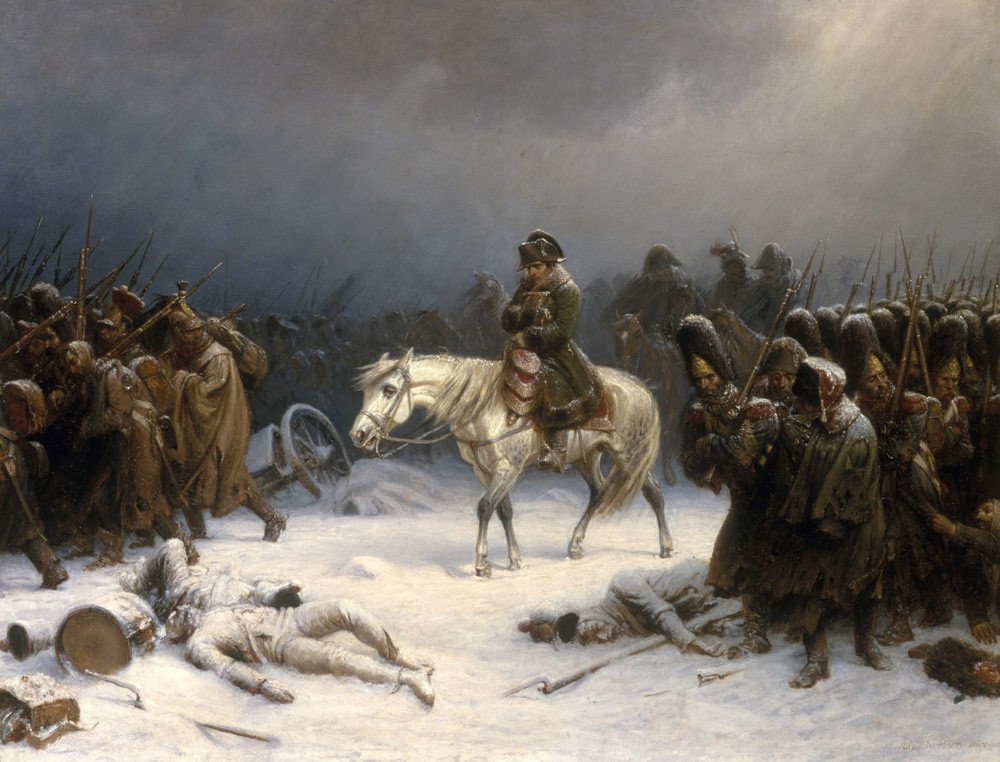
Napoleon's Retreat from Moscow, depicting the catastrophic withdrawal of the French army through the Russian winter of 1812 Napoleon's Retreat from Moscow, public domain -
This defeat was so enormous it not only doomed his chances against Russia, it doomed the entire empire. They had lost hundreds of thousands of men, horses, artillery and guns; it would take years of non-stop production to replace them, and they didn't have that kind of time.
-
Aware that Nap was fatally weakened, the rest of Europe pounced: Prussia, Austria, Sweden, Russia, Great Britain, Spain and Portugal banded together into a huge coalition, invaded France and defeated Nap. He was forced to abdicate and sent to exile in Elba.
-
Where? Elba. It's a little island off the coast of Italy. For reasons that probably made sense at the time, the victorious coalition decided Naps could be king of this tiny little island, complete with a handful of troops and a tiny little six-ship navy.
-
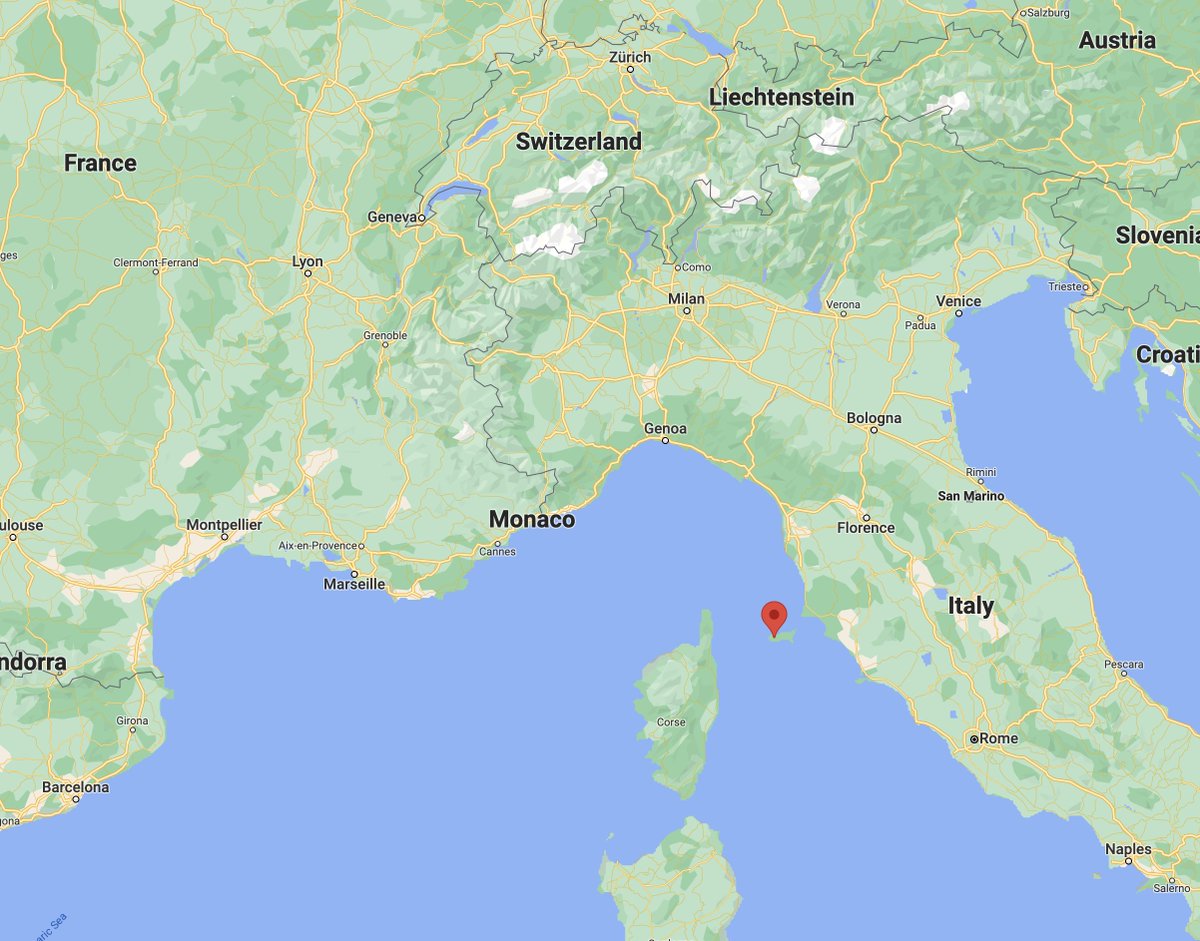
Map showing the island of Elba off the coast of Italy, where Napoleon was first sent into exile after his abdication Google Maps data © Google -
I don't know about you but that seems like a really weird decision? Why would you leave the world's most talented military general free to plan a comeback on a little island only a few days sail away in a little navy that you also let him have? And indeed it was a stupid idea.
-
The coalition had rummaged through the remains of France's royal family and found a dude called Louis, always a strong start for a French king, and installed him as Louis 18. Louis was not good at running France (few of them had been) and soon the people were unhappy again.
-
Thus was Napoleon able to stage a comeback. He escaped with his ships and tore back to Paris, picking up support from the populace and additional soldiers along the way, until his arrival in Paris was essentially a formality and he was back in charge and emperor again.
-
(Those noticing the many parallels to Trump should note the strong conclusion here, which is: you should put that fucker in prison, not leave him around to cause trouble. He's committed hundreds of crimes, just pick one and put him in prison for it, preferably one very far away.)
-
But there was no way for this to last. France still hadn't recovered militarily, Napoleon was in poor health and wasn't able to micro-manage his troops as before, and the royal heads of Europe still supremely hated his guts, so he was defeated again and exiled, again.
-
This time his captors were taking no chances and his new location of exile was St Helena, which even today is the ass-end of nowhere and very difficult to get to. Even so they took no chances: he was guarded by thousands of soldiers and a pair of ships patrolled offshore.
-
In a final Trumpian touch, Napoleon spent the rest of his life grousing that his loss was unfair. His position was that he would have won if it hadn't been for the weather in Russia, which is true as far as it goes, but generals are supposed to account for the weather.
-
Napoleon, it should be clear from all of this, was awful. He was a nasty piece of work who was exceptionally skilled at manipulating people, and he cared about no-one but himself and getting his own way, no matter how many hundreds of thousands of corpses he had to step over.
-
Like all monsters, he wasn't monstrous all the time. He was truly in love with Josephine (though when it came down to her or empire, empire won). While on St Helena he was befriended by a 14 year old girl, with whom he played innocent games and told stories.
-
But he was a monster. His legacy includes his legal code, the metric system, and various other reforms, but also the death and suffering of millions in France and elsewhere in service to his pathological need for validation. His life is a warning: never let this happen again.
-
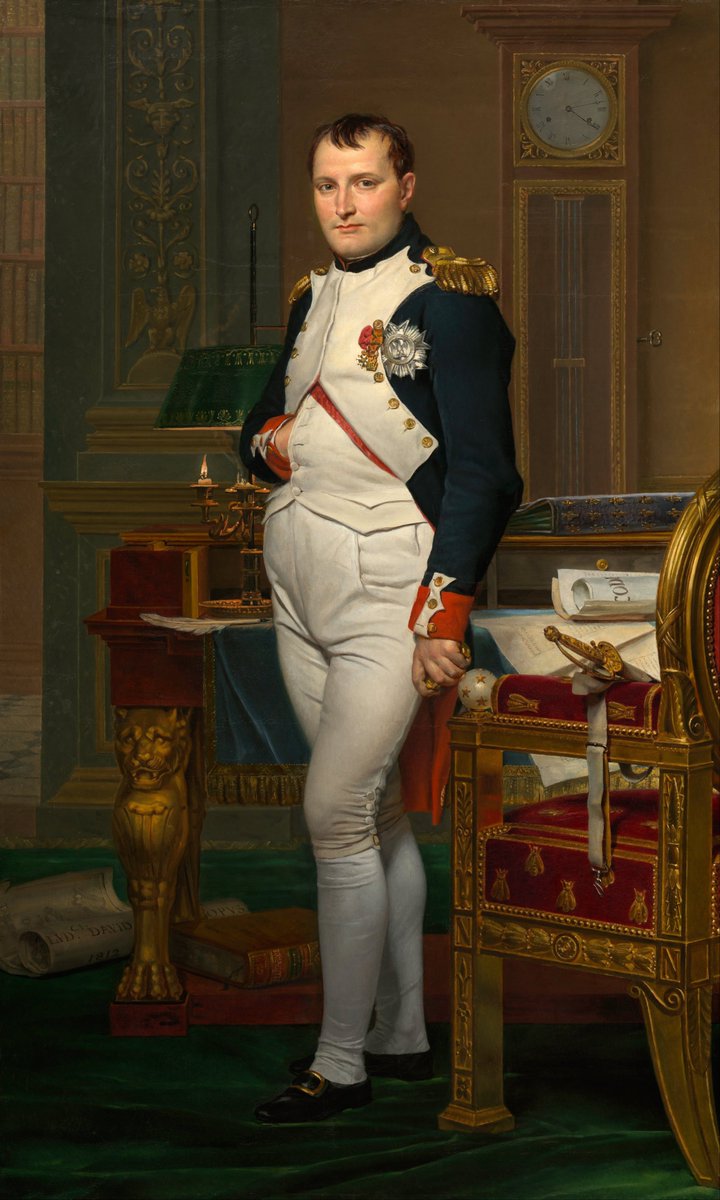
The Emperor Napoleon in His Study at the Tuileries, by Jacques-Louis David, 1812 Jacques-Louis David, 1812, public domain -
P.S. I, data person that I am, somehow managed to talk about Napoleon's disastrous march on Moscow without including the world's most famous data visualization, the Minard Diagram, which is about it.
-
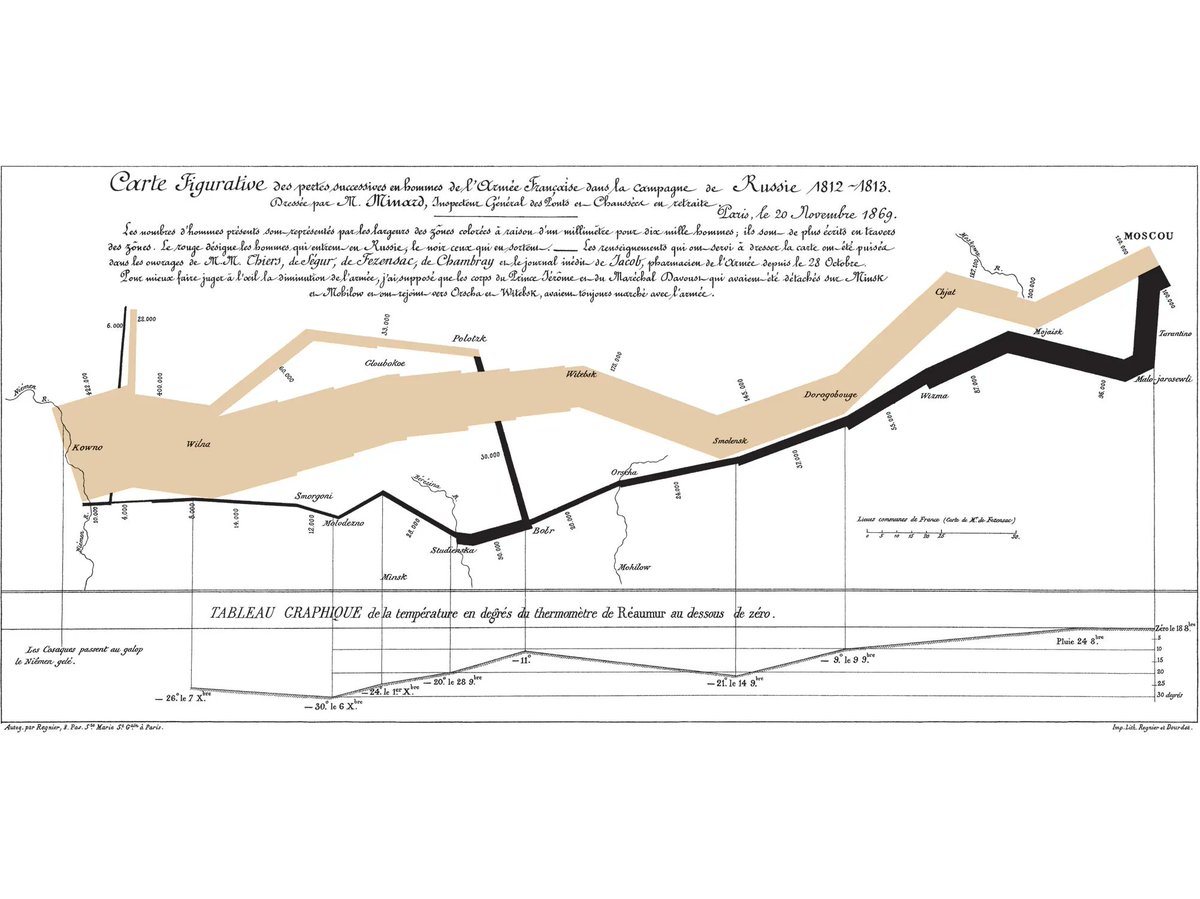
Charles Joseph Minard's famous 1869 infographic of Napoleon's disastrous 1812 Russian campaign, widely considered the greatest statistical visualization ever made Charles Joseph Minard, 1869, public domain
- Previously: Mary Shelley
- Next: Beethoven
- Full list
Text and images copyright © 2020-2023 Laurie Voss
except where indicated
except where indicated