Tycho Brahe and Kepler
-
#EuropeanBios entry number 49 is a dual entry for Johannes Kepler and Tycho Brahe, because the bio I found covered them both. They were important but Kepler is boring. Brahe had a wild personal life but even so I expect this thread will be short.
-
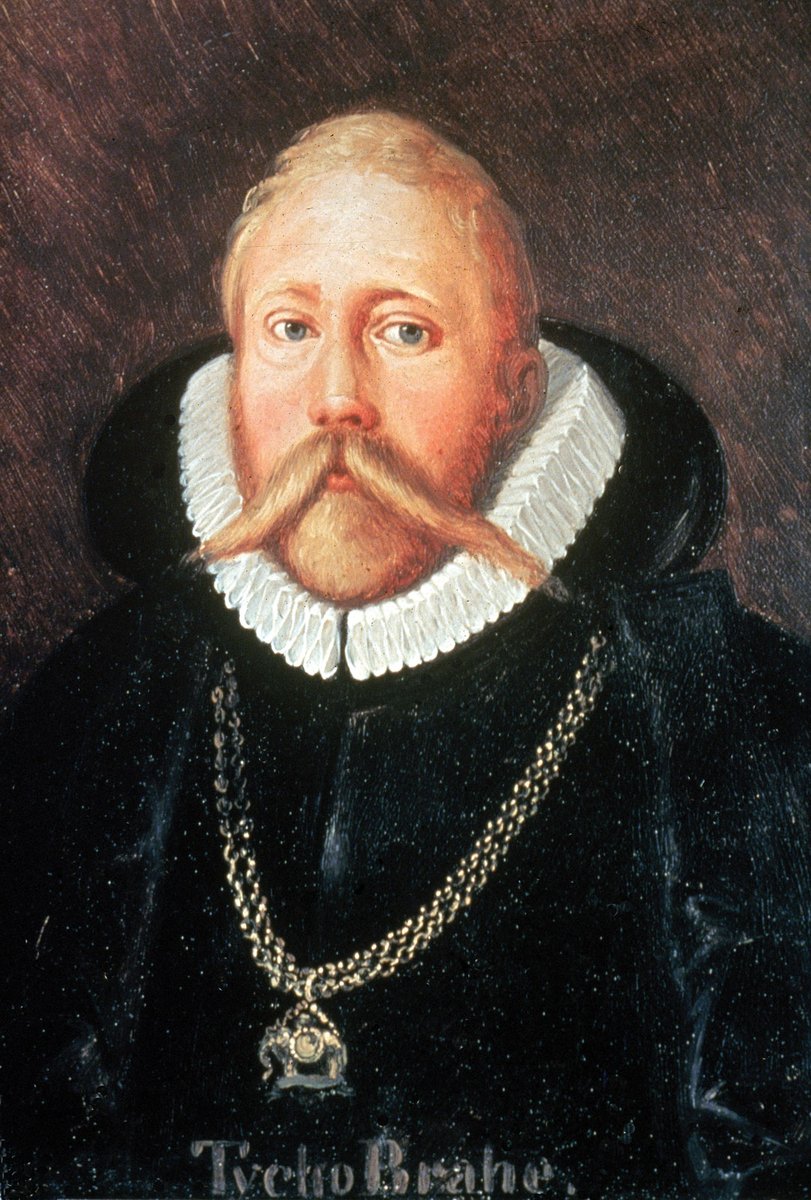
Portrait of Tycho Brahe, artist unknown, c.1590 public domain -
Tycho Brahe, born 1546, was 25 years older than Kepler. As is often the case with my subjects, the name he's famous for is not his name, it is "Tyge", Tycho being a variation he used later in life. And "Brahe" is pronounced "Bra-hee", which was a surprise to me at least.
-
Tycho and Kepler were famous astronomers, following in the vein of our previous subject, Copernicus, and in fact improving directly upon his own, sun-centered view of the universe, which was still considered something of a fringe theory at this time.
-
Tycho's contributions to astronomy are mostly extremely accurate astronomical observations, later used by Kepler. Tycho had a massive passion for observing the stars and invented significantly more accurate instruments to do this.
-
As a child, Tycho was kidnapped by his uncle, who thereafter raised him as his own child. This was apparently the result of a promise Tycho's biological father had made to let the uncle have his kid, but not kept.
-
This was apparently considered not completely wild at the time! Tycho's biological parents had a lot of kids, his adopted parents had none, it was considered not wholly unusual to give a spare kid to a childless couple, though the kidnapping was a little out of the ordinary.
-
Regardless, Tycho grew up as a child of privilege, being related to a number of noble families in Denmark and inheriting lots of money. He never had to work and received an excellent education, a pattern true of most of the famous scientists of history.
-
Tycho was a lifelong heavy drinker. As a student, he got into a drunken argument with a friend over who was the better mathematician, resulting in a duel in which his nose was cut off. For the rest of his life, he wore a prosthetic nose, probably of brass (it's in the portrait).
-
He was also pretty weird in the way spoiled rich kids are. For years he had a pet elk, whom Tycho would feed beer and then amuse his guests with the animal's drunken antics. The poor creature eventually drunkenly fell down a flight of stairs and died.
-
In the 1500s astronomy and astrology were considered closely related arts, and the latter significantly more important for its claimed ability to predict future events. Tycho was valued enormously in his lifetime by the king of Denmark, but primarily for astrology.
-
At one point Tycho was considering leaving Denmark to study elsewhere, and to persuade him to stay the king gave him his own little mini-kingdom, the tiny island of Hven, where he was lord of a bunch of serfs whom he treated abysmally, chaining them in dungeons as punishments.
-
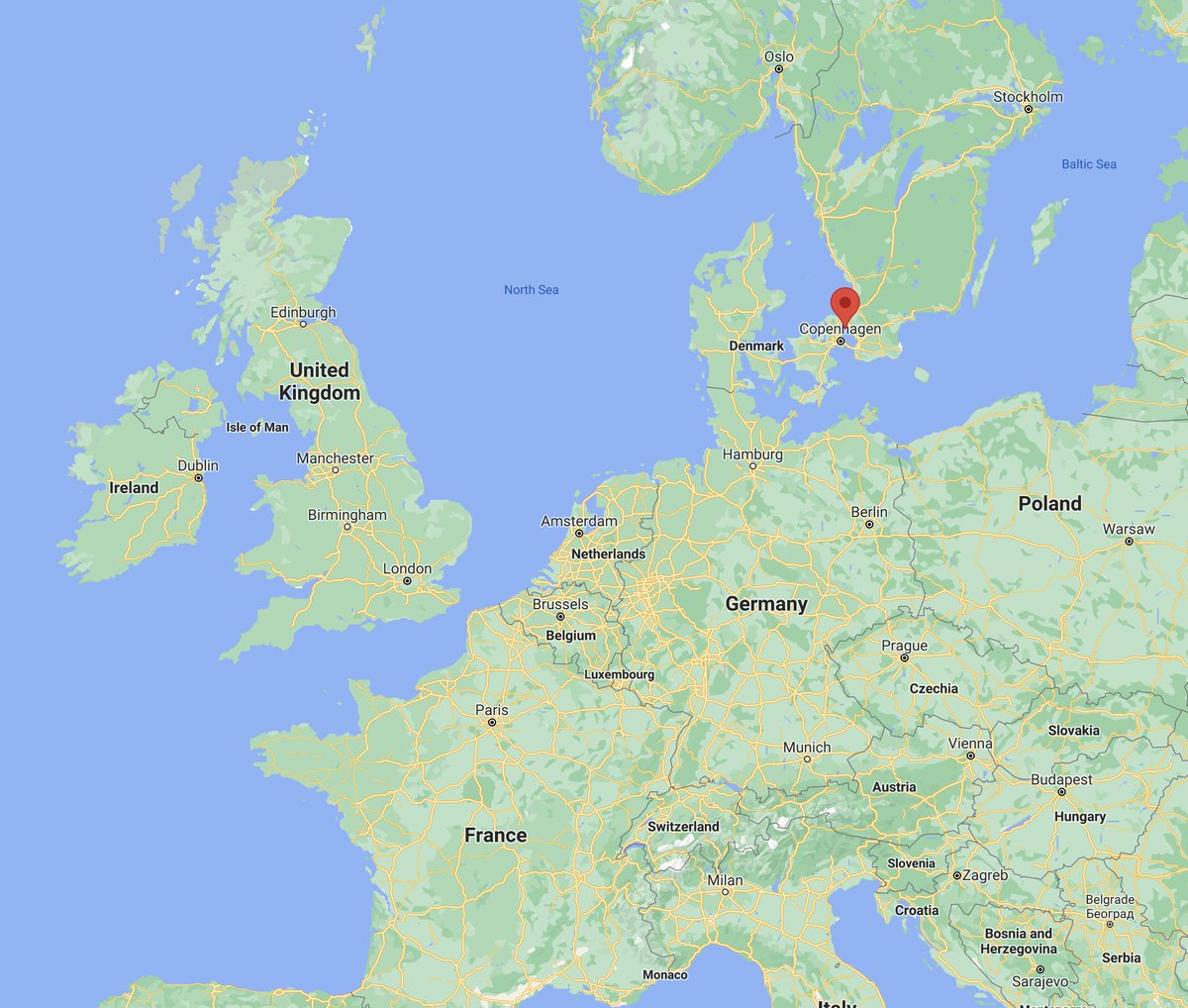
Map showing the island of Hven near Copenhagen, Denmark Google Maps data © Google -
The king continued to generously support Tycho for years, funding the operations of the island of Hven and also supporting up to 100 students of Tycho there, but that king died and his successor was not such a fan, especially not of Tycho's mistreatment of the serfs.
-
The result was that Tycho was exiled and fled to Prague, where his reputation as an astrologer once again gained him favor and funding from the local ruler. It was here he met Kepler, who became his assistant.
-
Kepler, born 1571, was more of a mathematician than an astronomer. His contribution was to take the amazing wealth of observations Brahe had made and put them to good use, using them to further refine the heliocentric model of the universe.
-
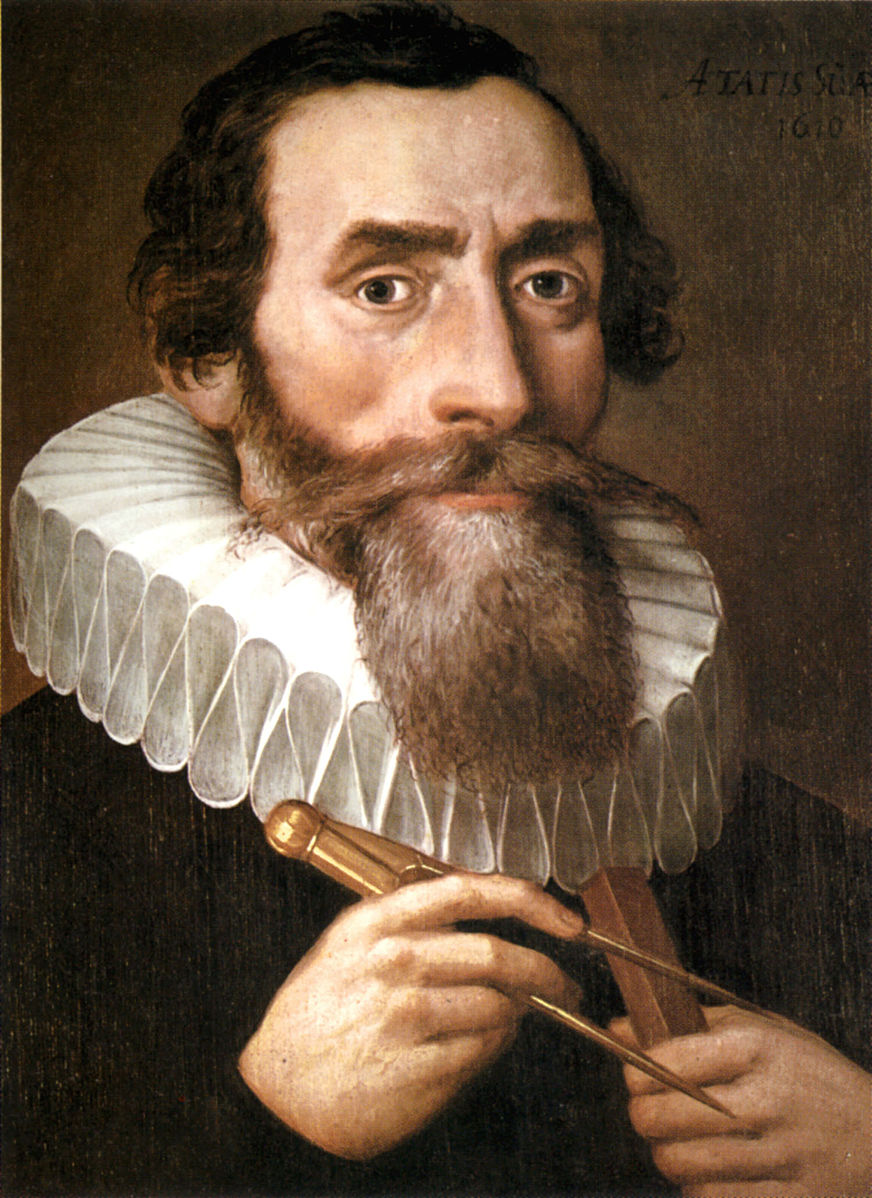
Portrait of Johannes Kepler, 1610 public domain -
He didn't get around to doing most of his work until Brahe died in 1601. Tycho was jealous of the younger man's gifts and kept his observations literally under lock and key, but when he died all of his work was given by the king to Kepler.
-
Kepler was a very religious man who saw god in mathematics. Describing the orderly, mathematically precise arcs of the planets, he observed that there needed to be some mathematically-describable force responsible for the motion. He called it their souls.
-
What he'd actually observed the need for was gravity. But it wasn't until Newton -- coming up 5 entries later in this series -- that gravity would be fully defined. Tycho and Kepler are who Newton was talking about when he said he was "standing on the shoulders of giants".
-
Kepler was a true scientist, and when his theories did not match Brahe's meticulous observations, he would go back and change his theories rather than conjuring up hand-wavey dismissals. This was pretty new behavior, and set the model for science after him.
-
Brahe and Kepler's legacy was to advance the system defined by Copernicus and perfected by Newton. It was good and worthy work, but honestly just not that interesting. Perhaps a better biographer could have got me more invested.
-
Coming up next: Shakespeare, who I promise is a lot more interesting.
- Previously: Mary Queen of Scots
- Next: Shakespeare
- Full list
Text and images copyright © 2020-2023 Laurie Voss
except where indicated
except where indicated