Virginia Woolf
-
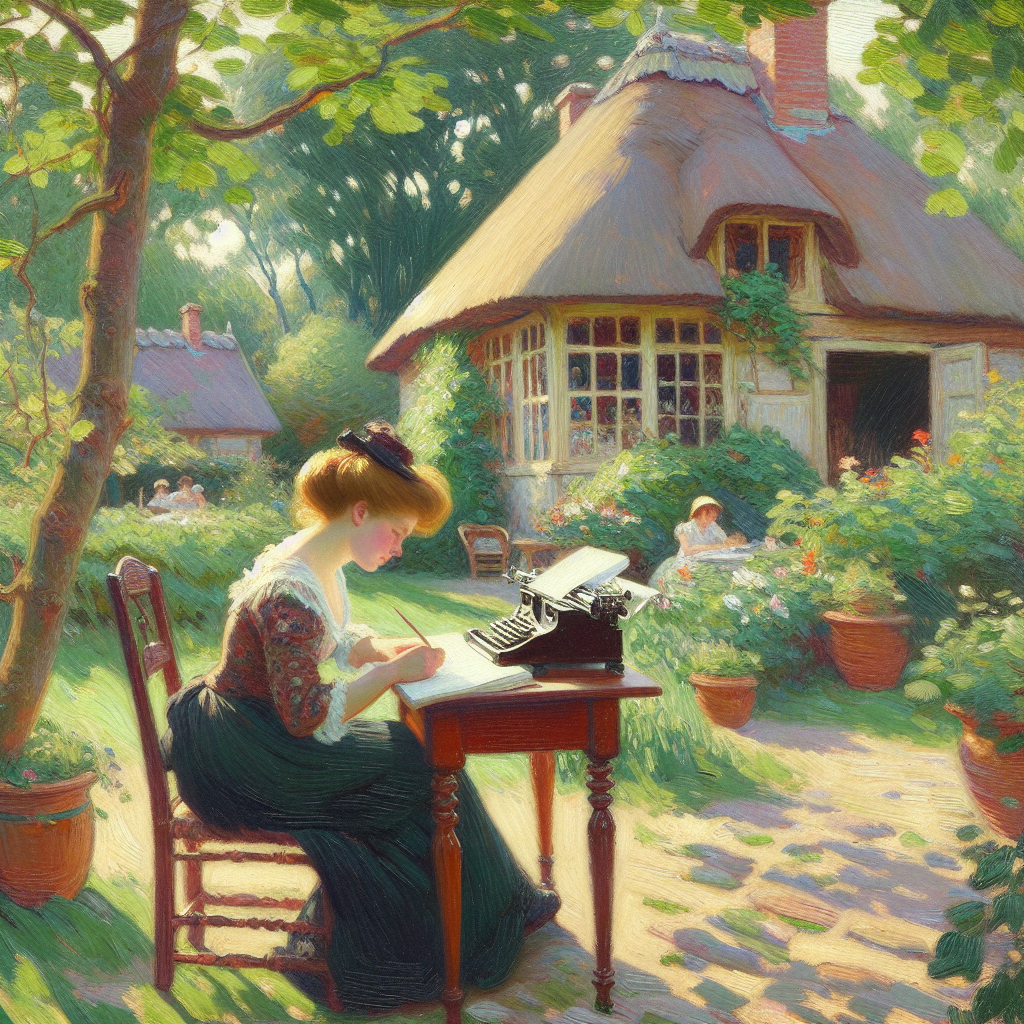
It has been a VERY long time since I did a #EuropeanBios thread, and this is the very last one: Virginia Woolf, born 1882. I was kind of hoping to release the last one with the book version but the book is going very slowly so here you go anyway.
-
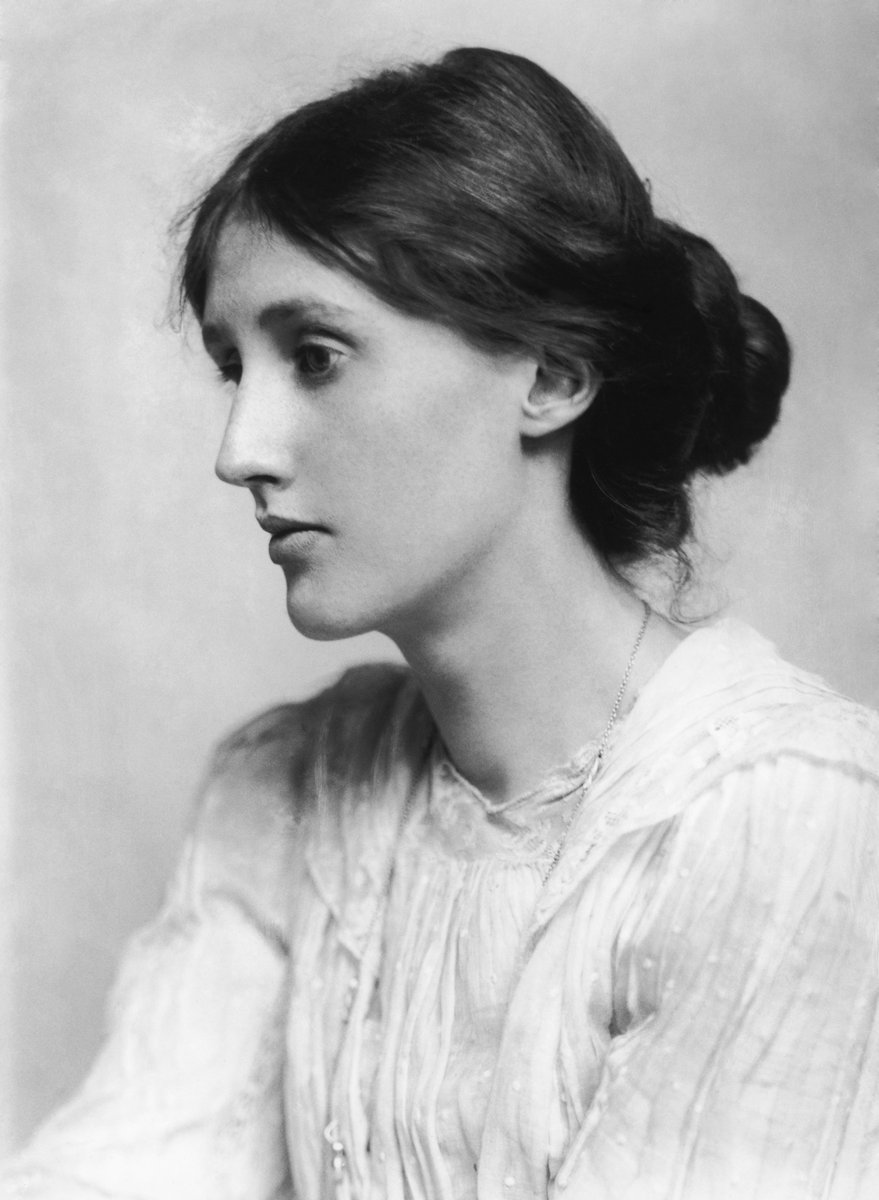
Virginia Woolf, portrait by George Charles Beresford, 1902, public domain public domain -
The bio I read, "Virginia Woolf and the women who shaped her world" was only about 10% about Virginia herself and the rest was about a huge cast of entertaining side characters. It was a lovely, well-written and hilarious book but only barely a biography. Nevertheless.
-
Virginia was born Adeline Virginia Stephen in 1882. Her mother, Julia, had been born in India, so the first surprise of Virginia is that she was partly Indian both culturally (her mother spoke Hindustani at home) and also genetically, via her great grandmother.
-
The fact that Virginia's whole family was both multicultural and mixed race did not at all suit the agendas of later biographers or family members so this entire quite important aspect of her heritage was completely erased until relatively recently.
-
She grew up in a large family of 7 children, four of whom were half-siblings via her mother's first marriage. Her mother died when she was 13, triggering the first of many bouts of depression, a condition she would struggle with her entire life.
-
Her childhood was wealthy and privileged. Her father made good money as an editor, more via his connections than any particular excellence at his profession, and she hobnobbed with the upper class, becoming in her own words "a snob"; she preferred upper class company.
-
But privilege and wealth does not automatically equate to a happy childhood. With her mother gone, her Victorian father did not consider it his job to raise children. As a result she and her siblings were, it seems, left mostly to their own devices and her education neglected.
-
Evidence suggests Virginia was sexually abused by one or more of her half-brothers. This left permanent psychological scars and what Virginia described as a lifelong revulsion to her own body and a great deal of psycho-sexual trauma.
-
In 1904, when she was 22, her father died. This had the potential to be a ruinous event for her but through the chance discovery of some extremely valuable original manuscripts by William Thackeray, a friend of her father's, she was financially comfortable.
-
She and her brothers moved house to Bloomsbury and created what would become known as the Bloomsbury Group, a large, loose group of bohemian, avant garde, free-loving fashionable writers, artists and other notables centered on Virginia and her family.
-
I always look for connections between subjects, and Bloomsbury has left Virginia with no end of them. Charlotte Brontë visited at least once, and so did George Eliot, any number of other famous writers, and most especially John Maynard Keynes, he of the economic theories.
-
Keynes, I was delighted to discover, was core to the Bloomsbury group and also extremely gay. Nearly all of the men in the Bloomsbury group were gay or bisexual and they were all constantly having love triangles and messy breakups and just staggering amounts of drama.
-
Having Meynard Keynes as a close confidant was also financially very rewarding for Virginia; he managed her wealth for her, and being Meynard fucking Keynes he was very good at this, meaning the Bloomsbury Group were all financially quite comfortable for years.
-
Virginia's own sexuality is very unclear. The gays in her circle (which was nearly all of her circle) believed she was a repressed lesbian. She agreed that she was repressed (a result of her trauma from abuse) but happily married Leonard Woolf and enjoyed sex with him.
-
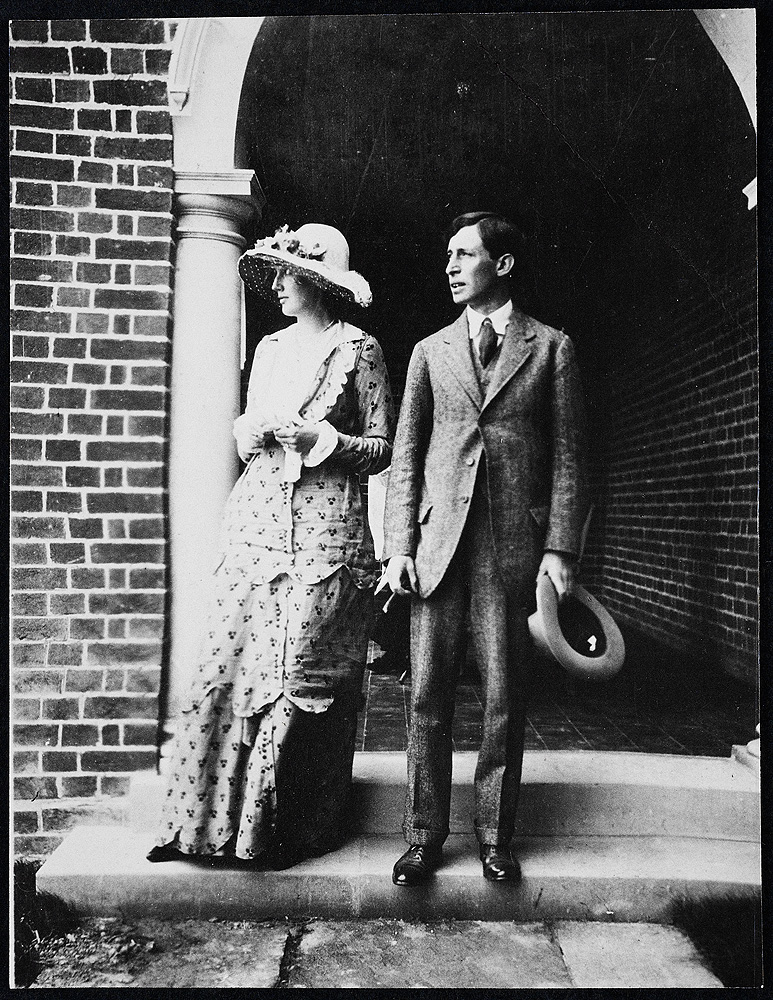
Virginia Woolf and Leonard Woolf, c. 1912, public domain public domain -
But she certainly also slept with at least one woman, the writer Vita Sackville-West, although according to Sackville-West this was primarily an emotional affair and only physically consummated two times. So functionally she was bisexual, but also very complicated.
-
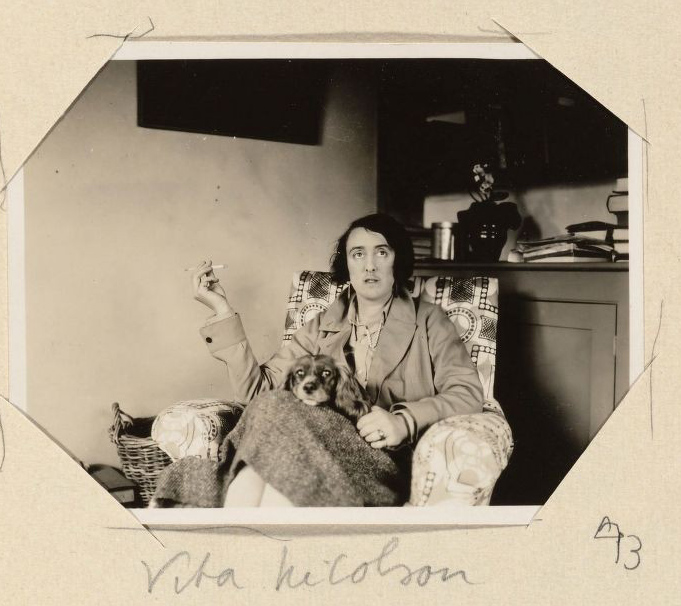
Vita Sackville-West (Vita Nicolson), writer and Virginia Woolf's lover, with her dog, c. 1920s, public domain public domain -
Emotional complications abound. When her sister Vanessa got married she began to flirt outrageously with her husband Clive. Virginia also accepted a proposal of marriage from her gay friend Lytton Strachey, who was apparently drunk at the time and withdrew it the next day.
-
Vanessa and Clive are the origin of what was probably peak drama in the extremely drama-filled Bloomsbury group. Vanessa, though married to Clive, became infatuated with Duncan Grant, a very attractive and extremely gay fellow member of Bloomsbury.
-
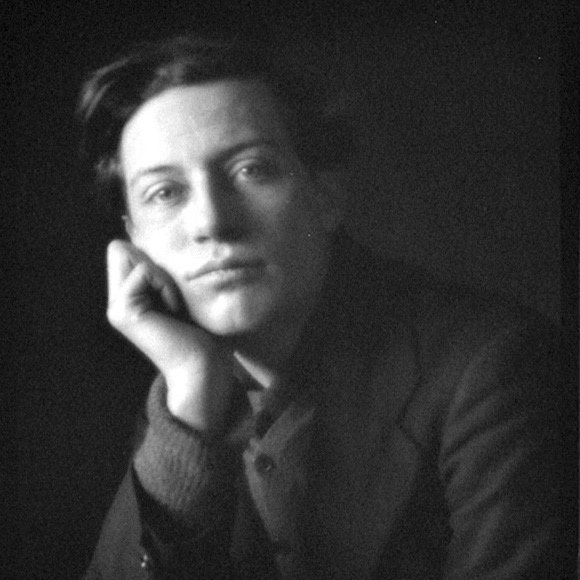
Duncan Grant, Bloomsbury Group painter, c. 1910s, public domain public domain -
Through manipulation and persistence, Vanessa managed to persuade Duncan to sleep with her in order to have a child. When the child, Angelica, was born, Vanessa's husband agreed to acknowledge her as his own child to avoid scandal (and also get money from his parents).
-
Meanwhile, one of Duncan's jilted former lovers, David Garnett, wrote a letter (to Lytton Strachey, it was a small group!) about the newborn Angelica, saying "Its beauty is the remarkable thing ... I think of marrying it; when she is 20 I shall be 46 – will it be scandalous?"
-
That's quite an astonishing thing to write but even more astonishing is that he carried through with it: 24 years later, he seduced Angelica (in H.G. Wells' spare bedroom, apparently) and then, aged 50, married his former lover's daughter.
-
Nobody in the Bloomsbury Group apparently felt it was their place to tell Angelica that her new husband seemed to be marrying her specifically to enact a weird and much-delayed revenge on his ex-boyfriend, and when Angelica eventually found out she was traumatized.
-
If this all sounds like a mediocre musical-theater plot you're spot on: David Garnett wrote a thinly-ficitonalized novella about the situation called Aspects of Love which was then turned into a musical by Andrew Lloyd Webber.
-
All of this has very little to do with Virginia Woolf herself but it is just off-the-charts dramatic and the rest of Woolf's life is about to be very depressing so it would be remiss not to include it.
-
As already mentioned, Virginia struggled with depression her whole life. She was self-institutionalized a number of times, often for months at a time, but medical science could do very little for her at the time except prescribe rest.
-
The outbreak of World War 2 and the prospect of invasion by Hitler were the final straw for Woolf, who drowned herself in 1941, aged 59, her final note to her husband indicating that she believed she was "spoiling" his life and wished to stop doing so.
-
Woolf's legacy is as a literary powerhouse, still popular and studied today, and as a feminist, but I will be mostly remembering her as the center of a vortex of a chaotic, sprawling, pansexual Victorian polycule.
-
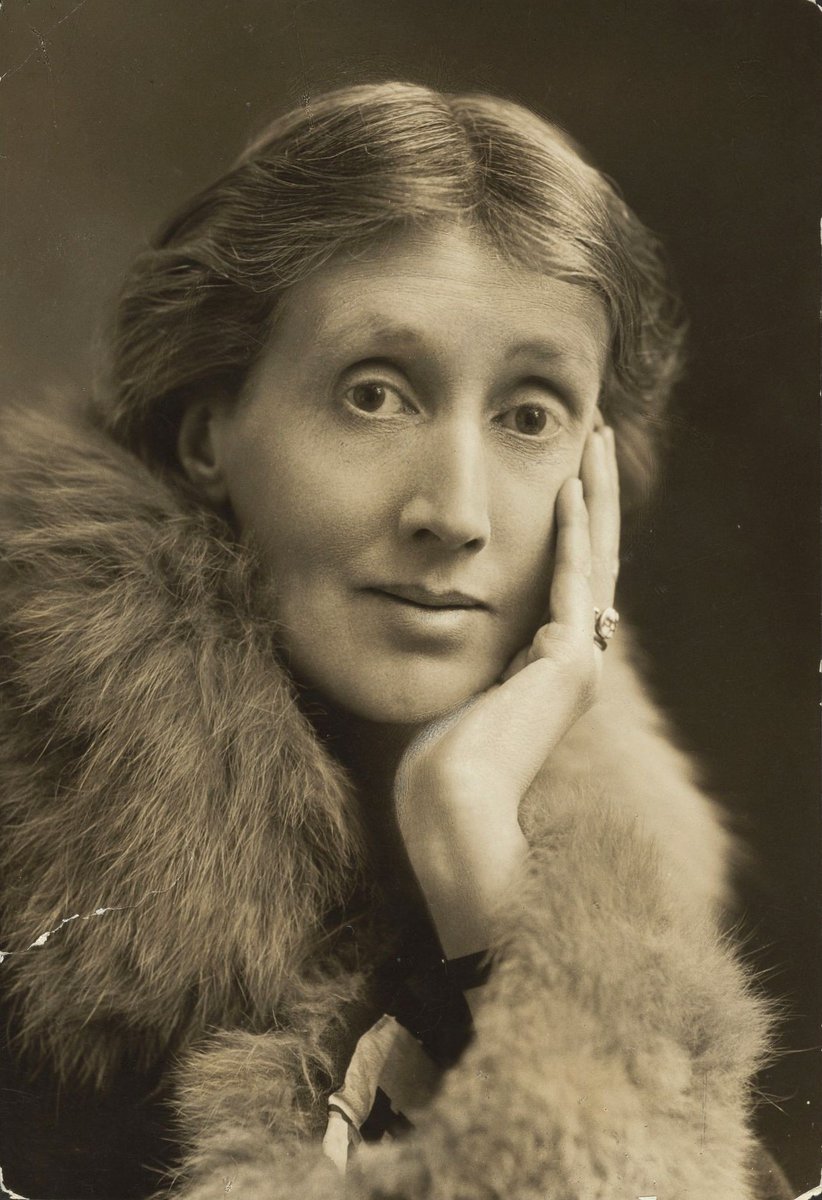
Portrait of Virginia Woolf, c. 1930s, public domain public domain
Text and images copyright © 2020-2023 Laurie Voss
except where indicated
except where indicated